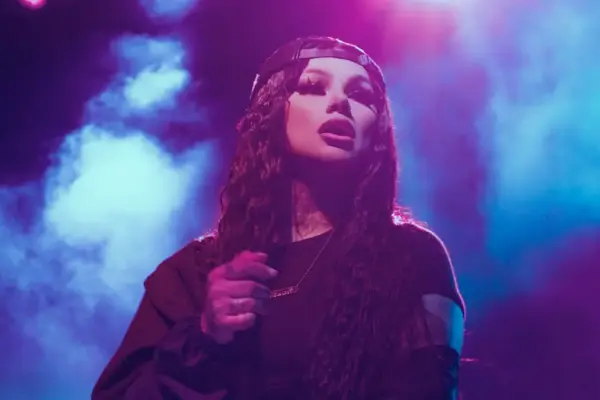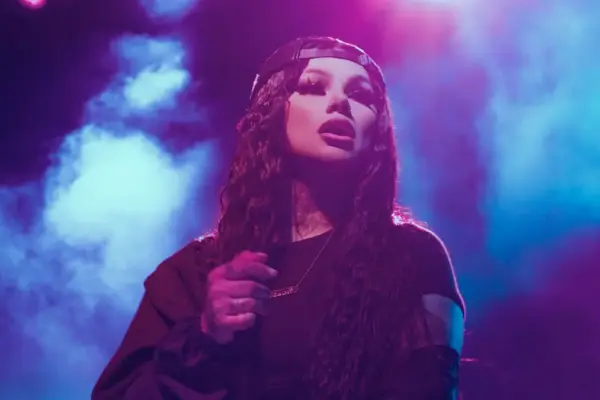







Before Lorely Rodriguez, known professionally as Empress Of, could even begin to visualize the physical blueprint for rebuilding her family’s destroyed Altadena home, she first constructed a sanctuary out of melody and lyrics. Sitting at her piano in the devastating aftermath of the Los Angeles wildfires that reduced her family’s longtime residence to ash, the acclaimed Honduran-American singer, songwriter, and producer penned a profound vow to her mother. The lyrics formed the emotional bedrock of her new album: "I want to build a dream for you just the way you did for me."
Released on September 18, her latest full-length record, Dream House, methodically traces the complex journey that followed that devastating moment. It is a sonic exploration of grief, the grueling labor of physical and emotional rebuilding, and a radically transformed understanding of what it truly means to find home when its physical walls have been erased.
For Rodriguez, the house that her family lost was never simply a collection of wood, drywall, and nails. Her family had inhabited the space since she was just six years old, meaning the structure held the entirety of her childhood, generations of family history, and the vibrant, diverse community that wrapped around them. Altadena itself carried immense cultural and personal significance for her family. It was a place where her Honduran mother, a single parent raising four children while working tirelessly as a house cleaner and nanny, managed to achieve the American dream of buying a home and establishing a stable, secure foundation for her family.
The cultural fabric of Altadena, Rodriguez explains, was often misunderstood by outsiders who generalized Los Angeles through the narrow lens of celebrity, wealth, and Hollywood glamour.
"When the fires first happened, I think a lot of people that don’t live in LA equated LA with celebrity and Hollywood," Rodriguez shares. "And so a lot of people didn’t know the history of Altadena, and Altadena being so diverse, a place where my mom, who was a nanny and a house cleaner, could buy a house. Our neighbors—everyone—came from different backgrounds and different histories."
That deep sense of community and shared history did not vanish with the flames; rather, it became even more luminous in the aftermath of the disaster. While Rodriguez mourned the loss of the physical architecture where she grew up, she simultaneously began to realize that the true essence of "home" had existed far beyond its walls all along. For many Latine communities, home is not merely a geographic coordinate or a piece of real estate. Instead, it is carried persistently through the intangible threads that connect people to their families, heritages, and cultural roots: the traditional comfort foods we eat, the languages we speak, the music that soundtracked our upbringing, and the specific individuals who ground us and remind us of who we are at our core.
Rodriguez reflects on how returning to her mother’s cooking during breaks from her demanding touring schedule always served as an immediate, grounding homecoming.
"Whenever I’d be on tour, at a red carpet, or at a photoshoot or whatever, when I would come home in the past, I’d eat my mother’s food, and if she made a baleada or caldo, it’s like I immediately knew who I was again," Rodriguez says. "I am this artist. I am this entertainer. But when you strip all that away, and I’m just home—it’s a very grounding experience. So, not having had that for the last year, I’ve had to find home."
Left without that familiar physical grounding, Rodriguez was forced to seek and cultivate home within her surrounding community, her close-knit family, and ultimately, through the creation of new music. Dream House emerged organically as a vessel—a safe space to hold the heavy, irreplaceable memories tied to her childhood home while simultaneously clearing emotional runway for whatever future might lie ahead.
The creation of the album became its own form of shelter and therapy. Rather than rushing into a commercial project, Rodriguez allowed the process to unfold naturally, viewing the final product as an unexpected gift rather than a calculated career move.
"I’ve been actually thinking about this. I’m like, ‘Wow, I’ve already been gifted so much by the album that releasing it and having other people hear it is just added blessings,’" she says. "Just a lot of gratitude and learning a lot about myself and making this album feel like home."
To deepen this sense of place and legacy, Rodriguez took the intimate step of incorporating actual audio snippets of her mother speaking throughout the tracklist. By weaving these conversational fragments into the music, she transformed Dream House into a powerful multigenerational record. The album reflects not only her own deeply personal experience of losing the home she had identified with for her entire life, but it also elevates the remarkable narrative of endurance and grit embodied by the woman who built that life from scratch decades prior.
"I use this album as a way to share a multigenerational experience of not only my experience of losing my home and things I identified with my entire life, but also to share my mom’s story," she explains. "It’s just the resilience and the determination that she’s always had her entire life. There are just moments where we talk about believing in ourselves, and my mom believes in herself so much."
That very same fierce determination proved vital when it came time for the family to physically rebuild. Following the destruction of the property, Rodriguez’s mother did not simply wait for external help; she returned to local permit offices week after week, cutting through bureaucratic red tape, and eventually took on the extraordinary role of acting as the general contractor for the brand-new house herself. The woman who had first forged a pathway for her children in Altadena years ago was now personally hammering together their future—providing Rodriguez with an unmatched, living model of how to cultivate hope and construct a tomorrow after experiencing profound loss.
This journey of restoration fundamentally transformed how Rodriguez approached the songwriting process. Recognizing the depth of her trauma, she initially permitted herself simply to grieve without artistic filter, recording intensely raw, unvarnished audio journals before she even considered writing a cohesive record.
"And when I decided to start making music about this experience, I wrote a bunch of songs that nobody should ever hear, and it’s just me just crying into a microphone," she recalls. "And then I started to write songs about the optimism of rebuilding, which felt more in line with the energy that I wanted to give myself."
That hard-won optimism pulses directly through the heart of the album’s title track, "Dream House." Written before construction on the physical property had even begun, the song captures Rodriguez sitting at her piano, projecting forward and mapping out all the security, peace, and beauty she desperately wanted her mother to experience after a lifetime of labor and sacrifice for her children. The composition ultimately established the emotional architecture and thematic blueprint for the entire project.
"When I wrote the song ‘Dream House,’ we hadn’t built our house yet, and I was sitting at a piano, and I was thinking about all of the things I wanted my mom to have, and how she had built a dream for me already," she reflects. "The opening lyrics of that song are, ‘I want to build a dream for you just the way you did for me.’ And I think a dream house is all the possibilities."
Through this creative act, Rodriguez successfully bridged two monumental feats of creation: the foundational home her mother had originally sacrificed to make for her children, and the expansive, hopeful future that Rodriguez could now manifest through her art.
Although the physical house in Altadena has now been fully rebuilt, Rodriguez notes that the traumatic experience of losing it permanently altered her perspective on gratitude and security. She realized that the ordinary, grounding elements of daily life often reveal their true, irreplaceable weight only after they are suddenly ripped away.
"I mean going back to that earlier feeling of what those familiar things that make you remember your identity, specifically to my Latinidad, is just those things," she says. "In the moment you know how comforting they are, but you know even more when they’re not. So it’s like everything means more now. Everything has a bigger smile, a bigger affinity, a bigger familiarity, because I understand what it meant not to have it."
Ultimately, Dream House confronts a universal human question: What remains intact when the tangible, physical markers of a lifetime suddenly vanish into smoke, and what are the invisible things we have been carrying inside us all along? For Rodriguez, the recording studio and the microphone became instruments of alchemy, transforming a deeply frightening and destabilizing life event into something communal, resilient, and deeply hopeful for anyone listening.
"I can never control what someone’s going to get out of this music," she notes, acknowledging the diverse ways audiences consume art. "Because they could just be like, ‘Oh, I need to have a good time.’ But for me to use music as a healing tool and to talk about something that was a scary experience for me, it took a lot of bravery, and I hope that someone can see that and be like, ‘Well, if she did something she was afraid to do, I can as well.’"
Emerging from a grueling year defined by displacement, mourning, and the arduous task of redefining home beyond a single geographic address, Empress Of leaves her listeners with the same bedrock philosophy that guided her family through the ash and rubble of the Los Angeles fires. It is a simple, enduring mantra that fueled her mother’s decades of labor, inspired a deeply moving record, and continues to point toward the horizon: "There’s always tomorrow."