





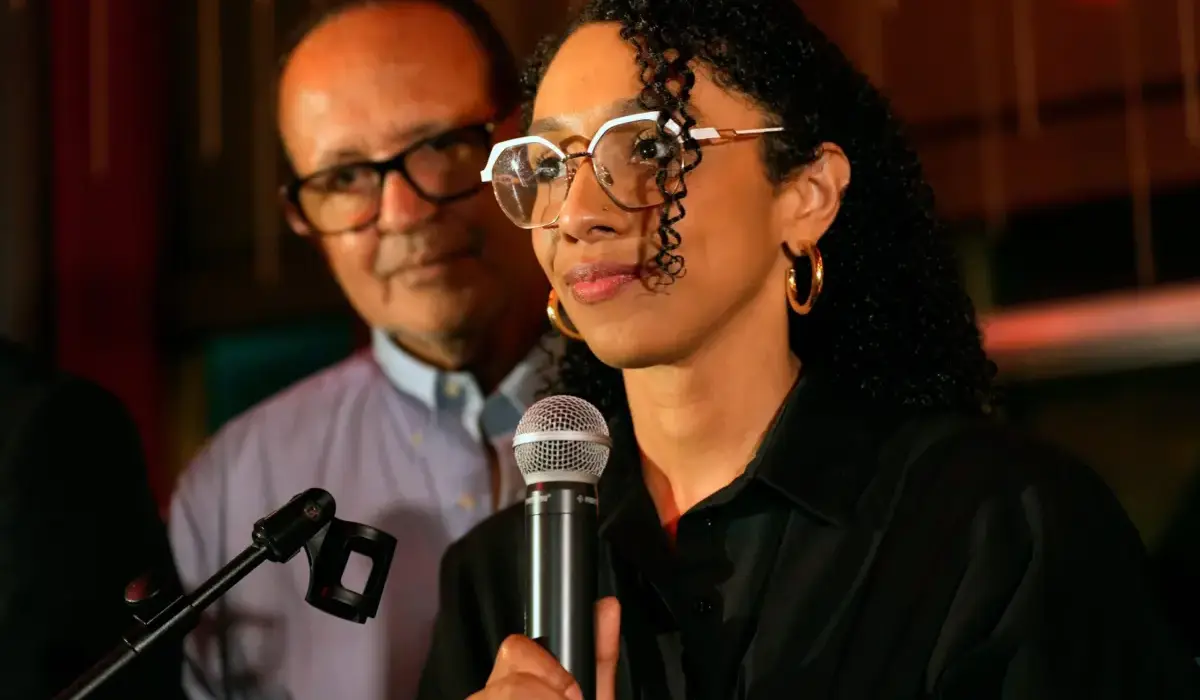
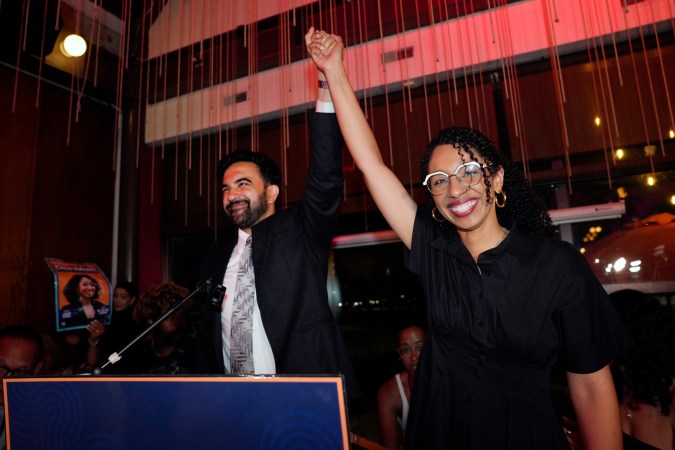
Tuesday night marked a historic turning point for New York’s 13th Congressional District, as Darializa Avila Chevalier secured a monumental victory in the Democratic primary, defeating longtime incumbent Adriano Espaillat. Yet, even as supporters celebrated the milestone and election night watch parties buzzed with energy—with figures like New York City Mayor Zohran Mamdani joining in to mark the occasion—a different, more contentious conversation was already unfolding across digital spaces.
Rather than focusing on her political platform, legislative vision, or the specifics of her campaign for the district, online critics—particularly within certain Dominican nationalist circles—fixated intensely on her identity. Specifically, her last name became a focal point for intense speculation and vitriol.
Despite Avila Chevalier having publicly and repeatedly stated that she is Dominican American and that both of her parents are of Dominican descent, her background was subjected to aggressive public interrogation. On various social media platforms, terms like "Haitian" were deployed deliberately as insults and accusations. Commentators and online nationalists engaged in protracted debates questioning whether she could authentically be considered "Dominican" at all.
These coordinated attacks revealed troubling underlying currents within contemporary cultural and political discourse. Far from representing an isolated incident, the backlash exposed longstanding anti-Haitian sentiments that persist within segments of the Dominican community, alongside a broader, pervasive anti-Blackness that continues to affect Latine communities at large.
The phenomenon of a candidate’s ancestry overshadowing their policy positions raises uncomfortable questions about modern identity politics and cultural belonging. Observers are left to grapple with fundamental concerns: Who ultimately holds the authority to determine who is considered truly Dominican? How is it possible that, well into the 2026 political landscape, Haitian identities continue to be weaponized as tools of social or political shame? Furthermore, why do discussions surrounding Blackness remain a source of profound discomfort and defensiveness across many Latine communities?
Analysts note that the vicious backlash directed at Avila Chevalier was never exclusively about her individual candidacy. Instead, it unmasked deeper, historically rooted tensions concerning race, identity, and national belonging—tensions that many within the Dominican diaspora recognize, even if mainstream community spaces remain reluctant to confront them directly.
To understand the persistence of anti-Haitian and anti-Black attitudes within Dominican communities, scholars point to deliberate historical framing. Dr. Saudi Garcia, a Dominican American scholar, organizational leader, movement builder, researcher, and Executive Director of In Cultured Company, emphasizes that these sentiments were not inevitable organic developments, but rather the product of systematic cultivation.
According to Dr. Garcia, the foundation was laid beginning in the late 19th century, when Dominican nationalist writers began systematically reframing the Unification period lasting from 1822 to 1844 as "La Dominación Haitiana." This historical interpretation reduced a complex era of geopolitical relations into a rigid narrative that cast Haitians exclusively as the nation’s historical and cultural enemy. Over time, this interpretation became systematically embedded within Dominican educational curricula and state institutions.

This perspective was intensified during the 30-year dictatorship of Rafael Leonidas Trujillo. During the 20th century, regime-aligned intellectuals and writers—including figures such as Manuel Arturo Peña Batle, Ramón Marrero Aristy, and Joaquín Balaguer—produced texts designed to erase Black political agency and historical solidarity. These writings ultimately formed the bedrock of the educational textbooks studied by generations of Dominican students.
Consequently, Dr. Garcia explains, mainstream Dominican national identity has largely been constructed in direct opposition to Haitian identity. If Haitian identity is explicitly linked to Blackness—as affirmed by the Haitian constitution of 1804—dominant Dominican narratives have historically positioned Dominican identity in an ambiguous middle ground. This framework promotes the idea that Dominicans are neither European white nor Black, but rather occupants of an intermediate, mixed racial category often reduced simply to the national label of "Dominican."
This dynamic aligns closely with extensive academic research. Scholars of Dominican identity, such as Ginetta E. B. Candelario, author of Black Behind the Ears, have long documented how national identity has been constructed around what Dominicans are not. Because many individuals equate being Haitian with being Black, they frequently gravitate toward alternative descriptors such as mixed, indio, Hispanic, or simply "Dominican," even when their physical characteristics place them squarely within the Black racial category.
By treating the national descriptor as a racial category in its own right, individuals attempt to bypass discussions of race. However, as younger generations of Dominican Americans—particularly millennials and Gen Z—demonstrate through their own self-identification, race does not simply vanish because it is replaced by nationality. Many diaspora members openly embrace Black identities, creating a generational friction with traditional homeland narratives.
Navigating these conversations requires careful historical context and theoretical frameworks, Dr. Garcia notes. For individuals raised entirely within the nationalist paradigms established during and after the Trujillo era, critiques of anti-Blackness or anti-Haitianism can often be misinterpreted as fundamental attacks on the Dominican Republic’s right to exist as a sovereign nation.
Progressive critics, however, argue that their objections are not aimed at the nation itself, but rather at the elite hijacking of a national project that was originally envisioned as a multiracial republic.
When Blackness is externalized and conflated entirely with Haiti, profound internal contradictions emerge within Dominican society. A person with dark skin, Afro-textured hair, and clear phenotypic markers of African ancestry may vigorously reject the label of Black, having been indoctrinated to believe that rejecting Blackness is what preserves their distinct national identity. This deep-seated mindset ultimately harms Afro-descendant Dominicans by rendering their experiences invisible while simultaneously reinforcing colorism, anti-Blackness, and anti-Haitian prejudice.
In the case of Avila Chevalier, the scrutiny directed at her background rather than her political platform amounted to a direct challenge to her authenticity. Her identity as a Dominican was treated as public property subject to evaluation by hostile critics.
This dynamic illustrates how certain interpretations of pride and patriotism manifest as exclusionary nationalism. Dr. Garcia points out that nationalism is fundamentally a political movement reliant on cultural and political exclusion. By design, nationalist ideologies require an externalized enemy or antagonist to justify their defensive posture. When an organic adversary is absent, nationalist political structures frequently manufacture one from within the existing population.
Avila Chevalier became a target for nationalist critics attempting to claim she lacked authenticity because she did not conform to the narrow ideological, religious, or cultural profiles dictated by nationalist orthodoxy.
A crucial lesson emerging from these attacks is the urgent necessity of decoupling Blackness from external "otherness" and integrating it fully into the understanding of Dominican identity. The persistent notion that Blackness exists entirely outside the Dominican community is the primary engine maintaining anti-Haitian sentiments.
This challenge extends beyond the Dominican community to affect Latine populations more broadly. When communities celebrate African heritage through cultural elements like food and music while simultaneously distancing themselves from actual Black people, they facilitate the ongoing stigmatization of Haitians and other members of the Black diaspora.
The rhetoric directed at Avila Chevalier bears a striking resemblance to historical political propaganda deployed against prominent Dominican figures of the past, such as José Francisco Peña Gómez. As a Dominican politician who served as mayor of Santo Domingo and mounted presidential campaigns in the 1990s, Peña Gómez faced continuous attacks questioning his belonging because his parents were Haitian, despite his birth and upbringing in the Dominican Republic.
Reflecting on the election cycle, Dr. Garcia emphasizes that the episode highlights the extensive work still required within communities to counter disinformation and propaganda. At the same time, the decisive victory achieved by Avila Chevalier—bolstered by vocal support from diaspora members across generations, particularly Gen Z and millennials—demonstrates that extreme nationalist tactics are losing their grip. The traditional playbook of leveraging anti-Haitian sentiment is encountering robust resistance.
Ultimately, the primary revelation of the election is not that anti-Black and anti-Haitian sentiments have vanished from the cultural landscape, but rather that these antiquated tactics no longer wield unquestioned authority. The core question highlighted by the campaign was never whether Darializa Avila Chevalier was sufficiently Dominican, but rather why such exclusionary questions continue to be asked at all.