








Bilateral relations between Argentina and the United States have reached an unprecedented point in their modern history, propelled by a profound and close geopolitical alignment between the government of Argentine President Javier Milei and the administration of U.S. President Donald Trump. This burgeoning partnership is increasingly moving beyond shared political rhetoric and taking concrete shape through economic frameworks, most notably the Agreement on Reciprocal Trade and Investment (ARTI) signed by the two nations earlier this year.
The comprehensive agreement is designed to unlock significant new commercial horizons, creating lucrative business opportunities for American corporations seeking to establish or expand their investments in Argentina, while simultaneously opening doors for Argentine enterprises aiming to scale their operations and enter the highly competitive U.S. market.
A central mechanism driving this evolving economic synergy is "friendshoring"—the strategic practice of relocating or developing vital components of a nation’s supply chains exclusively within the borders of trusted geopolitical allies. This approach has rapidly gained immense global prominence since the commencement of Donald Trump’s second presidential term, characterized by his administration’s decisive escalation of a broad tariff war with China. By anchoring supply chains within friendly nations like Argentina, Washington seeks to secure critical supplies while bolstering allied economies in the Southern Hemisphere.
However, despite the sweeping momentum and high-level enthusiasm surrounding the partnership, a critical domestic hurdle remains before these ambitions can materialize. The agreement still requires official approval by the Argentine Congress, representing the final and decisive legislative obstacle before the pact can fully take effect.
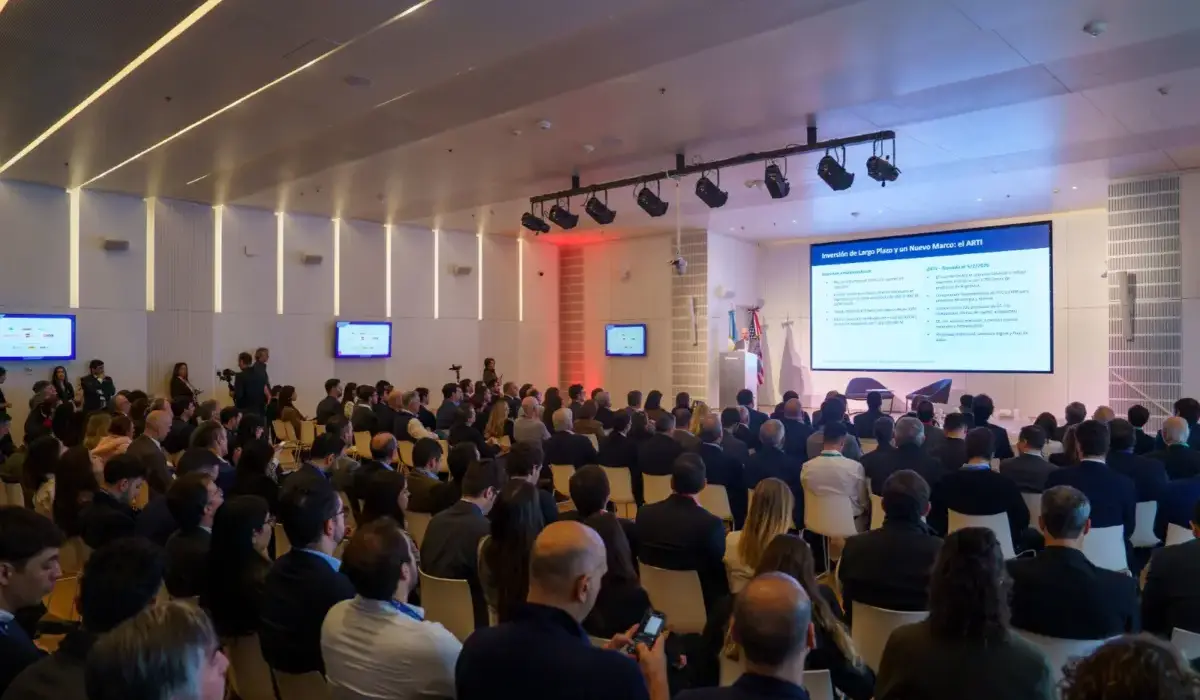
These insights and developments formed the core consensus among prominent business leaders, diplomats, and policy experts gathered on Wednesday at the American Chamber of Commerce (AmCham) Trade & Conference, hosted at the Santander Auditorium, an event attended by the Herald.
A Unique Moment in US-Argentina Relations
Addressing an audience of over 300 attendees—including high-ranking representatives of major European and Brazilian companies operating within Argentina—AmCham Argentina CEO Alejandro Díaz underscored the truly "unique" historical moment currently defining diplomatic and commercial relations between Buenos Aires and Washington.
Díaz argued that the two heads of state have not only successfully cultivated a robust personal and ideological dynamic through which to interact smoothly, but that both national administrations are also fundamentally "predisposed to establishing a strategic relationship on a scale that puts geopolitics clearly ahead of trade." He elaborated that trade flows naturally as a direct consequence of a broader geopolitical alignment that deliberately positions Argentina in a pivotal, central role throughout the Southern Cone.
Díaz also placed heavy emphasis on the enormous potential for friendshoring alongside the United States, suggesting that the two governments can and should leverage their deepening political ties to aggressively boost bilateral trade and reciprocal foreign investment.
Nevertheless, Díaz struck a pragmatic note regarding the practical realities facing local enterprises. For Argentine companies actively aspiring to break into the expansive U.S. market, he explained that the indispensable prerequisite is a substantial improvement in overall competitiveness. Crucially, he argued that this competitiveness relies far less on internal corporate productivity—which companies are well-equipped to manage independently—and far more on systemic national conditions.
"What we need here is not so much productivity, which is clearly a factor companies can manage themselves, but rather competitiveness, which depends on other factors," Díaz told the attentive audience. He pointed directly to structural domestic hurdles that continue to plague the Argentine economy, citing the heavy national tax burden, high logistics costs, persistent infrastructure constraints, and the ongoing challenge of making the macroeconomic math work so that local products, particularly sophisticated manufactured goods, can viably enter and compete within the United States.
Interest in Securing Approval of the Agreement with the US
Echoing the themes of economic opportunity and strategic cooperation, Joel Reynoso, Commercial Counselor at the U.S. Embassy in Buenos Aires, told conference attendees that Argentina "has a great deal to offer" international markets, pointing specifically to its vast wealth of natural resources, "particularly in energy, minerals, and agriculture." Furthermore, Reynoso praised the nation’s human capital, highlighting its "highly skilled workforce and dynamic technology sector."
Shifting to the legislative front, Reynoso revealed that the U.S. Embassy is "very interested" in seeing the Argentine Senate secure the approval of the Patent Cooperation Treaty (PCT)—an essential component integrated within the broader trade agreement—during the current week. The established international framework facilitates streamlined patent protection across 159 countries worldwide, an issue that has historically generated friction and complex tensions between domestic Argentine pharmaceutical firms and their powerful American counterparts.
"I’m being told it will take a little longer, but we are very eager to get the PCT across the finish line. Hopefully, it will be approved tomorrow," Reynoso added. When pressed further on the legislative timeline by the Herald, he declined to offer additional comments.
Beyond intellectual property frameworks, Reynoso detailed ongoing initiatives by the U.S. Embassy aimed directly at expanding investment and financing opportunities for Argentine businesses. He noted a major milestone achieved in February 2026, when the Export-Import Bank of the United States (EXIM) officially reinstated its financial coverage for Argentina.
"That is important because it can facilitate financing for projects that use American equipment, technology, and services," Reynoso stressed, emphasizing the practical advantages the decision brings to capital-intensive sectors.
Looking ahead to upcoming diplomatic and commercial engagements, Reynoso announced that an official "energy mission," jointly organized by the U.S. Embassy and the Business Council for International Understanding, is officially scheduled to visit Argentina in December. Additionally, the embassy is actively organizing a specialized security and defense event slated for February 2027. The upcoming gathering aims to showcase innovative defense technologies originating from the United States while actively facilitating direct commercial and institutional contact between American defense contractors and Argentine authorities.
Dissenting Voices
Despite the prevailing atmosphere of optimism, enthusiasm, and corporate ambition shared by most speakers at the AmCham conference, a contrasting viewpoint emerged, highlighting deep concerns regarding the socioeconomic impacts of the bilateral alignment.
Daniel Novoa, president of the Hispanic Retail Chamber of Commerce (HRCOC) and one of the featured speakers at the event, offered a starkly critical perspective during an interview with the Herald. Novoa contended that the primary focus of the current bilateral discourse remains dangerously narrow.
"All anyone has talked about is extraction [of natural resources]," Novoa stated bluntly. "No one has talked about supporting the domestic market, including through financing. No one is talking about supporting small and micro businesses, which are the ones that create jobs and drive growth."
Novoa argued vehemently that the ongoing economic boom currently visible in Argentina’s mining, energy, and agricultural export sectors directly benefits only a "very small number of businesspeople," while leaving the vast majority of the country and its citizenry behind. He suggested that the structural hardships currently gripping Argentina mirror broader economic pain felt abroad.
"The problems Argentina is facing today, with low profitability and weak consumption, are also affecting the United States," Novoa warned.
Detailing the real-world impact on American small businesses, Novoa shared findings from a recent HRCOC survey conducted among member businesses operating in Florida and California. The survey revealed that corporate profitability among these enterprises has dropped precipitously by 15% to 30% compared to the same period a year earlier.
Novoa laid direct blame for this profitability decline at the feet of the protectionist trade policies enacted by the current U.S. administration, pointing squarely to Trump’s sweeping tariffs.
"When we were consulted as a chamber of commerce, I drew on my experience in Argentina and said this does not work," Novoa concluded. "It is a terrible idea to do this because, ultimately, the cost will be passed on to the end consumer."