









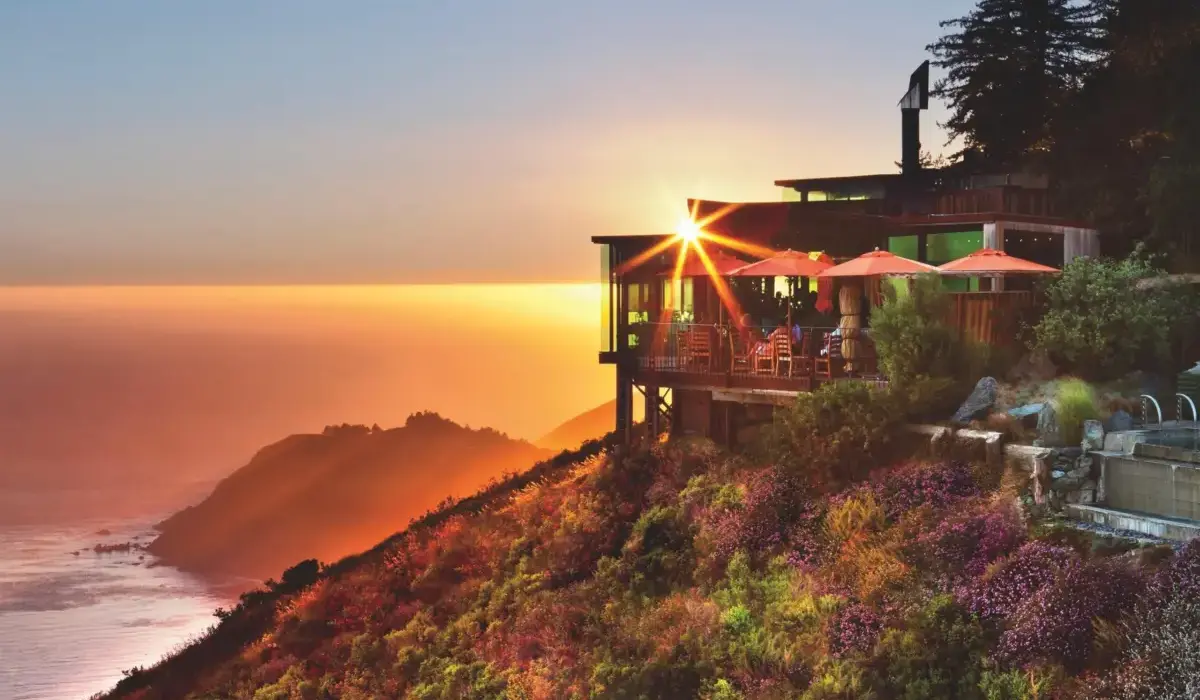
It is a brilliant fall day on Carter’s Creek in Irvington, Virginia, and a small group is hauling baskets of heavy oysters from the brackish waters, their hands working with the practiced curiosity of locals, though they are anything but. They aren’t traditional Chesapeake watermen earning a living on the bay; they are guests of the historic Tides Inn, and for them, this hands-on harvest is simply the best way they know to press pause on the relentless noise of their everyday lives and become fully present in this particular place and time. Meanwhile, thousands of miles away in the dappled light of a Big Sur, California, forest, a solitary meditator takes in deep lungfuls of crisp eucalyptus and salty ocean air, grounding themselves in the natural majesty of the Pacific coast. At the base of a nearby ancient live oak sits a freshly foraged, frilled chanterelle mushroom, carefully gathered and destined for the dinner table that very evening at the Post Ranch Inn’s renowned, award-winning restaurant, where the landscape is translated directly onto the plate.
These distinct yet culturally rich scenes capture a profound shift rippling across the hospitality industry. A new generation of travelers is eager to hit the road, check in, and truly destress, but they are approaching traditional resort vacations entirely on their own terms. Modern vacationers are increasingly rejecting the cookie-cutter, isolated resort experiences of the past, opting instead for properties that offer deep immersion into the surrounding environment, community, and heritage. Crucially, today’s discerning travelers expect that this authenticity will not come at the expense of luxury; they demand a seamless fusion of relaxation, exceptional cuisine, and vibrant local culture.
The modern hospitality landscape has responded vigorously to this evolution in traveler psychology. Whether a visitor’s ultimate escape looks like a tranquil maritime retreat on the shores of the Chesapeake Bay or a cliffside architectural marvel suspended between the redwood forests and the crashing waves of the Pacific Ocean, there is now a resort tailored precisely to those desires. The philosophy centers on the idea that luxury travel should nourish the mind, body, and palate simultaneously, removing the artificial barrier between the resort grounds and the surrounding destination. Guests are no longer content to simply look at a landscape from behind a window or a pool fence; they want to taste it, touch it, and participate in its daily rhythms.
Yet, even as travelers seek deeper meaning and relaxation from their journeys, the process of planning these intricate getaways has historically been a source of significant anxiety. The anticipation of booking flights, coordinating itineraries, selecting the right accommodations, and filtering through endless online options can sometimes induce the very stress that the vacation is intended to cure. Recognizing this friction, travel experts and industry observers have begun compiling essential professional strategies and insider tips designed to streamline the planning phase, ensuring that the entire travel experience—from the initial web search to the final checkout—is undeniably worth the journey.
This desire for meaningful engagement paired with effortless planning reflects a broader maturation in the tourism sector. Travelers are placing a higher premium on time, viewing it as their most valuable asset. Consequently, every hour spent on vacation must count, whether it is spent hauling oysters from a tidal creek in the Mid-Atlantic or meditating beneath the towering canopy of a California state park. The emphasis has shifted definitively away from passive consumption toward active, mindful participation. Resorts that understand this shift are thriving by offering curated programs that connect guests directly with local artisans, chefs, historians, and naturalists, transforming a standard hotel stay into an enriching cultural chapter.
As this trend continues to shape the future of leisure travel, the intersection of personalized escape and expert logistical planning remains the golden standard for the industry. By bridging the gap between immersive local experiences and stress-free preparation, the modern resort experience is redefining what it means to truly get away. Whether one is seeking the quiet solitude of a coastal forest or the communal warmth of a Chesapeake harvest, the path to genuine relaxation is clearer, more flavorful, and more accessible than ever before, inviting travelers to step out of their daily routines and into a world deeply connected to its surroundings.