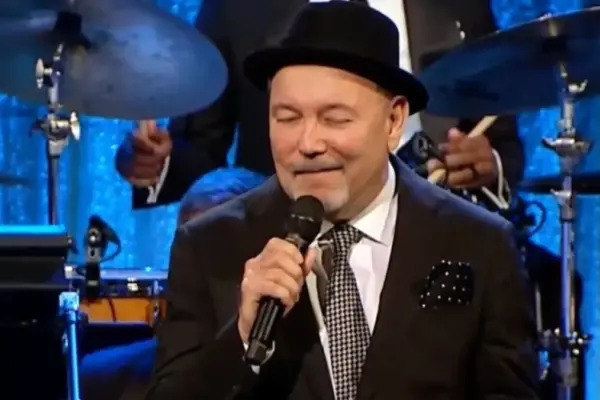








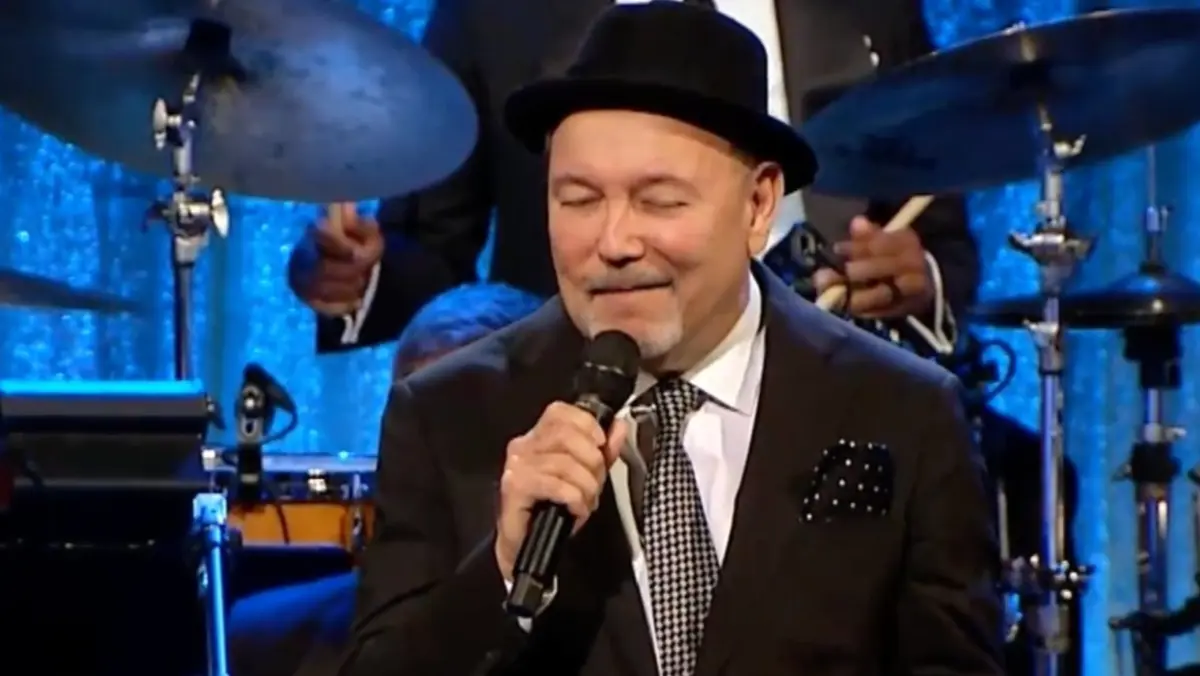
The legendary Panamanian singer, songwriter, and social activist Rubén Blades is set to receive the prestigious Billboard Icon Award at the upcoming Billboard Latin Music Awards. The ceremony, scheduled for October 22 in Miami, will celebrate a career spanning more than five decades—a remarkable journey that fundamentally transformed salsa music, expanding its cultural boundaries and proving that popular dance music could also serve as a profound vehicle for storytelling, political commentary, and social critique.
Blades, who has recorded over 25 albums, written hundreds of enduring songs, and collaborated with a vast array of artists across salsa, rock, jazz, pop, hip-hop, and reggaeton, has built a body of work that consistently defied easy categorization. By refusing to stay confined to a single musical lane, he continually pushed the genre into new artistic territory. The Billboard Icon Award is specifically designed to recognize artists whose careers have maintained enduring relevance over time and who have established themselves as fundamental reference points for their genre. Within the landscape of Latin music, few living artists embody that description with as much precision and historical weight as Blades.
Upon the announcement of the honor, Blades released a statement expressing his deep gratitude to everyone who has contributed to making his extensive body of work possible over more than fifty years. He noted with characteristic humility that true success is never achieved in isolation. Taking great care to acknowledge the musicians, arrangers, composers, and sound engineers who have collaborated with him throughout his storied career, Blades also offered special recognition to his longtime touring and recording partners of the last sixteen years, Roberto Delgado y Orquesta de Panamá.
Rubén Blades Did Not Follow the Genre, He Expanded It
To understand the magnitude of Rubén Blades’ contribution to music, one must look back to the vibrant and tumultuous salsa revolution that took hold in New York City during the 1970s. During this era, Blades emerged as a central and visionary figure in a movement that transformed a musical style deeply rooted in Caribbean tradition into one of the most politically charged, intellectually stimulating, and emotionally resonant sounds in the world. Rather than adhering strictly to the formulas that had defined traditional tropical music up to that point, he aggressively pushed the genre in entirely new directions.
Blades integrated sophisticated influences from American rock, jazz, pan-Latin folk traditions, and global sounds into a style that was unmistakably his own while remaining fiercely connected to the working-class immigrant communities that gave salsa its cultural foundation. His songs performed a vital double duty: they captured the vibrant textures of everyday urban life while simultaneously tackling heavy social and political issues that most popular music of the era systematically avoided.
With extraordinary specificity and a remarkable literary sensibility, Blades wrote compellingly about migration, institutional corruption, social displacement, romance, and political violence. In doing so, he elevated salsa from mere party music into a sophisticated vehicle for narrative storytelling. This unique fusion of high musical ambition and acute social consciousness defined his early work and has remained a constant, guiding principle throughout a career that has steadfastly refused to calcify into mere nostalgia or self-repetition.
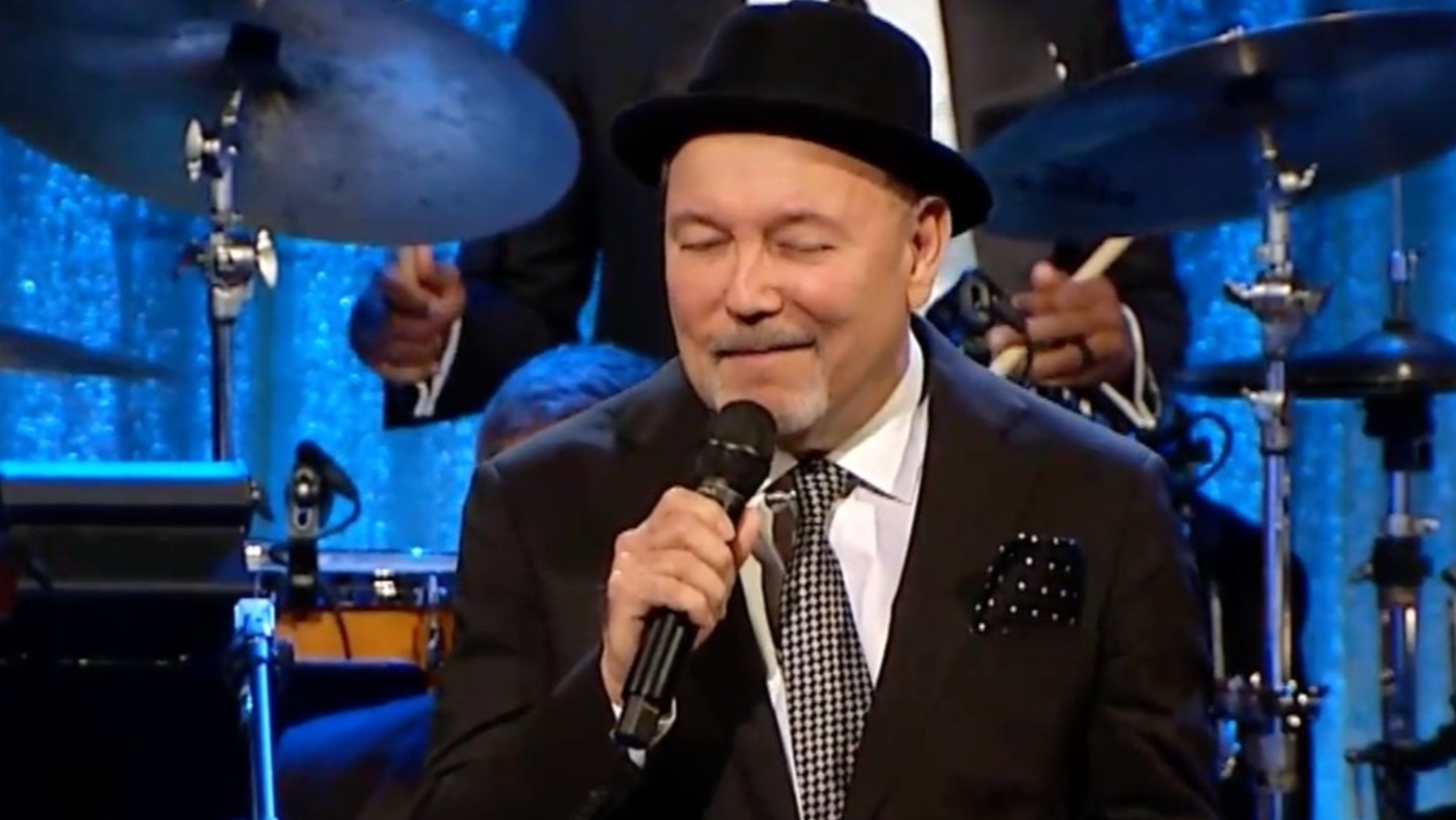
País Portátil Proves He Is Still Saying Something Worth Hearing
Unlike many legacy artists who eventually step back from contemporary creation to rely entirely on past hits, Blades continues to record new material and tour internationally on a rigorous schedule. This ongoing dedication serves as a powerful testament to what sustained artistic commitment looks like over the course of a lifetime. His most recent musical project, "País portátil," recorded and released in close collaboration with Roberto Delgado y Orquesta, exemplifies this relentless creative drive.
The album consists of eight interconnected songs that collectively address complex themes such as migration, corruption, institutional imprisonment, social responsibility, and lingering hope. These are the very same thematic territories that Blades has been mapping out and analyzing since the very beginning of his recording career, yet they are rendered here with the refined perspective and nuanced depth of someone who has lived long enough to witness historical cycles repeat themselves across the globe.
The album’s tightly interconnected structural design reflects a sophisticated compositional approach. Blades treats the entire collection as a single, extended musical work rather than just a loose grouping of individual commercial tracks. This holistic philosophy is entirely consistent with the way he has always conceptualized his art—viewing music as something much larger and more consequential than its individual component parts. "País portátil" stands as undeniable proof of the work of an artist who remains actively and urgently engaged with the world around him, rather than lazily coasting on the massive reputation and goodwill he built decades ago.
The Industry Finally Put a Name to What Everyone Already Knew
The upcoming Billboard Latin Music Awards will take place on October 22 in Miami, serving as the grand finale for a broader, industry-wide Latin Music Week running from October 19 through the 22nd. As a central highlight of the week’s events, Blades is scheduled to participate in an intimate and in-depth Icon Q&A session alongside Billboard’s Head of Content, Leila Cobo. This conversation will offer audiences, fans, and industry peers a rare, extended look into the intellectual and creative thinking behind a legendary career that has produced an astonishing volume of work across a dizzying array of artistic contexts.
The decision to award the Billboard Icon Award to Rubén Blades functions as formal industry recognition of something that the global Latin music community has understood for generations: that his influence permeates the genre in ways that can be difficult to fully account for because they are deeply structural rather than merely superficial. Countless artists who may never have cited him directly in interviews have nonetheless been profoundly shaped by the expansive precedent he established. He single-handedly redefined what Latin popular music could say and how effectively it could communicate those messages. Ultimately, the Billboard Icon Award serves as the formal industry acknowledgment of a monumental cultural contribution that never actually needed formal validation to be completely real.