



Growing up as a first-generation Dominican American in New Jersey, the cultural markers of home were not always grand or monumental. More often than not, they were woven into the background hum of everyday life—specifically, the steady, comforting glow of a television set casting light across the living room corner while dinner simmered on the stove.
In households like mine, the sonic landscape was a bustling orchestra of competing sounds. Spanish phrases from broadcast speakers blended seamlessly with the sharp clatter of pots and pans, overlapping family conversations, and the occasional lighthearted argument over who held the television remote. More often than not, the battle for the channel came down to a familiar rotation between Univision and Telemundo, the twin pillars of Spanish-language television in the United States.
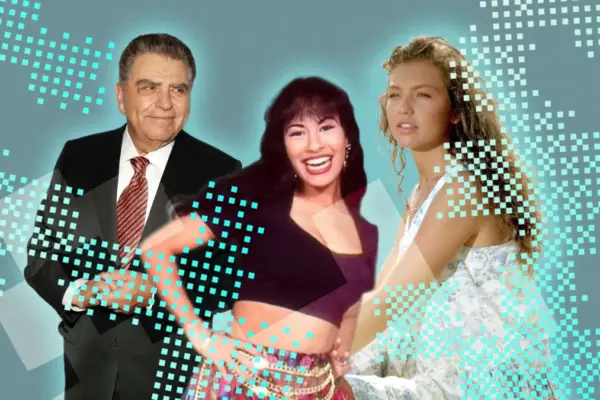
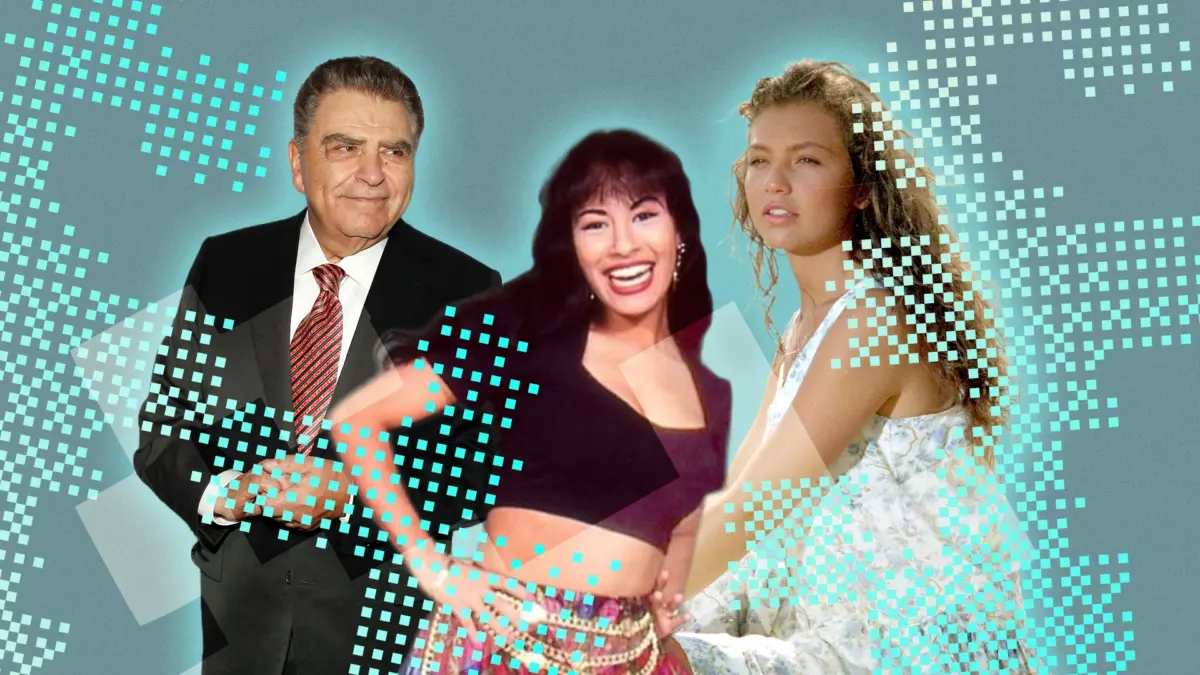
Those screens served as windows into a broader cultural universe. I remember the mesmerizing pull of Marimar, the classic telenovela starring Thalía and Eduardo Capetillo, which easily claimed the title of my very first television crush. I remember the anticipation that built up all week long for the weekend arrival of Sábado Gigante and its iconic host, Don Francisco, an entertainment staple that commanded the attention of the entire household. I remember the magnetic performances of Selena, whose music videos and televised interviews were replayed endlessly on our VCRs because my family simply never seemed ready to let those transcendent moments slip away.
There was something profoundly powerful about hearing the Spanish language spoken dynamically within the walls of our New Jersey home. Even when the dramatic storylines playing out on the screen did not mirror our exact experiences as a Dominican family, they still felt unmistakably familiar. The cadence of the expressions, the intricate family dynamics, the foundational humor, and the larger-than-life personalities all reflected pieces of a broader cultural fabric that we instinctively recognized and embraced.
Watching a broadcast like Marimar alongside my family was never a quiet, passive affair. My mother would inevitably shake her head in disbelief at a character’s disastrous decision, prompting someone else in the room to immediately chime in with a knowing, "¡Te dije que eso iba a pasar!" Within moments, the room would fill with a cacophony of overlapping voices, echoing laughter, gentle teasing, and spirited debates over who among the characters—and the viewers—was actually right.
That exact energy was entirely interchangeable with the atmosphere of any standard Dominican family gathering. It mirrored the sound of the adults laughing heartily over generations-old stories, passionately debating everything from the latest neighborhood gossip to the dramatic plot twists unfolding on television. Someone was always calling out from down the hall or another room, and somehow, within seconds, everyone was actively looped into the conversation. The television show might not have explicitly told a Dominican story, but watching it surrounded by my mother and the rest of my relatives always felt like home.
Marimar was produced in Mexico, not the Dominican Republic, and Selena was a celebrated Mexican American icon. Yet, cultural connection does not always rely on literal, direct representation. Sometimes, it is forged purely through recognition—finding shared emotional truths within art created by others across the diaspora.
At the time, none of us thought of those ordinary weeknight or weekend evenings as an intentional exercise in cultural preservation. We were simply an immigrant family watching television together in New Jersey. It is only with the perspective of decades passing that I have come to realize how those seemingly mundane moments were actively teaching me who I was, where my family came from, and how to navigate the space in between.
For countless immigrant families across the United States, Spanish-language broadcast media functioned as far more than mere evening entertainment. It acted as an essential bridge, spanning the vast chasm between the homeland our parents had left behind and the unfamiliar American landscape where we were learning to grow up. For my Dominican family, these programs helped us tightly grip our native language, our music, our distinct humor, and an enduring connection to the Caribbean, all while we diligently worked to build a stable life stateside.
This was the undeniable magic of appointment television. We tuned in simply because a program was scheduled to air at a specific hour, and it organically integrated itself into our family dialogues because we had all experienced it collectively. I could navigate the English-dominant world of my local school system all day and return home to a living room completely enveloped in Spanish. I was growing up in New Jersey while simultaneously absorbing vibrant pieces of Latin America and the Caribbean directly from our living room screen. I never had to choose between being proudly Dominican and being a kid from New Jersey; I was seamlessly allowed to be both.
Even today, hearing the distinct opening notes of the Marimar theme song instantly transports me back to those evenings of shared family warmth. Yet, the mechanics of how we consume television and media have radically transformed over the years. The era of waiting patiently for a scheduled broadcast or gathering physically in a living room to negotiate what everyone would watch together has largely faded. Today, content is streamed individually on personal devices whenever time permits. When something modern makes me laugh or triggers a sudden wave of nostalgia for home, I still share it with my relatives, though that sharing now typically takes the form of a quick digital clip or a meme dropped into our family group chat.
The underlying emotional connection remains intact, but its physical shape has fundamentally evolved. When I was growing up, a dramatic telenovela twist, a powerhouse musical performance on Sábado Gigante, or a poignant song broadcast across the nation would automatically become tomorrow’s family conversation without anyone needing to plan it. Everyone had watched the exact same broadcast; everyone walked away with a distinct opinion. Today, amid a landscape of endless choices, algorithmic feeds, and hyper-personalized content, we may watch completely different shows, follow entirely different creators, and encounter our culture through vastly disparate pathways. Shared cultural moments have not vanished entirely, but they have undeniably become less automatic.
At the same time, a new generation of Latino creators is no longer waiting around for traditional gatekeepers to grant them representation; they are actively building that representation themselves. A young Dominican child growing up in New Jersey today can unlock their smartphone and immediately tap into a thriving, hyper-specific digital community that mirrors their exact lived experiences. That level of direct access and creative freedom is something I would never trade.
And yet, a part of me still deeply misses the collective ritual of us all watching the exact same screen together.
While media platforms have rapidly expanded far beyond traditional telenovelas and variety shows to encompass TikTok, independent podcasts, YouTube channels, and subscription streaming services, my fundamental desire for connection has remained entirely unchanged. I still yearn to encounter something that reminds me of home—and to share that exact experience with the people who made my upbringing feel like home in the first place.
For those of us who grew up navigating life between two distinct cultural worlds, heritage is passed down through far more than just the verbal stories we tell about our ancestral homelands. It lives and breathes in our native language, our family recipes, our enduring music, and the quiet, ordinary moments we carve out to spend together.
For me, that cultural anchor lives permanently in the memory of a television glowing brightly in a New Jersey living room, filling the air with the cadence of Spanish. I once mistakenly believed those programs were just passive entertainment. Today, I understand that what truly shaped me was not simply what we watched on that screen, but the fact that we were watching it together as a family.
We possess more technological avenues to connect with our cultural roots today than at any point in history. The ongoing challenge, however, lies in figuring out how to keep those vital connections shared. Culture is never merely something we quietly consume; it is something we actively experience, remember, and pass on to the generations that follow.