






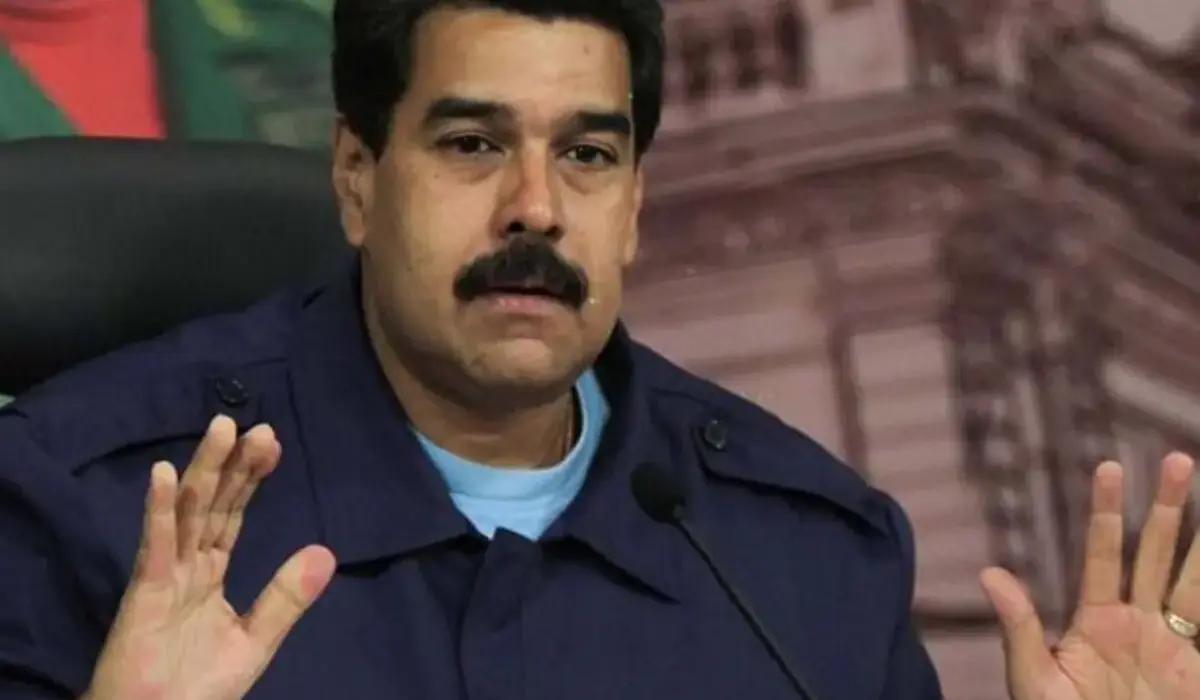
Former Venezuelan President Nicolás Maduro and his wife, Cilia Flores, are facing severe new legal jeopardy in the United States after federal prosecutors unveiled a superseding indictment charging the couple with conspiring to torture political opponents. According to U.S. authorities, the gruesome measures were systematically deployed to preserve their grip on power amid mounting domestic dissent and international pressure.
The development marks a significant escalation in the ongoing high-profile criminal case playing out in a New York federal court. Maduro and Flores have been held at a high-security detention center in Brooklyn, New York, since they were captured during U.S. strikes in Caracas in early January.
The new charges, made public on Thursday by federal prosecutors in Manhattan, add to an already extensive criminal docket that includes charges of narco-terrorism, conspiracy to import cocaine, and serious firearms offenses. Notably, while Flores was initially excluded from the narco-terrorism count when the initial wave of charges was unsealed, Thursday’s superseding indictment officially added her to that charge as well.
The expansion of the case coincided with a setback for the defense team in court. On the same day the new indictment was released, a federal judge formally denied a request to transfer Flores to house arrest on health grounds, ensuring that both defendants will remain behind bars as the legal proceedings advance.
During a media briefing outside the courthouse on Thursday, prosecutors outlined the scope of the latest allegations, revealing that the new torture charge specifically covers the alleged abuse of nine individuals, three of whom are United States citizens.
According to the text of the superseding indictment, Maduro and Flores presided over an institutionalized system of state repression that relied heavily on brutal violence directed against the political opposition. The court documents allege that this apparatus utilized arbitrary detentions and the systemic torture of detainees, including American nationals trapped within the regime’s security network.
The methods of torture detailed in the federal indictment paint a harrowing picture of state-sponsored violence. The document explicitly lists electric shock, asphyxiation, rape, forced nudity, prolonged isolation, severe starvation, confinement in punishment cells, and calculated psychological torture. Prosecutors noted that the psychological abuse frequently involved horrific threats to murder the victims’ families if they did not cooperate or cease their opposition activities.
“Maduro, Flores and other high-ranking members of their inner circle used a violent system of torture and repression to maintain their power,” Jamie McDonald, the top federal prosecutor in Manhattan, told reporters outside the courthouse following the announcement of the indictment.
Maduro and Flores’ Response
Legal representatives for both defendants have pushed back against the gravity of the accusations, signaling that they intend to mount a vigorous defense in court.
“President Maduro denies the charges in the new indictment and looks forward to his day in court,” said Barry Pollack, the lead attorney representing the former Venezuelan leader.
Similarly, the legal team representing Cilia Flores maintained their clients’ innocence regarding both the legacy charges and the newly added counts. “We look forward to fully responding to the allegations in court at the appropriate time,” Flores’ lawyers, Mark Donnelly and Andres Sanchez, said in a joint statement.
Legal analysts point out that the cumulative weight of the federal indictment carries staggering potential penalties. If convicted on all counts currently before the court, both Maduro and Flores would face a mandatory minimum sentence of 50 years in prison, effectively meaning life behind bars given their ages. The couple had already formally entered pleas denying the earlier accusations brought against them by U.S. authorities and have now formally rejected the new torture allegations through their defense counsels.
Torture Accusations and International Context
While the federal indictment in New York represents the first time Nicolás Maduro has faced direct criminal charges over allegations of torture, the accusations themselves are far from new. For years, domestic human rights organizations, prominent international watchdogs, and bodies such as the United Nations have documented and repeatedly accused Maduro and his administration of widespread human rights violations and systemic torture.
The shadow of international accountability has followed Maduro across borders for several years. In recent times, Venezuelan citizens who fled their homeland to live as political refugees in Argentina filed formal criminal complaints against Maduro in Buenos Aires courts. Those complaints accused the former president of crimes against humanity, detailing specific, harrowing episodes of torture suffered by dissidents under his rule.
The momentum of those regional efforts culminated in 2024, when a Buenos Aires federal criminal court issued a landmark order directing Interpol to immediately arrest Nicolás Maduro alongside other key members of his administration. The Argentine court sought their extradition to Buenos Aires to face intensive criminal investigations into allegations of torture, kidnapping, and murder. Investigators in that case argued that these acts were carried out as part of a centralized, “systematic plan” enacted against the Venezuelan populace, which they alleged had been running since at least 2014.
That legal maneuver relied heavily on the legal doctrine of “universal justice,” a principle recognized in Argentina that permits national judges to investigate and prosecute grave international crimes committed outside the country’s physical borders. It marked the very first time an international arrest warrant had been issued for Maduro and his top government officials. Ultimately, however, that specific judicial avenue in Argentina did not move forward to fruition, leaving the current federal prosecution in New York as the primary legal battleground addressing the long-standing accusations of state-sanctioned violence.