










For an entire generation of television viewers, the long-running animated series Arthur served as much more than a simple cartoon about a cheerful aardvark and his diverse circle of friends. Based on the beloved book series by Marc Brown, the show established a familiar, comforting little world that reflected the nuances of growing up, navigating childhood friendships, and understanding the communities around us. In 2001, that familiar world expanded in a meaningful way, making literal room for a brand-new family moving in right next door to the Read household.
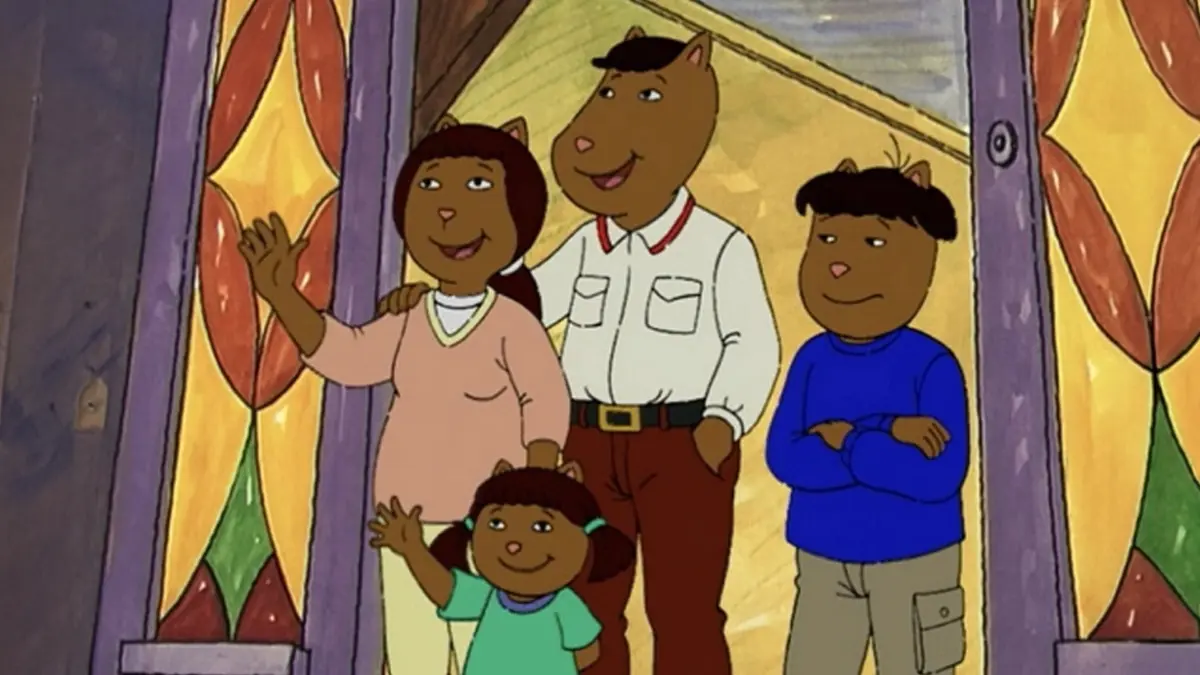
In the memorable episode titled “Arthur and Los Vecinos,” viewers are introduced to the Molinas, a vibrant family originally from Ecuador who settle into Elwood City. The household consists of Mr. Ramón Molina and Mrs. Molina, their 13-year-old son Alberto, their lively 3-year-old daughter Vicita, and the family dog, Amigo. Their arrival injects a fresh dynamic into the neighborhood, providing Arthur and his family with an organic opportunity to reach out, extend a welcome, and get to know their new neighbors. Rather than arriving as a superficial addition to the cast, the Molinas immediately establish roots with their own distinct lives, daily routines, and cultural backgrounds.
As the narrative unfolds, the daily rhythms of the Molina family become clear. Mr. Ramón Molina runs a local establishment appropriately named Cafe con Leche, contributing to the small-business fabric of the community, while Mrs. Molina shares her passion and talent by teaching dance at the local community center. When Arthur’s family visits to welcome them to the neighborhood, the two families begin laying the groundwork for a genuine friendship. It is a warm, everyday kind of introduction that resonates deeply with viewers—not orchestrated as a grand, preachy educational lesson, but rather depicted simply as neighbors opening their doors, sharing a cup of coffee, and making room for one another in a growing community.
The cultural exchange between the families extends even down to their canine companions. The Molinas arrive with their pet dog, Amigo, whose presence leads to a charming cultural and linguistic realization for Arthur’s family pet, Pal. Through interactions with Amigo, Pal learns that dogs raised in Latine households do not just communicate with the traditional English "woof," but instead express themselves with the Spanish-equivalent "guau." While the Molinas first step onto the screen in “Arthur and Los Vecinos,” their presence in Elwood City does not end with a single introductory storyline. Instead, the family becomes integrated into the broader fabric of the series, making appearances in several subsequent episodes, including “Dear Adil” and “Dancing Fools.”
Alberto’s narrative arc, in particular, continues to develop well beyond that initial neighborhood meeting. He brings distinct hobbies and passions to the show, most notably a cherished soccer ball that he affectionately calls “El Boomerang.” The ball carries special significance for the young sports fan, as it is signed by the fictional Ecuadorian soccer player Juan-Carlos Salamanca. This detail anchors Alberto in a relatable adolescent reality, complete with prized possessions and athletic interests that help define his character beyond his cultural background.
Later in the series, in the episode “Dear Adil,” Alberto’s role expands to challenge both Arthur and the audience to think more critically about cultural stereotypes and media representation. The storyline is catalyzed when Arthur reads a comic book featuring a reductive and exoticized depiction of a golden Mayan temple located in Ecuador. Rather than letting the inaccurate depiction pass quietly, Alberto speaks up, pushing Arthur to look closer at how cultures are portrayed in media and prompting a thoughtful conversation about accuracy, respect, and the importance of authentic storytelling.
These thoughtful narrative details ensure that the Molinas are given far more than a fleeting cameo or a token appearance. They are meticulously written as a fully realized family equipped with their own unique interests, professional pursuits, humor, and distinct worldviews. When misconceptions arise, characters like Alberto are given the agency to speak up and correct the record when a portrayal gets something wrong. For the many viewers who are now revisiting Arthur as adults, that specific standard of thoughtful, grounded representation remains a notable milestone worth remembering and celebrating.
Reporting by Anna Ortega.