








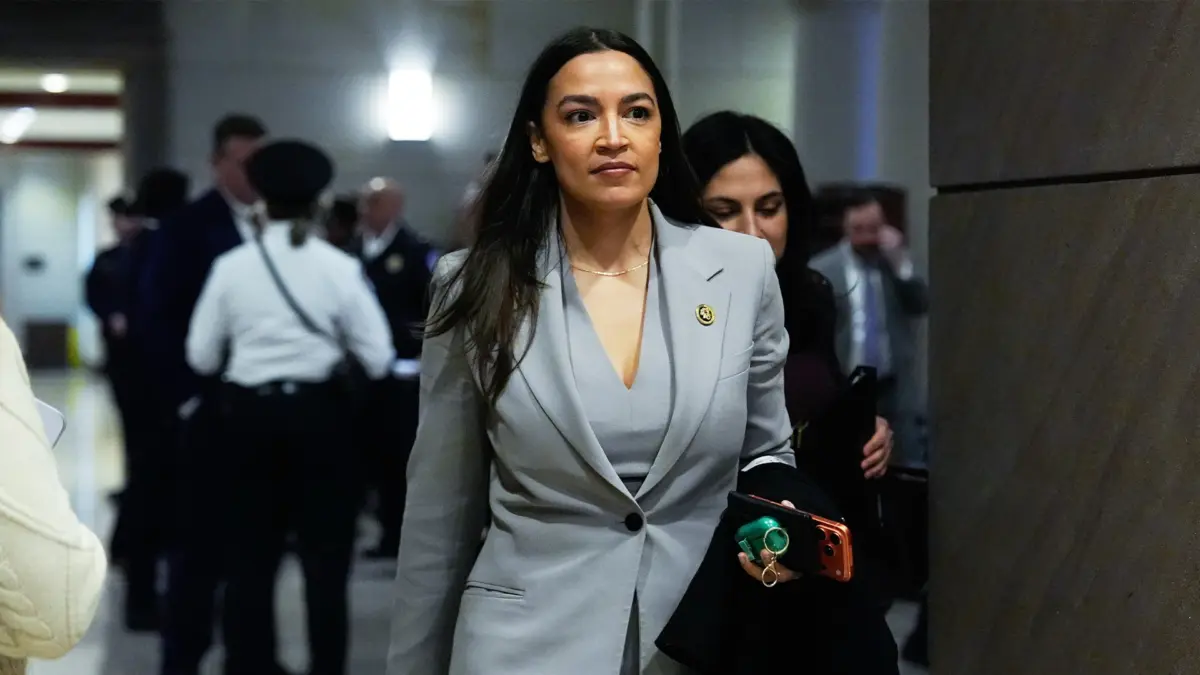
Beyond the personal milestone, Ocasio-Cortez addressed the broader cultural and political implications of sharing such an intimate medical choice in the public eye. As a high-profile progressive politician who has frequently been the subject of intense media speculation, including persistent rumors regarding a potential future presidential run, the congresswoman acknowledged that stepping forward with this information carried deliberate risks.
Addressing her followers in an Instagram story, she reflected on the unique scrutiny faced by women in leadership who speak openly about family planning. "There is, very strangely, a political risk—or a political tax—that comes with sharing this info," she noted, while also directly touching upon the wave of public speculation regarding her political future.
Ocasio-Cortez has long been a vocal and steadfast champion of abortion access and comprehensive reproductive rights. By choosing to share her own fertility journey, she is now actively working to spotlight a crucial, yet frequently overlooked aspect of the broader reproductive healthcare conversation: actual access to modern fertility treatments. While political debates often center strictly on contraception and abortion, the conversation rarely expands to include the financial hurdles women face when trying to preserve their reproductive options for the future.
Cutting straight to the heart of the matter, the congresswoman pulled back the curtain on the financial burden of the procedure. "Cutting straight to the chase, one of the things that was most stressful for me, as well, when I was considering doing this […] is cost," she shared with her followers. Highlighting a harsh reality familiar to millions of working women, she added, "My insurance does not cover one penny of this. It is 100 percent out of pocket."
This financial stress is a barrier known intimately by many women who have navigated the fertility preservation system. For many, the decision-making process is fraught with difficult financial compromises. For instance, the experience of considering and ultimately undergoing the procedure highlights the exact tension Ocasio-Cortez described. Many women find themselves first weighing the possibility of freezing their eggs in their late twenties, only to revisit the idea years later as biological clocks tick and financial circumstances shift.
Often, the primary obstacle is not a lack of understanding or emotional readiness, but pure economics. At certain stages of life, women are forced to confront stark financial realities, such as choosing between exhausting precious savings to fund a single round of egg freezing—which can easily cost between $10,000 and $15,000—or securing basic life stability, such as putting down money for an independent apartment. Many desire both: the luxury of more time to figure out motherhood, perhaps as a single woman, and the financial stability required to build a secure life. Yet, for a vast majority, affording both simultaneously remains completely out of reach.
For some, breaking through this financial barrier only happens through a convergence of timing and professional fortune. For example, after years of going back and forth, some individuals finally reach a definitive clarity about their desire to become mothers later in life, such as at age 39. Around that same time, professional opportunities—such as being assigned through a media job to document an egg-freezing journey for a publication and social media series—can completely change the equation. Through such rare arrangements, major fertility companies might cover the full cost of treatment.
For those who benefit from such circumstances, it is often recognized as the sole reason the procedure was possible. While some might attribute such a break to luck, and others to personal faith or divine timing, the underlying takeaway remains universal: access to advanced fertility preservation should not depend on winning a professional lottery.
This is precisely why Ocasio-Cortez’s transparency holds such significant value. By breaking down the financial components of the process, she pointed out that egg freezing typically involves two major out-of-pocket expenses: specialized medications and the surgical clinic procedure itself. While her estimated total would likely fall between $8,000 and $9,000, others have faced projected costs reaching closer to $15,000. Regardless of the exact figure, the undeniable truth is that the vast majority of working women simply do not have thousands of dollars in disposable income readily available to absorb these costs.
Furthermore, within specific cultural communities, this conversation intersects with deeply entrenched social myths. For Latinas, there is an additional, distinct layer of misinformation to contend with. Many grow up hearing persistent cultural myths dictating that Latinas are naturally and endlessly fertile. It is not uncommon for women to be reassured by family or community members that they will be "fine" simply because they are Latina, or because older generations of women in their families successfully bore children later in life.
However, biological fertility is never guaranteed for anyone. In the modern era, a multitude of compounding factors—ranging from persistent healthcare inequities to daily environmental stressors and broader economic pressures—shape and often diminish an individual’s natural ability to conceive as they age.
Statistically, Latinas are frequently among the demographic groups least informed about the realities of declining fertility, while simultaneously being the least likely to possess the financial resources required to afford fertility preservation treatments. If society and the healthcare industry are going to champion the narrative that egg freezing provides women with greater reproductive autonomy and choices, an honest evaluation must also address whether those choices are genuinely accessible to everyone, or merely a luxury reserved for the affluent.
The availability of fertility treatments should never depend on working for a progressive company with specialized healthcare riders, sitting on thousands of dollars in personal savings, or simply having a unique professional opportunity fall into one’s lap.
For many Latinas, the barrier has never been a lack of awareness or education regarding biological timelines. Conversations about family planning and fertility often begin early, sometimes prompted by major life transitions, such as the end of a long-term relationship in one’s twenties. The missing piece of the puzzle has never been information; the missing piece has always been access.
As public figures like Alexandria Ocasio-Cortez continue to bring these private struggles into the public square, the dialogue surrounding reproductive healthcare is forced to expand. If society truly believes that women deserve authentic choices regarding when, how, and under what circumstances they choose to become mothers, those choices must move beyond abstract concepts and become tangible realities within financial reach for every woman.