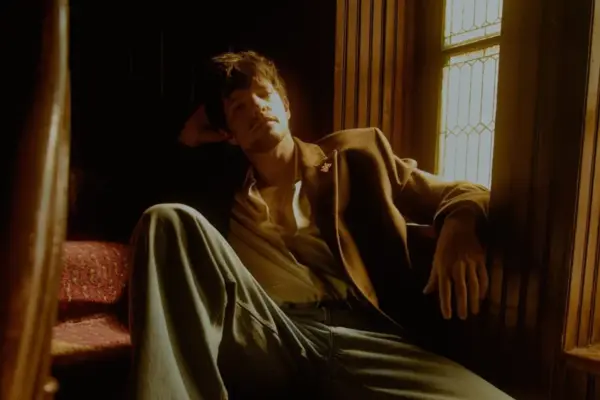










Being part of one of the most renowned and influential dynasties in Mexican music is a distinction that comes with immense prestige, but it is certainly no easy feat. For 27-year-old singer-songwriter Leonardo Aguilar, carrying the legacy of the Aguilar family in recent years has meant navigating a wave of intense public scrutiny, social media criticism, and widespread accusations.
The pressure of public opinion is something Aguilar openly admits has impacted him profoundly, affecting both his personal well-being and his professional momentum. At times, the weight of the commentary made him hesitate and think twice before sharing new art with the world. However, after years of introspection, therapy, and creative redirection, the young artist has decided to set his fears aside and push forward with renewed purpose.
"There were many years of negative comments that made me put my career on hold — but at this point, I don’t want to live with that anger anymore," the son of legendary Mexican icon Pepe Aguilar and brother of acclaimed singer Ángela Aguilar tells Billboard Español. "I’ve been through a lot of blows, but that shouldn’t stop me anymore. I’ve overcome that fear because there are things that are not in my hands to resolve; my music is."
Marking this definitive new chapter, Aguilar released his fourth solo studio album, Esquina 22, on Thursday night (Nov. 5). Distributed by Virgin Music Latino and released through the independent label Machin Records, the 10-track project serves as a deeply personal statement. The record features fresh renditions of iconic ranchera songs such as "Las Rejas No Matan," "A Pesar de Todo," and "Acepto Mi Derrota," alongside original compositions like "Nada Pa’l Futuro" and "Canción de Rancho," the latter featuring a special collaboration with renowned artist El Komander.
"I created very different versions of the classics. It’s not about trying to be like someone else," Aguilar reflects. Speaking on his collaboration with El Komander, he notes that he "never imagined I’d be able to sing with one of my idols."
Roots and Inspiration at Rancho El Soyate
The title of the album, Esquina 22, holds deep personal significance, taking its name from an emblematic street located in the small town of Tayahua, Zacatecas, where the Aguilar family ranch sits. Aguilar currently resides on the property, and the tranquil yet vibrant rural environment has served as the primary inspiration for this fresh stage in his artistic journey.
The album was expertly produced by Alfonso De La Cruz Pekas, a celebrated songwriter known for crafting major hits for prominent regional Mexican acts such as Julián Álvarez, Calibre 50, and Banda Los Recoditos.
Speaking from the peaceful surroundings of Rancho El Soyate—a location that has also achieved fame in recent years for its triumphs in charrería, the traditional Mexican equestrian sport—Aguilar sat down with Billboard Español to discuss his creative process, the challenges he has faced, and how he has learned to navigate the complexities of life in the public eye.
Reflecting on the family’s recent competitive season in charrería, where Rancho El Soyate narrowly missed defending their title at the National Charro Championship after winning last year, Aguilar addresses whether the outcome caused frustration among the family.
"Yes, it was very intense — especially because everything seemed to be pointing toward a victory, but it didn’t happen," he explains. "The competition was very strong. When someone else does something better than you, there’s no reason to get upset. The El Soyate team is very good, but this time it didn’t work out."
Maintaining these cultural pillars is vital to the younger generation of the Aguilar family, including Leonardo, his sister Ángela, and his brother-in-law Christian Nodal. For Aguilar, preserving traditions like charrería and regional Mexican music is more than an obligation; it is a source of community pride.
"Besides what you mention, charrería brings a lot of satisfaction to those who compete, to the team members and to the fans. It’s a beautiful environment," Aguilar shares. "Plus, we’re supporting traditions, the culture of artisans, trainers, veterinarians, horse handlers — everyone."
An Honest and Diverse Musical Direction
When asked if he views the responsibility of passing traditional Mexican music down to new generations as a heavy burden, Aguilar is quick to reframe the narrative.
"It’s not a responsibility when it’s something you like, feel and love," he states. "For example, with this new album, Esquina 22, I enjoyed carefully selecting the songs. I had a lot of songs to choose from and it was challenging, but in the end, the album turned out to be very diverse and, above all, I consider it to be very honest."

Elaborating on what makes the project authentic, Aguilar emphasizes his genuine connection to rural life. "That what I interpret and want to convey is real. I didn’t grow up on a ranch, but I know the ranch life very well. I’m currently in Tayahua; I live here — it’s my home, I’m not just visiting. I’m not pretending to live on a ranch, I’m not pretending to be from the countryside; I live it and express it in my songs. I didn’t choose songs about things I haven’t experienced. People can tell when the lyrics don’t resonate with you."
The creation of the duet with El Komander stands out as one of the defining moments of the album’s production. Aguilar recalls running into the singer at a charro tournament in Puerto Vallarta. Inspired by the encounter, he reached out to songwriter Eduardo Gurrola to request a corrido detailing horsemen, complete with references to chaps and saddles. After refining the track, Aguilar connected with El Komander through a mutual friend, sent him "Canción de Rancho," and secured the collaboration.
Musically, Esquina 22 leans heavily into a ranchera-style banda sound. "All the arrangements were done by [Alfonso de la Cruz] ‘Pekas.’ He’s from Sinaloa, and has a lot of experience," Aguilar notes. "I love this album because it captures those moments of camaraderie, of drinking, when we’re all feeling down or tired and just want to have a good time or enjoy a street-side drinking session."
Amidst shifting musical trends, including the massive popularity of corridos tumbados, Aguilar remains steadfast in his choice of genre. He points out that audiences consume music differently depending on the region and context.
"When you look at social media, people might think that one thing works better than another, but that’s relative," he observes. "For example, here in Tayahua, you’ll see some people listening to Vicente Fernández or Antonio Aguilar, and others listening to corridos tumbados. It’s not the same as the lineup of a small-town fair in Zacatecas, where artists might have up to 100 shows a year without much recognition, compared to something like the Feria de Aguascalientes, which gets a lot of exposure. There’s no single reality; there are many realities."
Confronting the Narrative and Looking Forward
Defending an independent artistic identity while bearing a famous last name has proven difficult, but Aguilar is increasingly choosing to focus his energy on supporters rather than critics.
"I no longer want to convince anyone that I’ve been working on my own project since 2017. Back then, I even went into Espinoza Paz’s dressing room to ask him for a song," he recalls. "There are many projects Ángela and I have done without my dad, though we still seek his advice and he guides us. But there are many people for whom it’s more convenient to believe the narrative that everything was handed to us. That’s fine, it doesn’t matter; changing someone’s opinion is very difficult. I’d rather focus on the people who want to listen to my music. Luckily, today many people who ask me for a photo call me by my name and no longer just say, ‘Pepe Aguilar’s son.’"
While Esquina 22 reflects a distinct artistic maturity, Aguilar acknowledges that he still wants his audience to engage with his work with fresh eyes and ears.
"It’s important to clarify that not having anything to prove doesn’t mean I’m not interested in people hearing my music. This is an ecosystem: without them, this wouldn’t make sense," he explains. "I want the audience to give me a chance, and yes, I want people who may have seen me before and thought I was arrogant to see me now at 27 and say, ‘Oh, look, he has a different mindset now.’"
Achieving this personal growth required confronting his own past demeanor and working through external pressures with the help of professional guidance.
"I have to admit that I wasn’t pleasant before. Honestly, I had a lot on my mind that, thank God, I’ve been working through with therapy," Aguilar shares candidly. "There were many years of negative comments that made me put my career on hold, but at this point, I don’t want to live with that anger anymore. I’ve been through a lot of blows, but that shouldn’t stop me anymore. I’ve overcome that fear because there are things that are not in my hands to resolve; my music is."
He adds, "I’ve learned from the mistakes made in the family, and I accept that there are things that need to be fixed. More than anything, I wish that the hate I receive would turn into support."
Looking ahead, Aguilar remains open to future creative partnerships with his sister Ángela and brother-in-law Christian Nodal, noting that they frequently collaborate behind the scenes and share songwriting ideas. For now, he is already setting his sights on the future, actively working on a brand-new album and a planned collaboration with Moy Bobadilla.