











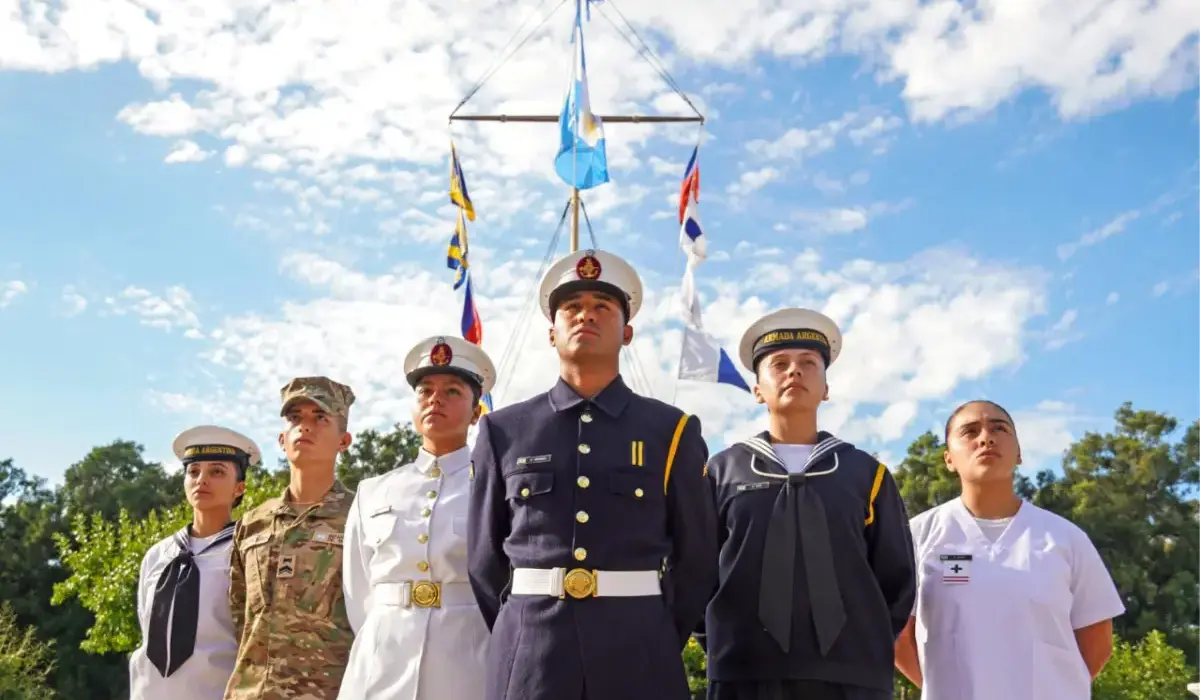
In a sharp escalation of bilateral tensions, Iran’s Foreign Ministry announced on Wednesday that it has officially classified the Argentine Navy and the Argentine Air Force as "terrorist organizations."
The retaliatory move by Tehran comes directly in response to the aggressive foreign policy stance adopted by libertarian President Javier Milei. Specifically, the designation follows the Argentine government’s decision to include Iran’s Islamic Revolutionary Guard Corps (IRGC) on its national registry of designated terrorist groups.
Justifying the unprecedented measure
on the grounds of diplomatic and strategic reciprocity, Iranian authorities issued a stern warning to Buenos Aires, declaring that the South American nation would ultimately have to "bear the consequences" of its actions.
According to an official statement released by Iran’s Foreign Ministry, the designation is legally backed by a controversial 2019 Iranian domestic law. This legislation explicitly provides the framework and legal authority for Tehran to take punitive actions against any foreign government that supports, endorses, or mirrors the United States’ decision to designate the Islamic Revolutionary Guard Corps as a foreign terrorist organization.
"The Argentine Navy and the Argentine Air Force are subject to the provisions of the aforementioned law and are hereby designated as terrorist organizations," the Iranian authorities stated in the official communique.
Furthermore, Tehran condemned Buenos Aires’ policy shift as overtly "hostile," issuing a sweeping warning that the Argentine government would bear full responsibility for all downstream ramifications arising from the designation. Despite the severity of the language and the symbolic gravity of labeling a foreign sovereign military as a terrorist entity, Iranian officials refrained from detailing what specific operational or diplomatic steps Tehran might take next in pursuit of this policy.
A Long History of Tensions and Historical Grievances
The latest diplomatic rupture does not occur in a vacuum; rather, it stems from a deeply troubled historical relationship and a fundamental reorientation of Argentine foreign policy under President Milei. The immediate catalyst for the current standoff was Milei’s decision earlier this year to formally add the IRGC to Argentina’s domestic registry of terrorist organizations.
The Argentine government justified the contentious March announcement by pointing to extensive official judicial and intelligence reports linking the powerful Iranian military branch to international criminal networks and catastrophic terrorist attacks carried out directly on Argentine soil.
Chief among these historical grievances are two of the darkest moments in modern Argentine history: the March 1992 bombing of the Israeli Embassy in Buenos Aires and the devastating July 1994 attack on the Argentine Israelite Mutual Association, widely known by its Spanish acronym, AMIA.
The 1992 embassy bombing resulted in the deaths of 29 people, while the AMIA bombing two years later proved even more catastrophic, killing 85 people and injuring hundreds more. For decades, the Argentine judiciary has pursued justice for these atrocities, ultimately attributing operational planning and logistical responsibility to members of the Iranian regime and the Lebanon-based militant group Hezbollah.
Efforts by Argentine prosecutors and international investigators to bring high-ranking Iranian officials to justice have continually stalled due to Tehran’s refusal to cooperate or extradite suspects, leaving an enduring scar on the collective consciousness of the Argentine public and creating an institutional barrier between the two nations.
Under President Milei, who has charted a staunchly pro-Western foreign policy course closely aligned with the United States and Israel, Buenos Aires has broken from the more ambiguous or conciliatory diplomatic approaches favored by some previous administrations. This recalibration has quickly translated into aggressive countermeasures.
Beyond the IRGC terrorist designation, relations between Buenos Aires and Tehran deteriorated sharply in April, when the Argentine government expelled Iran’s top diplomatic representative in the country, Mohsen Soltani Tehrani, signaling a profound downgrade in bilateral engagement.
The invocation of the 2019 retaliatory law by Tehran also mirrors similar moves made against other Western powers. In early November, Iran took an identical step against the United Kingdom, applying the principle of reciprocity to designate the Royal Navy and the Royal Air Force as hostile actors, while simultaneously describing the British intelligence agency MI6 as a terrorist group. In both the British and Argentine cases, Iranian authorities have relied on the same domestic legal mechanism to project strength and retaliate against perceived slights from Western-aligned nations.