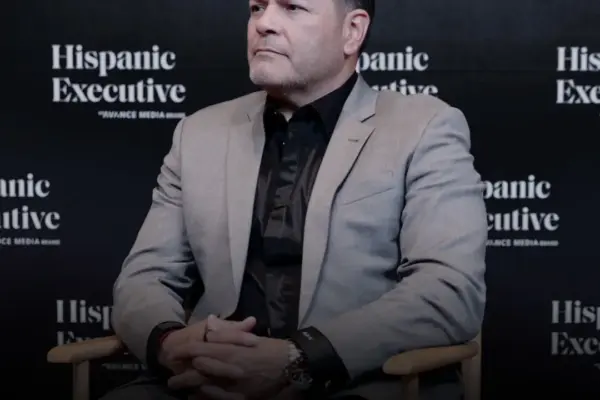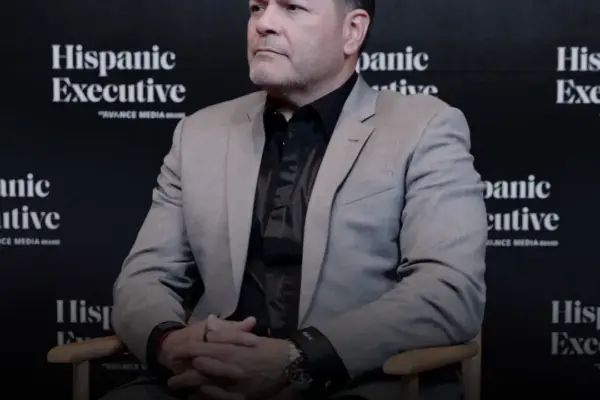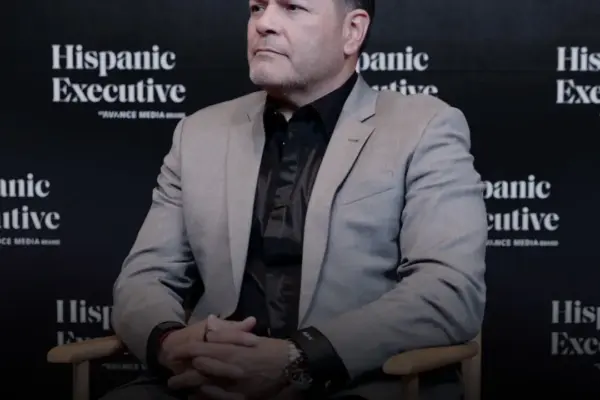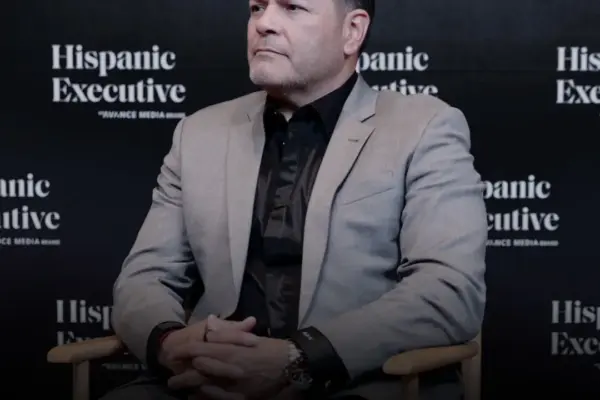












At the AVANCE Global event in Las Vegas, filmmaker Dito Montiel transported the audience back to his formative years in New York City’s gritty hardcore punk scene. Recalling those early days with a touch of humor, he noted that his band wasn’t particularly skilled at playing Led Zeppelin covers. Rather than letting their lack of polished musicianship hold them back, they took matters into their own hands: they wrote their own original songs, organized their own underground shows, and figured out the complexities of the industry along the way.
Decades and ten feature films later, that same do-it-yourself mentality continues to define and shape his professional work.
"You could make a movie on your iPhone," Montiel said during the event, reflecting on just how accessible modern filmmaking tools have truly become. His core advice to aspiring creators was remarkably simple: stop waiting for a major studio to call and start creating your own projects right now.
His lived experience and modern perspective raise a profound question that extends far beyond the glitz and glamour of Hollywood: Can having fewer options actually make us more creative?
Decades of psychological and organizational research suggest that, under specific conditions, the answer is a definitive yes.
When Limits Become an Advantage
In contemporary professional culture, people tend to associate true creativity with absolute freedom—unlimited time, generous budgets, and endless possibilities. Yet, complete and unbridled freedom is not necessarily the ideal environment for sparking innovative thinking.
In a comprehensive 2019 review published in the Journal of Management, researchers Oguz Acar, Murat Tarakci, and Daan van Knippenberg examined how various types of constraints influence human creativity and corporate innovation. Their work demonstrates that certain restrictions can actually encourage creative thinking by successfully narrowing the range of possibilities and directing human attention toward alternative, out-of-the-box solutions.
Consider a corporate marketing team tasked with developing a major new brand campaign. Without any clear parameters or boundaries, the potential avenues are virtually limitless, which can sometimes lead to analysis paralysis. However, introduce a specific target audience, a strict format, or a defined production requirement, and the team suddenly has a much more tangible, defined problem to solve.
The constraint ceases to be a roadblock and instead becomes an integral part of the creative challenge itself.
However, the researchers also discussed an important nuance known as an inverted-U relationship. While some constraints can genuinely help guide the mind toward inventive solutions, excessive restrictions can quickly undermine creativity and morale. There is no universal, one-size-fits-all formula for determining precisely how many limitations will produce the absolute best results.
Not All Constraints Work the Same Way
In professional environments, a limited budget, a tight deadline, and a specific creative brief are all recognized as constraints. However, they do not necessarily affect the creative process equally or yield the same psychological results.
Pioneering research conducted by Brent Rosso, published in Organization Studies in 2014, examined how various types of restrictions shape the day-to-day creative processes of research and development teams. His work highlights a critical distinction in organizational psychology: while some constraints can help structure a complex challenge, others can actively interfere with an individual’s or team’s ability to explore novel solutions.
For instance, asking a creative team to communicate a complex, multi-layered idea within a strict 30-second video format creates a focused, engaging creative problem. Conversely, asking that exact same team to produce an entire high-level campaign with severely insufficient staff and unrealistic deadlines creates an entirely different dynamic.

The first scenario may encourage inventive, resourceful thinking. The second scenario may simply make good work exponentially harder to achieve, leading to burnout rather than innovation.
Furthermore, Teresa Amabile’s extensive research on organizational creativity reinforces the fundamental importance of intrinsic motivation and a supportive work environment. For modern leaders and executives, the practical implication is straightforward: define the core challenge clearly without overly prescribing every single step of the solution.
The Danger of Romanticizing Scarcity
Inspiring stories about visionary entrepreneurs building billion-dollar companies out of makeshift garages and independent filmmakers crafting cinematic masterpieces with borrowed equipment are undeniably compelling. Yet, they can also create a misleading and potentially harmful impression that fewer resources automatically produce superior ideas.
Research focusing specifically on time pressure offers a useful and necessary counterpoint to the romanticization of scarcity.
In the influential Harvard Business Review article "Creativity Under the Gun," authors Teresa Amabile, Constance Hadley, and Steven Kramer examined how strict deadlines affect everyday creative work in professional settings. Their empirical findings directly challenge the persistent assumption that urgency naturally improves creativity. While moderate pressure can sometimes encourage intense focus, severe and chronic pressure frequently interferes with the deep exploration and quiet reflection that truly original thinking requires.
This distinction is vital for modern organizations to understand. A smaller budget might inspire a creative production approach, but a budget that is fundamentally too small to test, refine, or execute an idea can permanently prevent that idea from becoming anything meaningful in the marketplace.
True creativity under constraints is not the same thing as creativity caused by constraints.
Give People Boundaries, Not Roadblocks
For modern executives and business leaders, the ultimate lesson is not to deliberately slash resources or manufacture artificial crises. Rather, it is to carefully identify which specific limitations help teams maintain focus while still preserving adequate room to experiment, fail, and iterate.
Dito Montiel’s eclectic career illustrates this delicate balance in action. His early roots in the punk rock scene taught him the valuable lesson that creating something meaningful does not always require institutional permission or expensive, high-end tools. Yet, as a seasoned veteran of the film industry, he also readily acknowledges that modern filmmaking fundamentally depends on deep collaboration, sustainable financing, and a strong sense of responsibility toward others.
Both of these realities can be true at the same time.
Creators do not necessarily need unlimited resources to begin bringing their visions to life. At the same time, they do need enough freedom, structural support, and psychological safety to turn a raw idea into something of lasting value.
Ultimately, the most useful constraints are those that make the underlying problem much clearer without dictating the exact answer, leaving space for genuine human ingenuity to take root.