






Esai Morales was in the middle of studying orchestra rehearsals, carefully observing conductors who possessed the extraordinary ability to hear microscopic mistakes he could not yet discern himself. A musician would play a passage, the conductor would abruptly stop the ensemble, and Morales would stand by wondering what exactly had gone wrong.
He was preparing to step into the shoes of a conductor for an upcoming television role, and he knew that simply waving his arms in front of an orchestra would be the easy part of the job. Knowing precisely when to bring in the brass section, how to anticipate a sudden musical shift, and how to make the physical movement look entirely natural and his own required intensive homework.
"It looks real easy, but it’s not," Morales reflected.
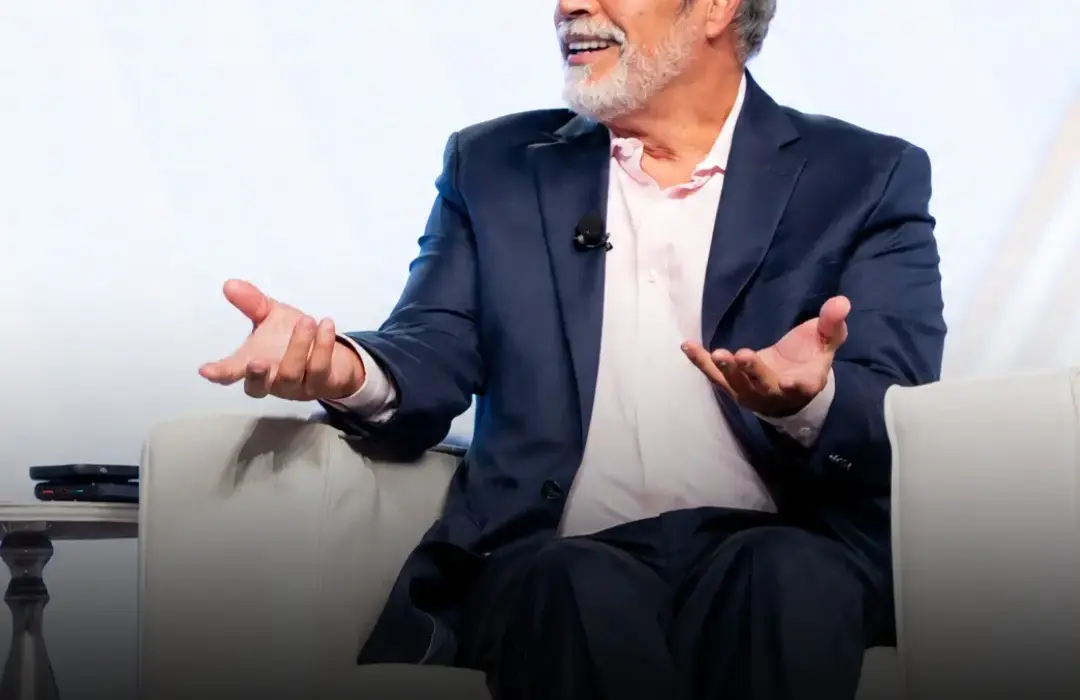
The acclaimed actor, widely recognized by audiences for his powerful portrayal of Bob Morales in the timeless biographical film La Bamba and more recently as the formidable antagonist Gabriel in the blockbuster Mission: Impossible franchise, sat down for an extensive conversation with Hispanic Executive at AVANCE Global 2026 in Las Vegas. The discussion centered heavily on the rigorous, often grueling work of sustaining a multi-decade acting career long after the initial wave of fame subsides and an audience becomes familiar with your name.
"Making it is one thing, staying relevant, a whole other," Morales noted, speaking candidly about the realities of the entertainment industry.
Having worked consistently across film, television, and theater for more than forty years, Morales has built a legendary resume. Yet, despite his widespread recognition and decades of critical acclaim, achieving legendary status has not entirely removed the persistent limitations and rigid casting boxes he encounters within the Hollywood system.
"I still feel like I’m in the cartel box or the criminal," he admitted, highlighting the ongoing industry struggle with typecasting Latino performers into narrow, repetitive roles despite broader cultural conversations about diversity and inclusion.
While he acknowledges that there are noticeably more opportunities available for younger Latino performers breaking into the industry today, he describes this systemic progress as resembling waves crashing against a shore—advances that inevitably surge forward only to recede just as quickly. Audiences, he argues, play an essential and active role in sustaining these gains by consistently demanding representation and letting studios and television networks know when they deeply appreciate being included in mainstream narratives.
For his own part, Morales speaks with quiet determination about the ongoing mission of becoming "undeniable." In his view, that elusive status demands a lifelong commitment to continuous artistic growth, holding oneself strictly accountable for every performance, and firmly resisting the dangerous assumption that past successes and established fame will somehow make the next challenging job any easier.
It also means actively welcoming the chance to step entirely outside of his comfort zone and explore radically different emotional territory. In the drama project Live Like That, Morales takes on the role of David, a devoted pastor whose deep-rooted faith is pushed to its absolute limits after the tragic murder of his son. For the veteran actor, the role offered a profound emotional range and depth that he had spent years waiting for the opportunity to explore.
"To play a pastor, to play a person rooted in faith, whose faith is tested. Wow, thank you," he said, expressing deep gratitude for the complex character.
While discussing the nuances of the film, Morales recalled initially expecting a significant degree of explosive conflict between the grieving husband and wife as they navigated their shared tragedy. What ultimately struck him instead during the creative process was the remarkable, enduring strength of their relationship, even as their foundational beliefs came under severe strain. Understanding that subtle psychological and emotional distinction was a crucial part of unlocking the truth of the character.
The conductor role presented yet another entirely different kind of artistic challenge. Preparing meticulously for an upcoming episode of the television series High Potential, Morales explained that his preparation involved studying recordings of legendary masters, including the likes of Leonard Bernstein and Richard Strauss. By observing these historical giants, he noticed how drastically different each conductor’s leadership style was when managing a major symphony orchestra. Some commanded absolute authority with sharp, imposing gestures, while others possessed a gentle magnetism that drew the breathtaking performance organically out of the musicians.
Morales wanted to understand those distinct artistic choices well enough to synthesize them and develop a unique, authentic style of his own that would look and feel completely genuine on screen.
"The more specific you attack whatever your task is, the more universal," he observed, summing up his philosophy on the craft of acting.
After decades of playing memorable characters that have left an indelible mark on cinematic history, Esai Morales remains a student of his craft, continually studying the things he does not yet know how to do and proving that true longevity in the arts requires an endless appetite for reinvention.