








By Johanna Ferreira
September 24, 2026
The recent wave of public speculation and commentary surrounding Jenna Ortega’s appearance has been difficult to watch—not because her physical form requires any explanation or defense, but because the reaction once again exposes how socially acceptable it remains to discuss women’s bodies as though they are public property. Across social media platforms, entertainment columns, and digital forums, people continue to treat the shapes, sizes, and physical changes of women as open invitations for observation, public assessment, and unsolicited criticism.
This pervasive cultural habit is not limited to young Hollywood stars. Having spent most of my life relatively thin, I am acutely aware that the comments I receive about my body do not equate to the systemic judgment, barriers, and discrimination experienced by people in larger bodies. Still, recent experiences have served as a stark reminder of how deeply our society has normalized treating an individual’s weight as public information.
Earlier this year, I unintentionally lost a noticeable amount of weight while struggling with Small Intestinal Bacterial Overgrowth (SIBO). At times, my digestive system was so compromised that I was barely able to keep down more than a single meal a day. Yet, rather than eliciting concern for my well-being, neighbors, acquaintances, and casual contacts began offering enthusiastic congratulations. Their praise reflected a culture so intensely committed to thinness that any visible weight loss is reflexively coded as good news, even when it is an outward symptom of illness, distress, and physical suffering.
It is hardly a surprise that generations of women continue to struggle with fraught body image dynamics, self-esteem issues, and severe eating disorders in an environment with such distorted values. In a July interview with Jay Shetty, actress Camila Mendes opened up candidly about her own historical battles with bulimia, body image, and perfectionism stemming from her time on Riverdale. Mendes described the deep confusion she felt when people praised her appearance and showered her with compliments during periods when she was rapidly losing weight due to an eating disorder. That misplaced praise served to reinforce the toxic idea that she looked her absolute best when she was at her thinnest, even if her physical and mental health were severely compromised.
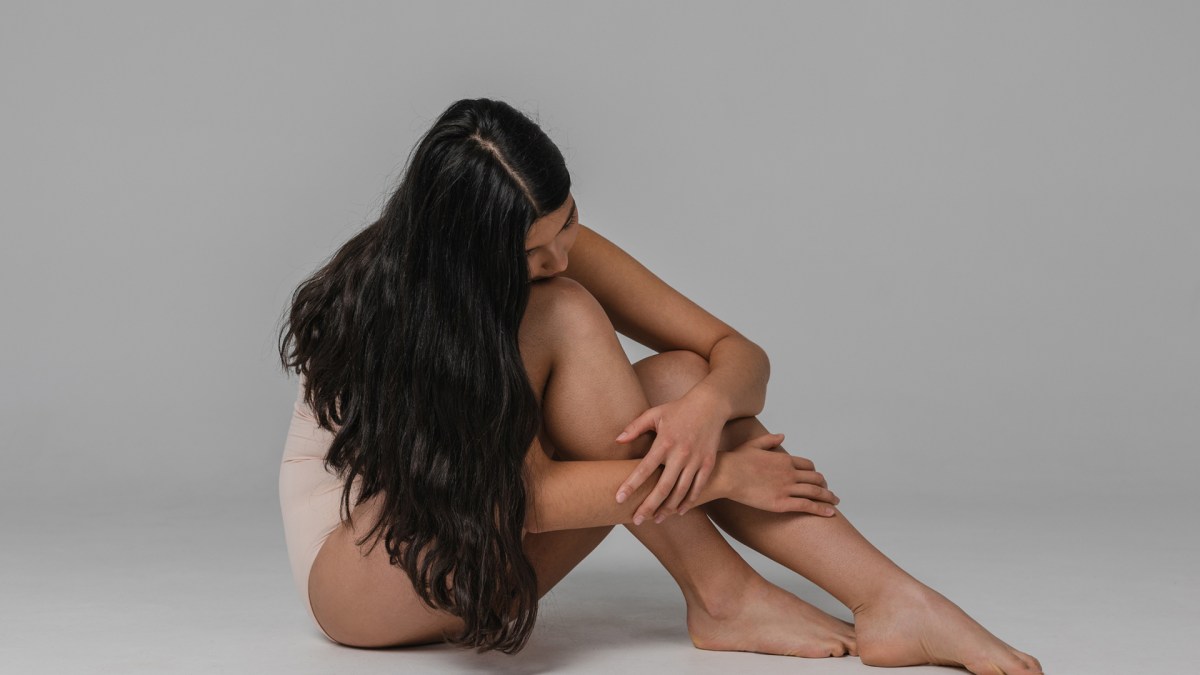
This dynamic points to an exhausting reality for women across the public and private spheres: no version of our physical selves ever seems to escape constant commentary. We are routinely deemed too thin, too fat, or lacking the socially mandated level of curves. Society always manages to find something to observe, question, praise, criticize, or worry over. Living under the microscope of perpetual scrutiny is profoundly draining for those on the receiving end.
For Latinas, this intense cultural scrutiny often begins at a remarkably young age. Many of us grow up embedded within family structures and cultural environments where comments about women’s bodies are so thoroughly normalized that we fail to recognize them as boundary violations until well into adulthood. Relatives feel entirely comfortable offering unsolicited assessments: one family member tells you that you have grown far too skinny, while another is just as quick to point out that you have gained weight, with tías routinely critiquing the size of your thighs, hips, or waist.
Growing up, my own girl cousins frequently told me that I was far too skinny and desperately needed to gain weight. Within my extended family, one of my enduring nicknames has always been flaca. While it was almost universally deployed as a term of endearment rather than a weapon, the underlying dynamic remained complicated. Losing even a few pounds could suddenly transform a casual greeting into a source of immediate familial concern. Although jokes and remarks about my thinness rarely bothered me personally, and I understood they usually stemmed from a place of deep affection, loving intentions do not erase the foundational message beneath the surface: that my body is fundamentally available for others to evaluate, discuss, and quantify.
What makes this particular brand of scrutiny especially tangled and contradictory for Latinas is the dizzying array of competing expectations we are expected to balance. We are persistently told to be thin, but never too thin. We are encouraged to be curvy, but never classified as “fat.” We are expected to embody a feminine, voluptuous ideal, provided that our stomachs remain perfectly flat and our waists impossibly tiny. We are encouraged to eat and enjoy our traditional foods, only to be subtly or overtly criticized if our weight fluctuates upward. Conversely, we are praised for losing weight, immediately followed by anxious inquiries about whether we are eating enough—a persistent question that has echoed throughout my entire life. Across all these shifting standards, no version of our physical existence is ever simply allowed to exist on its own terms.
That fundamental tension is precisely why the recent public reaction to Jenna Ortega’s body felt so painfully familiar. The discourse surrounding the young actress prompted a necessary defense from within her own family. Her younger sister, Aliyah, recently stepped forward to support a viral fan message that reminded the public of a basic, immutable boundary: Jenna does not owe anyone an explanation for her body, and she certainly does not need to justify her appearance to internet strangers.
The underlying principle is remarkably simple, yet continually overlooked. Women should never have to explain why their physical forms look the way they do, whether those changes are driven by genetics, lifestyle, health conditions, or personal choice. And yet, here we are, still forced to articulate this fundamental truth. A woman’s body is not a public question that she is obligated to answer, nor is it an open exhibit for collective evaluation.