









Chicano Films Shaped Identity, Culture, and Representation Onscreen**
By Anna Ortega
September 8, 2026 – 13:18
For generations of Chicano and Latino audiences growing up in the United States, the cinematic landscape was often a place of profound invisibility. In mainstream Hollywood, stories focusing on the Mexican-American experience were rare, and when they did appear, they were frequently reduced to tired stereotypes or flat caricatures. However, a distinct wave of films shifted that narrative entirely. Movies like Selena, Blood In, Blood Out, Real Women Have Curves, and La Bamba did much more than simply populate the screen with faces that reflected the community; they became cultural touchstones that taught young viewers to take immense pride in their roots, validate their dual identities, and feel genuinely seen in a society that often overlooked them.
These enduring films captured the complex, everyday tensions that many families know intimately. They explored the delicate balance between pride and assimilation, the push and pull of cultural tradition versus personal independence, and the heavy emotional weight of family loyalty set against individual aspirations to achieve something greater. Decades after their initial theatrical releases, these movies continue to resonate deeply with audiences who return to them not merely out of a sense of comfortable nostalgia, but because the fundamental human need to see oneself authentically represented on screen never stops mattering.
Among the most powerful explorations of brotherhood, survival, and the harsh realities of urban life is Taylor Hackford’s 1993 epic crime drama, Blood In, Blood Out. The sprawling narrative follows three Chicano relatives—Paco, Cruz, and Miklo—as they navigate the turbulent worlds of drugs, gang life, and systemic violence in East Los Angeles. The film offered an unvarnished, gritty look at the institutional and social pressures facing young Chicano men, examining how different paths could branch out from a shared familial and cultural foundation. While dealing with dark and violent themes, the movie struck a chord within the community for its sweeping scale, its complex character development, and its unflinching portrayal of survival against overwhelming odds.

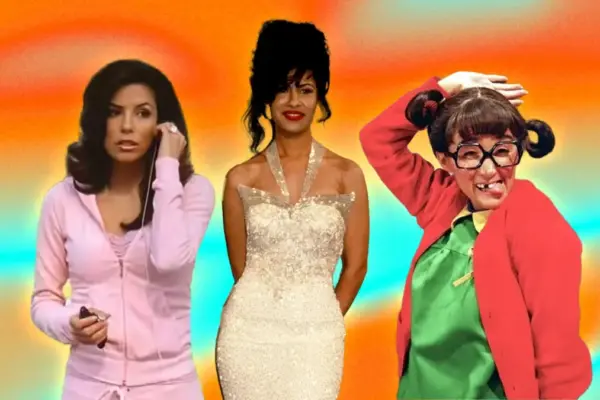
Equally monumental, though in an entirely different musical and emotional register, is the 1997 biographical drama Selena, directed by Gregory Nava. Centered on the extraordinary life, meteoric career, and tragic death of Selena Quintanilla-Perez, the late Queen of Tejano music, the film became an instant cultural phenomenon. Featuring a star-making breakout performance by Jennifer Lopez, Selena captured the vibrant energy of Tejano culture while intimately exploring the bicultural pressures faced by Mexican-Americans striving to bridge two worlds. For countless young viewers, the movie delivered a powerful, enduring message: to proudly embrace bicultural roots and never give up on personal and professional dreams, regardless of the obstacles in the path.
The tapestry of Chicano and Latino cinema expanded further with multigenerational dramas that examined the quiet resilience of immigrant and working-class families. Mi Familia, also known as My Family and released in 1995, follows the multi-decade journey of a Mexican-American family living in East Los Angeles. Through the eyes of its patriarch, Jose Sanchez, the film captures the profound resilience, struggles, triumphs, and daily realities of Latine communities building a life in the United States from the ground up. By chronicling the arrival of the family’s patriarch across the border to the trials and tribulations of his children and grandchildren, Mi Familia provided a comprehensive portrait of endurance, love, and cultural preservation across decades.
The early 2000s brought fresh perspectives on the specific experiences of young Latinas navigating body image, cultural expectations, and educational ambition. Real Women Have Curves, released in 2002 and starring a dynamic America Ferrera in her feature film debut, celebrated the Latina experience while fearlessly highlighting the internal and external struggles associated with it. The film focuses on Ana Garcia, an 18-year-old Mexican-American woman living in a working-class neighborhood in Los Angeles who is caught between her traditional mother’s expectations of domesticity and marriage and her own desires to pursue higher education and a professional career. By addressing issues of body positivity, familial obligation, and generational friction with nuance, warmth, and humor, the film carved out a vital space for stories centered on young Latina womanhood.
No discussion of foundational Chicano cinema is complete without mentioning La Bamba, the 1987 biographical drama written and directed by Luis Valdez. The film tells the tragic, inspiring story of Ritchie Valens, the pioneering Chicano rock ‘n’ roll star whose life was cut short in a devastating plane crash at the age of seventeen alongside Buddy Holly and The Big Bopper. Starring Lou Diamond Phillips as Valens and featuring music by the acclaimed band Los Lobos, La Bamba immortalized a musical legend while highlighting the warmth, struggles, and tight-knit bonds of a working-class Mexican-American family. The film’s emotional resonance remains tied to its heartbreaking climax, cementing its status as an essential piece of cinematic history that has moved generations of viewers to tears.
The impact of these films extends far beyond their initial box office runs or critical reception. They gave audiences characters who carried their families, their internal contradictions, and their rich cultural heritage wherever they went. They provided a shared language of laughter, tears, iconic quoted scenes, and moments of self-recognition that Hollywood had historically failed to deliver. Decades after these stories first flickered onto the silver screen, audiences continue to rewatch them, proving that the desire for authentic representation remains as vital today as it was when these cinematic milestones first arrived.