










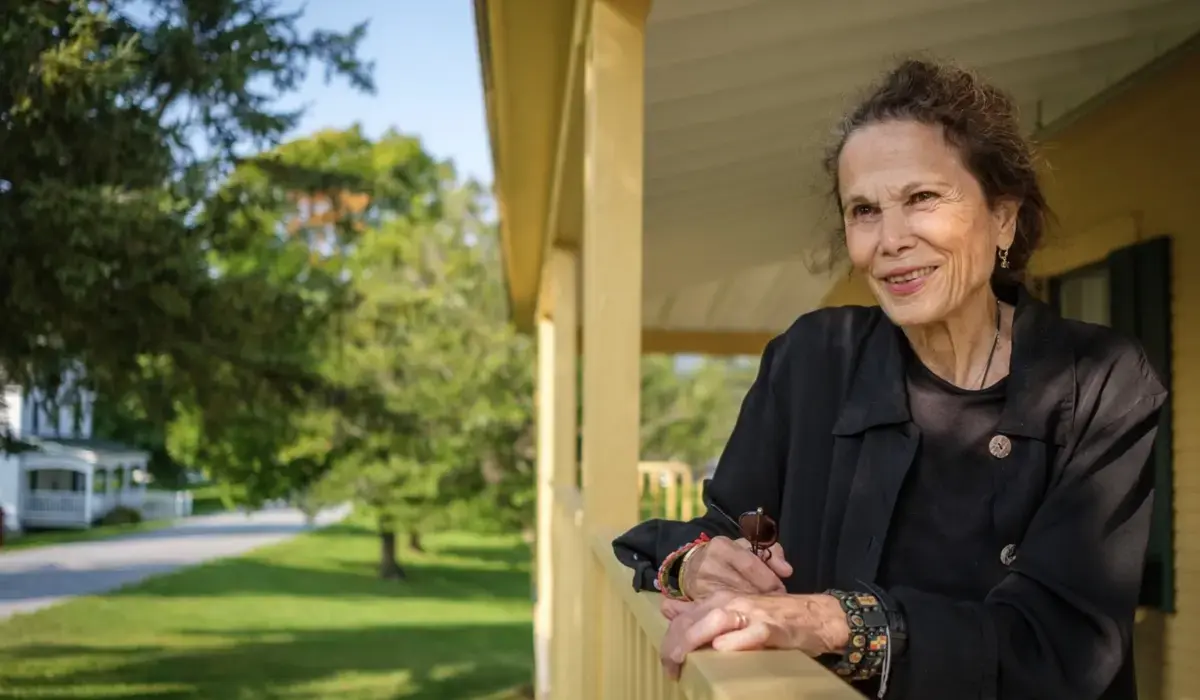
For more than four decades, acclaimed Dominican writer Julia Alvarez has used the written word to map the contours of displacement, identity, and cultural belonging. From her foundational 1984 poetry collection Homecoming to her groundbreaking 1991 debut novel, How the García Girls Lost Their Accents, Alvarez fundamentally transformed the landscape of American literature. Her work offered countless Dominican Americans their first true reflection in the mirror of mainstream publishing, paving a vital pathway for an entire generation of contemporary literary luminaries. Following García Girls, she cemented her place in global literary history with In the Time of the Butterflies, an unforgettable historical novel chronicling the lives and tragic martyrdom of the four Mirabal sisters who fiercely resisted the brutal dictatorship of Rafael Trujillo in the Dominican Republic.
As one of the earliest Dominican writers to capture widespread mainstream attention in the United States, Alvarez served as a defining voice for the diaspora. Her trailblazing efforts cracked open doors that had long remained shut, creating space for celebrated contemporary authors like Angie Cruz, Elizabeth Acevedo, and Cleyvis Natera to follow in her footsteps. By placing distinctively Dominican narratives at the very center of the American literary consciousness, Alvarez achieved something revolutionary, permanently expanding the definition of what American stories could look and sound like.
Now, following the release of her deeply intimate new poetry collection, Visitations, Alvarez is taking time to reflect upon her remarkable four-decade career, the sweeping arcs of her legacy, the stark realities of aging, and how the intersections of time and memory have informed her latest creative output. The result is a profoundly reflective volume that stands as arguably her most vulnerable work to date.
Throughout her career, Alvarez has balanced prose and verse, though the literary market frequently demanded novels. Reflecting on her enduring devotion to poetry, Alvarez explains that verse has always remained her true creative anchor. For four decades, she notes, the publishing industry overwhelmingly wanted novels, and while she dedicated herself to writing them, she would always return to poetry in the quiet spaces in between. Describing it as her first love, she still views poetry as the purest form of expression available to a writer, viewing her steady returns to the medium as a way to continuously remind herself of the absolute best that language can achieve.
Alvarez acknowledges that the poems compiled within Visitations represent a spectrum of her life, with some pieces penned decades ago when she was a much younger woman, while others were crafted much more recently. Among the most pervasive and defining themes woven throughout the collection is the inescapable reality of growing older and navigating the later chapters of life.
Having spent decades confronting xenophobia, cultural exclusion, and ethnic prejudice, Alvarez now finds herself navigating an entirely different kind of societal barrier. Having tackled the various "isms" that attempt to marginalize and erase immigrants, the other, and the alien throughout her life, she now confronts the pervasive shadow of ageism. She observes that older individuals are rarely depicted as the dynamic main characters of modern narratives, frequently relegated instead to background roles where they serve merely as dispensers of advice or as archetypal figures standing in the way of younger protagonists.
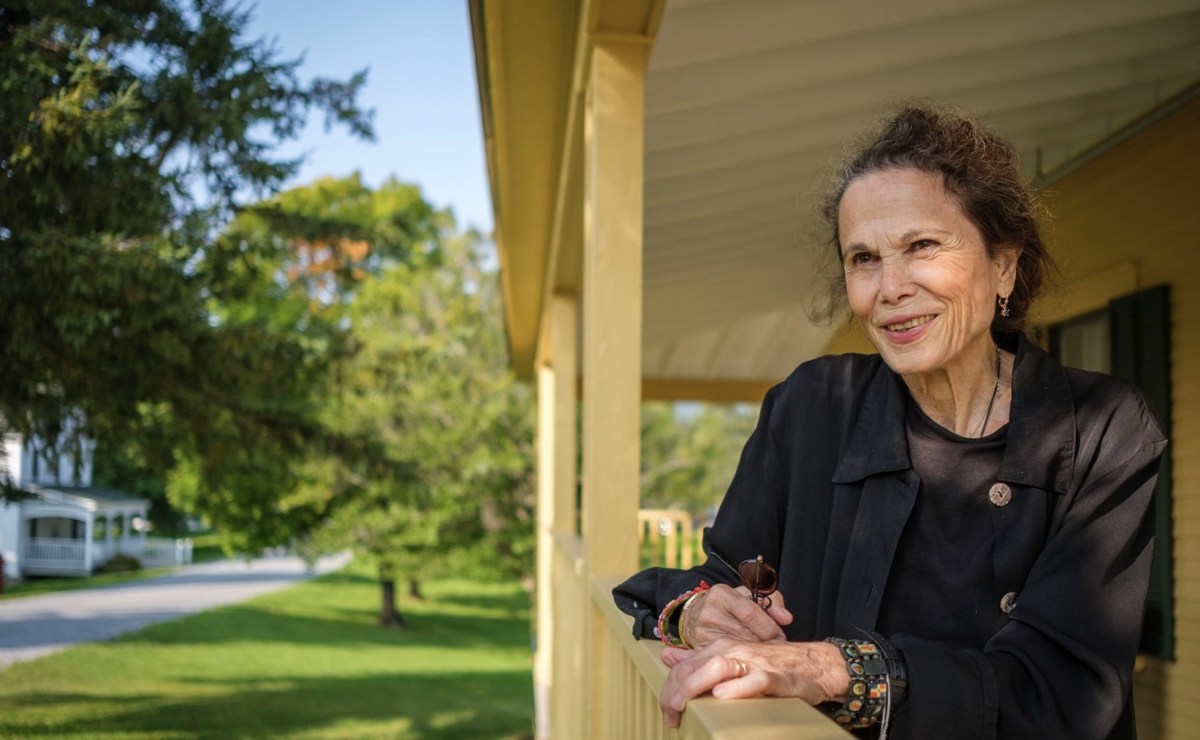
Alvarez explains that part of the foundational inspiration behind Visitations stems from a deeply personal desire to understand and embrace the exact stage of life she currently occupies at 76 years old. She emphasizes that if people are fortunate enough to grow old, it is a landscape entirely worthy of deep exploration. She questions what the specific stories of this phase of life truly look like, pondering what it means to exist closer to the endings of things rather than amidst the loud crescendos and youthful excitement of early adulthood. Furthermore, she interrogates what it means to inhabit a world where the dead outnumber the living, carrying the profound weight of having more departed loved ones than those who remain.
These complex, poignant themes emerge with striking clarity in poems like "The Red Bathrobe," in which Alvarez confronts the disquieting sensation of looking over one’s shoulder as younger, more powerful, or more conventionally beautiful individuals enter the room and command the center stage. In the opening lines of the poem, she writes about gathering with peers to reflect on who they are now that they have put away their lab coats, lecture notes, framed pictures of Sisyphus rolling his stone uphill, and professional degrees, having instead returned to being the people whose shoulders others look past at social gatherings to see who else is arriving.
Alvarez adds that this specific kind of invisibility is crucial to acknowledge, name, and explore through storytelling, noting that there remains a distinct scarcity of narrative space dedicated to this particular human experience.
Despite her monumental role in paving the way for a flourishing generation of Dominican writers—an impact most recently celebrated at the Dominican Writers Summit 2026—Alvarez admits that she deliberately avoids dwelling on her own legacy. She maintains that if she were to focus heavily on her historic standing, she would inevitably lose her creative focus. According to Alvarez, the act of writing requires an author to remain entirely in the service of the story and its characters. She insists that a writer cannot look outward at an audience or worry about how readers might react, whether positively or negatively, while the work is being generated. True fidelity belongs to the story itself in the moment of creation, leaving decisions regarding revision and release for a much later time.
Yet, when she does pause to look backward, her thoughts invariably drift toward the initial void that sparked her creative journey—the glaring absence of stories that mirrored her own lived reality. When she first began writing, she encountered a significant gap on the bookshelf where she could not see herself reflected. While immigrant narratives certainly existed, they were predominantly penned by men, many of whom came from Mexican-American backgrounds. Society often attempted to group diverse experiences under a single umbrella, ignoring the reality that different cultures possess entirely distinct families, histories, and worldviews. Alvarez explains that she turned to storytelling not because she held all the answers, but because she carried profound questions about what was happening to her, her sisters, and her community.
At 76 years old, she also maintains a profound appreciation for the rare privilege she has enjoyed in building a lifelong career as a Dominican-American writer and continuing to practice her craft to this day. Expressing immense gratitude, she marvels at the profound fortune of being able to pursue her life’s true passion in this world and earn a living doing what she loves.