







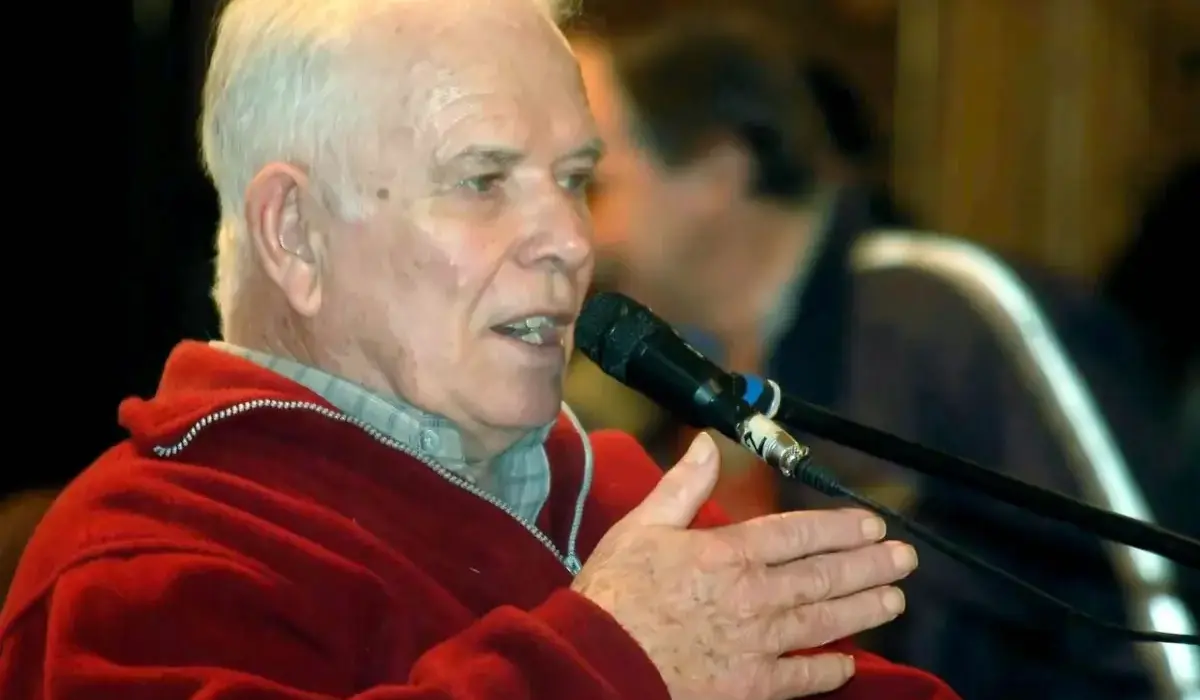
In the early, quiet hours of September 18, 2006, Jorge Julio López, a humble 76-year-old retired builder, stepped out of his home in La Plata, Argentina. He was bound for a provincial courthouse, where his legal team was scheduled to present its closing arguments against Miguel Osvaldo Etchecolatz—the very man who had tortured and held him captive three decades earlier during the nation’s brutal military dictatorship.
López, however, never reached the courtroom. His sudden disappearance sent immediate shockwaves through a nation still reckoning with its violent past, plunging his family, legal representatives, and human rights advocates into an enduring nightmare. Classified as a forced disappearance, his fate remains an impenetrable mystery to this day, marking two decades of agonizing questions, institutional failures, and an open judicial wound.
López holds a grim and singular distinction in modern Argentine history: he is widely considered the first and only person to have been forcibly disappeared both during the country’s last military dictatorship—which spanned from 1976 to 1983—and once again after the restoration of democracy.
At the center of the 2006 legal proceedings was Etchecolatz, a former investigations director for the Buenos Aires Provincial Police and one of the regime’s most feared and notorious repressors. Following the legislative and judicial annulment of the infamous impunity laws issued in the late 1980s, Etchecolatz became the very first perpetrator to stand trial for crimes against humanity in the post-pardon era.
Just three months prior to his vanishing, López had taken the stand to deliver a harrowing account of the ex-policeman’s heinous crimes. His testimony proved pivotal in establishing Etchecolatz’s direct command and role as a repressor. Ironically, just one day after López went missing, Etchecolatz was sentenced to life imprisonment.
Yet, López’s second disappearance resurrected the darkest phantoms of Argentina’s history. While authorities and even members of his own family initially wondered if the elderly builder might have simply lost his way or suffered a sudden medical emergency, the prevailing and grim consensus quickly pointed elsewhere. Investigators, relatives, and human rights lawyers theorized that Etchecolatz, active elements within the Buenos Aires Provincial Police, or other underground factions violently opposed to the ongoing dictatorship trials—or perhaps a combination of all three—engineered his abduction.
Supporters of this thesis maintained that López was kidnapped specifically to send a chilling, retributive message designed to intimidate witnesses, derail the judicial proceedings, and halt the historic trials.
“We didn’t realize until much later that this had to do with his testimony,” his son, Rubén López, told the Herald ahead of the anniversary. “He didn’t just identify Etchecolatz but several other repressors.”

Twenty years later, the truth behind that September morning continues to elude investigators. No concrete physical evidence regarding his whereabouts has ever surfaced, though the formal judicial investigation remains technically open.
The First Disappearance
The roots of the tragedy trace back to the military coup d’état on March 24, 1976. Following the takeover, López, then 46 years old, began collaborating with the Peronist guerrilla group Montoneros. His political affiliation and activities made him an immediate target of the state terror apparatus. On October 27, 1976, he was violently kidnapped from the streets by the Buenos Aires Province Police alongside several comrades.
The operation was directly led by Etchecolatz.
Over the next several years, López was shuttled through a network of four clandestine detention centers—brutal facilities colloquially known as "death camps"—located across La Plata. Within these confines, he endured relentless torture, including the agonizing use of electric shocks via the picana. He was forced to witness many of his cellmates and comrades executed in cold blood.
Decades later, when López finally found the courage to testify in court, he recounted the chilling cruelty of his chief tormentor. According to the victim’s sworn account, Etchecolatz would routinely direct his torturers by saying, "Turn it up a little more. This gringo was laughing before. Let’s kill this old son of a bitch."
After more than two years of illegal imprisonment, torture, and psychological torment, López was released in June 1979, joining the fragile ranks of survivors attempting to rebuild their shattered lives under the shadow of authoritarian rule.
Giving Testimony
Following the return of democracy in 1983, López began sporadically reconnecting with fellow survivors of the clandestine centers. For many years, however, he kept the horrific details of his captivity largely to himself, attempting to shield his family from the trauma.
The landscape shifted dramatically in 2006. With the pardon laws abolished and the judiciary breathing new life into the dictatorship trials, López found a renewed sense of purpose. He aligned himself with a dedicated network of fellow survivors and human rights lawyers who were actively mapping out legal strategies to prosecute the aging architects of state terror.
“López wanted to be part of that process. He participated actively,” Guadalupe Godoy, one of the lawyers who represented him, recalled.

On June 28, 2006, López delivered his testimony. Visibly moved and visibly affected by tremors that had begun years earlier as a physical manifestation of his trauma, he spoke plainly and devastatingly about how Etchecolatz had tortured him and murdered his peers.
“My dad was anxious to testify. We understood why he was so insistent when we heard him speak. He had never told us anything,” Rubén López recalled.
For López, speaking out was not merely a legal obligation, but a profound moral duty and a solemn promise he had whispered to his cellmates decades earlier in the dark of their cells—a commitment to ensure the world knew what happened to those who never walked out.
López’s Second Disappearance
Monday, September 18, 2006, was supposed to be a day of vindication. It was the date set for the plaintiffs’ lawyers to present their closing arguments. Although López was not scheduled to take the stand that day, his physical presence was required so that his legal team, including Godoy, could formally speak on his behalf. It was also an opportunity for him to lay eyes on Etchecolatz once more, as the former police chief had chosen not to be present during López’s earlier testimony.
Rubén saw his father the night before the scheduled hearing, describing him as “calm, normal, although a little anxious.”
The following morning, López’s younger son, Gustavo, who lived with his parents, rose early to help his father prepare. To his bewilderment, López was nowhere to be found. The clothes he had carefully laid out to wear to previous court hearings remained neatly draped over a chair.
The home showed no signs of a struggle, and very few items were missing: only a small gardening knife López frequently used and a pair of boots he practically never wore.
Panic set in when Gustavo arrived at the municipal building hosting the trial and discovered that his father was entirely absent. The lawyers had neither seen nor heard from him.
“At first, we thought he had suffered some kind of physical or mental episode, like a panic attack,” Rubén recalled.

Yet, those intimately familiar with the machinery of the dictatorship immediately recognized the grim parallels. Fellow survivors and legal counsel harbored a far darker suspicion.
“The only thing we knew is that his absence had something to do with the trial. At first we thought maybe he was distressed because he was remembering things, but we quickly realized it was something different,” Godoy said.
Certain that López had been abducted just as he had been thirty years prior, the family rushed to local police precincts to file a missing person report, while his legal representatives alerted the federal court overseeing the Etchecolatz case.
Reflecting on the immediate aftermath, Rubén noted that his father had never been assigned state-mandated security or special protection following his explosive testimony. “We trusted the justice system and the state fully,” he said.
“All Argentines believed that the repressors had finished doing their evil work in 1983, when democracy returned,” Rubén added. “After what happened to my dad, it became clear that they were still walking among us and carrying out the same practices from the dictatorship. We didn’t think this would happen to him again.”
The disappearance sent a profound shockwave through the administration of then-President Néstor Kirchner, whose government had made prosecuting dictatorship crimes a central pillar of state policy.
“There was little preparation and foresight about the power still held by certain groups with links to the military dictatorship,” said journalist Miguel Graziano, author of the 2013 investigative book En el cielo nos vemos (See You In Heaven), which closely examines the López case.
Graziano noted that a degree of naive institutional complacency had blinded both state entities and human rights organizations to the lingering, retaliatory capabilities of former security networks. For provincial and national authorities, who initially hesitated to entertain the theory that López had been targeted for his testimony, the event proved to be a devastating political blow. “Politically, for them it was better to deny it rather than accept it,” Graziano observed.
A Fruitless Search
The subsequent investigation was marred from its inception by procedural irregularities, bureaucratic inertia, and a lack of clear direction. Despite urgent demands from legal teams to treat the case as a forced disappearance from day one, authorities initially handled it as a standard missing-person inquiry.

Adding to the controversy, the search was initially spearheaded by the Buenos Aires Province Police—the very institution widely suspected by human rights organizations of harboring personnel connected to the abduction.
Eyewitness accounts eventually placed López walking through his neighborhood on the morning of his disappearance. Investigators managed to trace his footsteps for roughly five blocks away from his home, leading directly to the doorstep of Susana Gopar, an individual alleged to have worked as Etchecolatz’s secretary during the late 1970s. Although Gopar vehemently denied any ongoing ties to the convicted repressor, her name and contact information were discovered within Etchecolatz’s personal telephone directory.
Despite this ominous convergence, investigators were unable to establish a definitive link, and the trail went cold at her door.
It was not until 2008 that the federal judiciary formally reclassified the investigation as a "potential forced disappearance" and officially removed the Buenos Aires Province Police from the active case files following sustained pressure from human rights groups.
“We wanted the investigation to center around those who wanted to stop the trials from continuing to maintain their impunity,” Godoy explained.
Years later, in 2014, the case briefly captured national headlines again when Etchecolatz was photographed during a courtroom hearing holding a handwritten piece of paper bearing the name "Jorge Julio López." While the provocative gesture prompted immediate judicial inquiry into whether it constituted a coded message or intimidation tactic, the subsequent investigation yielded no actionable results.
The Case Today
Over the past two decades, the pursuit of truth has been perpetually frustrated by false leads, dead ends, and the analysis of millions of telephone records alongside prison visitor registries. While minor irregularities surfaced within the prison documentation where Etchecolatz and other high-profile repressors were incarcerated, none provided the decisive breakthrough investigators desperately needed.
Today, the Argentine Ministry of Security maintains an active financial reward of 5 million pesos for anyone offering verifiable, actionable information regarding the builder’s ultimate whereabouts. Yet, progress remains stagnant.
“To me, this is a story of impunity because of sloppiness and bad decisions in the investigation,” Graziano reflected.

Despite two decades of judicial efforts, Rubén remains painfully aware of the void at the heart of the case. “The problem is that we don’t know anything,” he stated.
“There is very little evidence to prove who organized this and who carried it out. Someone planned this—we all think it might have been Etchecolatz or some of the other repressors,” Rubén said. “लेकिन (But) someone else did the dirty work, because the repressors were all in jail at the time.”
Summarizing the family’s enduring anguish, Rubén offered a bitter comparison to the darkest days of the 20th-century regime: “In 1977, almost six months after he disappeared, in the harshest moment of the dictatorship, my dad was able to let us know through another person that he was alive. Two months later, we were able to visit him.”
“Today, 20 years after his second disappearance and in a democracy, when these things are not supposed to be happening, we still don’t know what happened to him,” he lamented. “That sums up all the anger we feel: nobody protected him, and the case has not been resolved.”
The family’s core demand remains unchanged: they want López found, and they demand clear, unvarnished accountability from the state.
While legal minds like Godoy and journalists like Graziano acknowledge the glacial pace of the investigation, they maintain that the unyielding persistence of human rights organizations will eventually secure historical justice for Jorge Julio López, even if it requires decades more—mirroring the long roads that eventually led to convictions for Etchecolatz and countless other architects of state violence.
In the meantime, López’s presence endures profoundly in the daily life of his son. Rubén has not only embraced his father’s human rights activism but also keeps his memory alive through the quiet, physical labor they once shared. Working in the family tool shed, Rubén continues to handle his father’s instruments.
“I use his shovel, his pick and his wheelbarrow every day,” Rubén said. “I remember him by doing what he did, supporting his cause and other causes. Just trying to keep his legacy alive.”