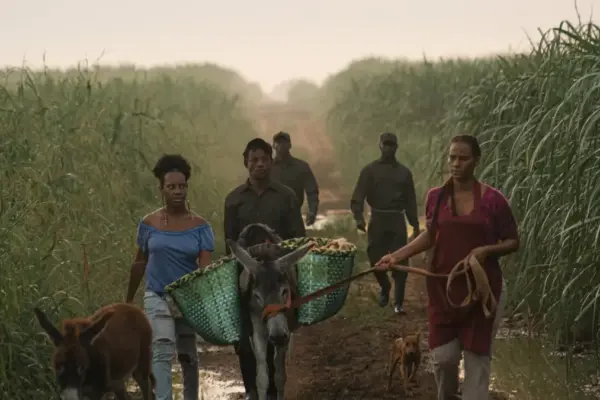









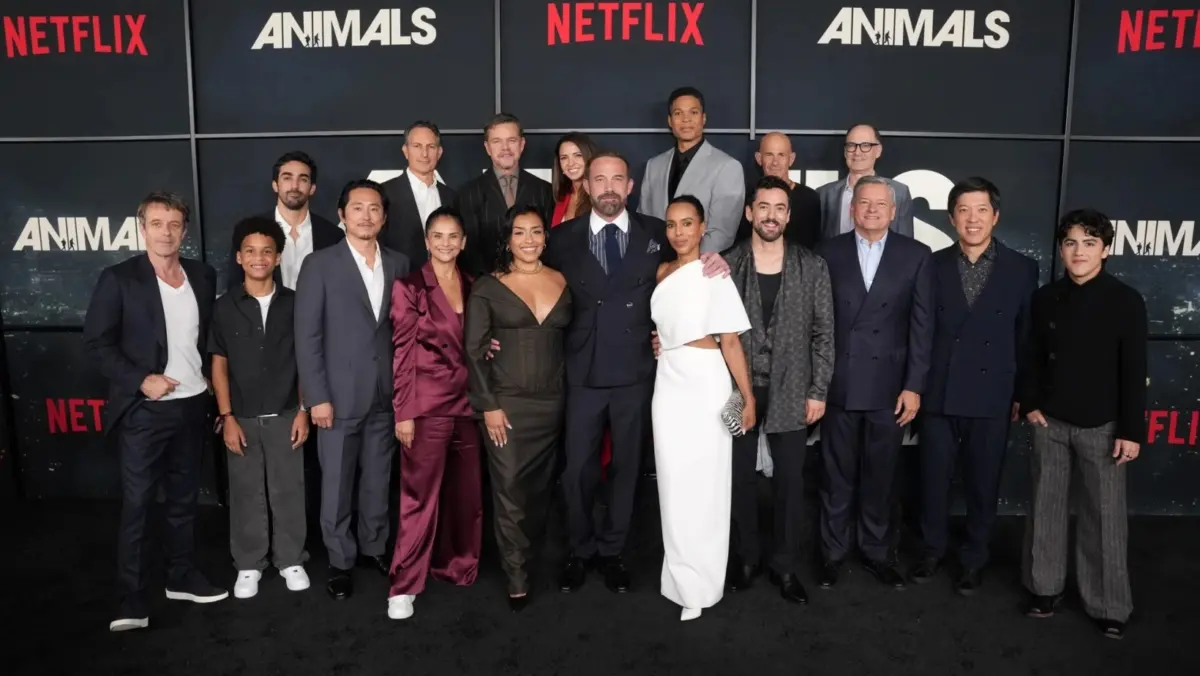
In the traditional landscape of Hollywood filmmaking, a director, co-writer, and star of Ben Affleck’s stature could easily have locked down a script, handed out pages to the supporting cast, and called it a day. When crafting the Mexican characters for his upcoming Netflix thriller Animals, Affleck faced a choice familiar to many filmmakers dealing with cross-cultural representation: he could have written the roles himself, trusting his own perspective and creative instincts, and nobody in the industry would have questioned the approach. Instead, the veteran filmmaker and Artists Equity co-founder chose a vastly different path, one that Hollywood rarely takes when it comes to Latino characters. He handed the pen directly to his Mexican actors, Adriana Paz and Luis Gerardo Méndez, giving them the creative autonomy to write their own lines, and—most importantly—he actually listened to what they had to say.
The film, which is slated to premiere on Netflix on October 9, brings together an ensemble cast and tackles high-stakes moral dilemmas through a gripping narrative lens. However, behind the scenes, the production process for Animals marked a significant departure from standard industry practices. Affleck recently opened up about his decision to step back and invite his actors to completely author their own parts. He acknowledged that he was placing a heavy and unusual responsibility on Paz and Méndez, pushing them well past the boundaries of what actors are typically asked to do on a major studio or streaming production.
Affleck explained to the actors that he needed their vital collaboration because their characters were representing millions of people around the world who would eventually watch the film and look for genuine reflections of themselves on screen. The weight of that cultural representation, Affleck admitted, was not something he felt entitled to handle entirely on his own. He was not merely asking them to act as cultural consultants or to flag lines that felt awkwardly written or culturally insensitive. Rather, he was inviting them to help build elements of the story that felt fundamentally true to their lived experiences, ensuring that the narrative belonged to the community they represented just as much as it belonged to anyone else involved in the creative process.
What It Meant to Paz and Méndez to Be Asked
For veteran actor Adriana Paz, the experience of collaborating on her character’s dialogue was defined by a rare sense of artistic respect and warmth. Affleck’s ongoing willingness to consult with her—asking whether the dialogue felt entirely authentic, whether her character would genuinely use specific phrasing, and whether there were nuances missing that needed to be addressed—created an environment of mutual trust. Paz noted that she never once felt she was undertaking exhausting extra labor. Instead, she viewed the assignment as a profound privilege that the vast majority of actors in her position are almost never granted within the studio system.
Paz described the creative process of sitting down with co-star Luis Gerardo Méndez to work through the dimensions of their respective roles as a deeply grounding experience. It was the kind of artistic collaboration that reminds performers why they chose their profession in the first place: the shared joy of building something authentic with another human being, rather than simply executing a pre-packaged, outsider’s vision of who society thinks you are supposed to be.
Luis Gerardo Méndez, widely recognized internationally for his standout work in projects like Club de Cuervos, approached the assignment with a profound sense of gravity. He spoke about the weight of what he and Paz were undertaking in terms that extended far beyond the immediate confines of the film set. Méndez emphasized that during this specific project, it was abundantly clear that the two performers were carrying the representation of a massive community of millions of people. This community extended well beyond the borders of the United States, resonating with migrants, refugees, and individuals living in countries where they frequently feel unwelcome or marginalized. That stark clarity of purpose shaped nearly every artistic decision Méndez made regarding his character’s motivations, actions, and voice. Reflecting on his career, Méndez noted that while some projects are designed purely for entertainment, and others carry varying degrees of importance, Animals fell into a demanding category that required him to bring every ounce of his dedication and truth to the screen.
Why This Matters for How Latino Migrants Are Depicted on Screen
The characters that Paz and Méndez bring to life in Animals deliberately break away from tired, reductive Hollywood tropes. They are not portrayed as criminals, menacing threats, or cautionary tales designed to stoke fear. Instead, the film presents them with nuance and humanity. Paz portrays Cecilia, a hardworking housekeeper employed in the Los Angeles home where Affleck’s character is actively running a high-stakes political campaign. Cecilia occupies a space that is frequently rendered invisible by the wealthy and powerful people surrounding her, despite the fact that she is the one intimately caring for the things they value most in their daily lives.
Méndez takes on the role of a man striving to support his family while navigating life without legal documentation, diligently doing everything he can within a rigid and unforgiving system that offers him zero formal protection and minimal recognition for the daily risks he must take just to survive. Both actors have emphasized that these characterizations were part of a deliberate, conscious choice to depict migrants with dignity and depth. This representation arrives at a critical cultural moment when a significant portion of public political discourse, alongside numerous mainstream Hollywood productions, continues to reduce vulnerable migrant populations to a single, monolithic, and threatening image.
Ben Affleck has taken that critical argument even further, publicly characterizing the persistent political narrative that frames migrants as criminals as an absurd and harmful falsehood. He noted that this trope has a long, documented history of being weaponized whenever a society experiences economic or social pressure and political figures require an easy scapegoat to deflect public frustration. According to Affleck, narrative fiction holds a uniquely powerful ability to disrupt that toxic logic because it forces an audience to recognize a living, breathing human being before it allows them to comfortably reduce that person into a faceless category. Once an audience member genuinely identifies with an individual’s shared humanity, Affleck suggested, it becomes immensely difficult to revert to a dehumanized caricature of what that person represents.
What the Film Is Actually About
At its core, Animals revolves around a high-tension plot involving the kidnapping of the young son of Mark and Abigail Kimball, characters portrayed by Ben Affleck and Kerry Washington. The film uses this gripping narrative premise as a vehicle to explore complex moral decisions, ethical gray areas, and the difficult compromises that every character must navigate when the institutional systems surrounding them fail to provide easy answers or reliable justice.
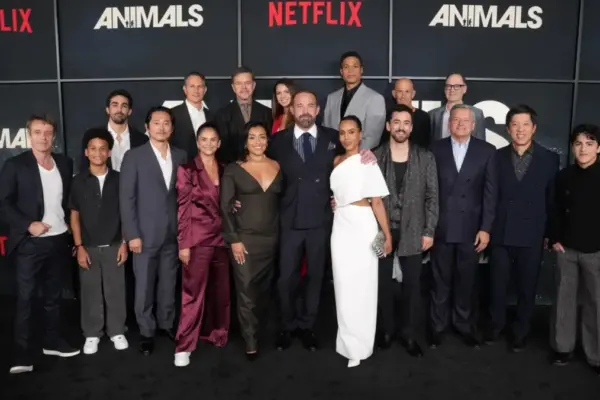
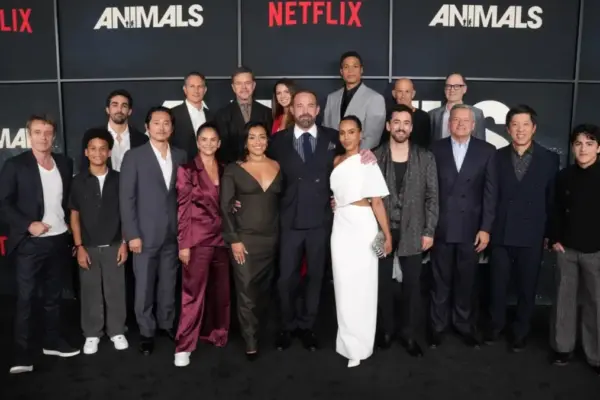
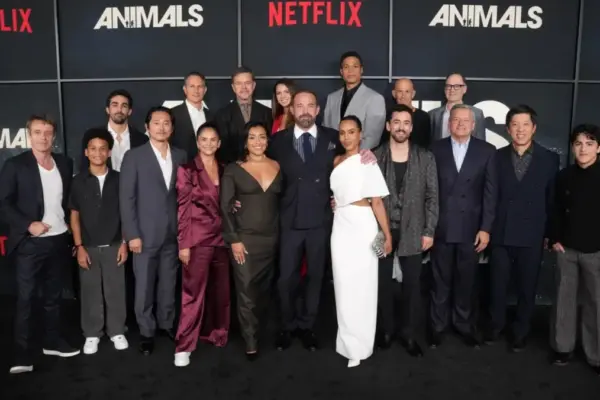
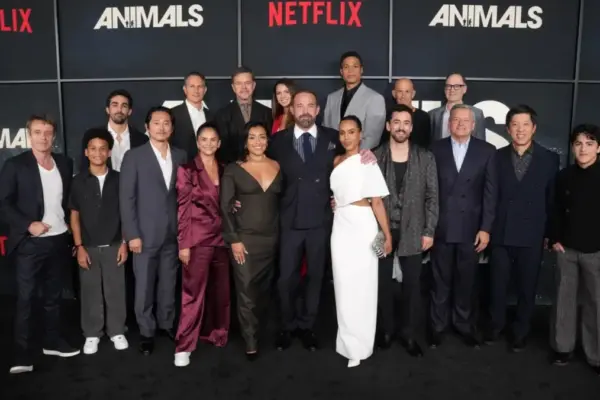
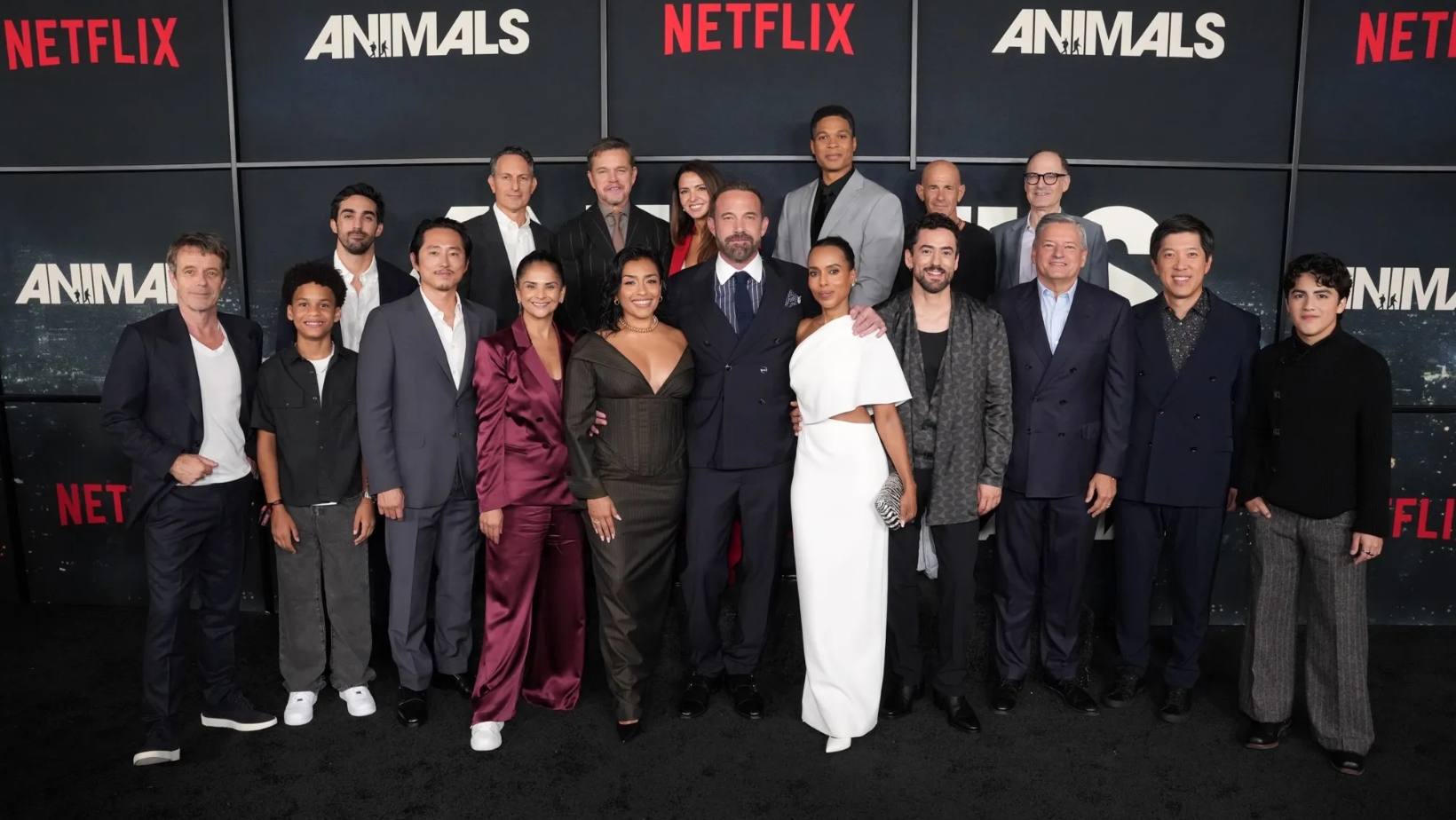
The star-studded ensemble cast also features prominent performances by Gillian Anderson, Steven Yeun, Ray Fisher, and several other notable actors. The thriller was produced in association with Artists Equity, the independent studio that Affleck co-founded alongside longtime collaborator Matt Damon, signaling a continued commitment to filmmaker-driven projects that prioritize creative integrity.
Reflecting on the emotional resonance of the project, Adriana Paz shared her ultimate hope for how audiences will receive the movie. She described Animals as a gripping cinematic experience capable of making viewers deeply uncomfortable in ways that linger long after the final credits have rolled, while remaining so compelling that audiences simply cannot look away. Animals is scheduled to premiere globally on Netflix on October 9.