









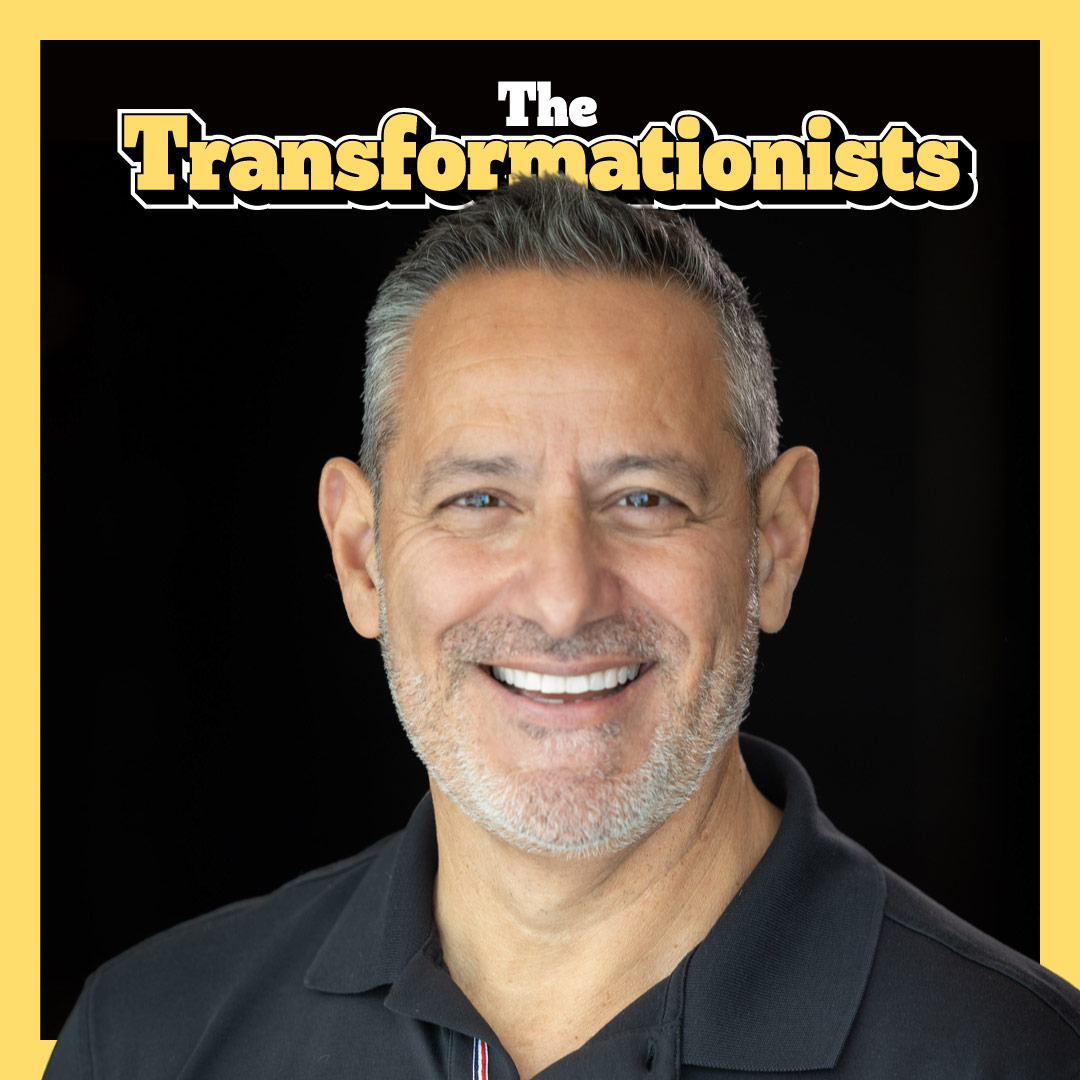
Ask Bobby Herrera what he thinks of the Grand Canyon, and you might be surprised by his answer. As the founder and president of Populus Group, a successful veteran, author, speaker, and builder who has spent decades studying the mechanics of leadership and human potential, Herrera holds a profound appreciation for the majesty of the American landscape. Yet, if given the choice, he would gladly look past one of the seven natural wonders of the world to focus on something else entirely.
"With great humility, I think the experts may have gotten it wrong," Herrera reflects. "The Colorado River is the wonder here. It’s what created the canyon and so much of the beauty we see and the life it sustains. To me, the premium should be on creation, not the result."
This philosophical outlook has quietly guided Herrera’s choices for years, but it has taken on a renewed urgency in his mind recently. Having written his own narrative—rising from his early life challenges to military service and corporate success—and having helped countless others find their own value and voices through his speaking, writing, and mentoring, Herrera sees a desperate need for something that might seem, on the surface, to be in abundance.
In a modern business culture oversaturated with self-proclaimed gurus, quick-hit social media clips, and viral soundbites, Herrera argues that society faces a severe deficit of genuine mentorship.
"We don’t need more examples—we have that in abundance—we need more teachers," Herrera says. "Whether it’s entrepreneurs or business leaders or influencers—whatever you want to call them—we need more leaders willing to ‘give away’ what they’ve learned to accelerate the stories of others. There are too many too busy being the person on stage; true leadership is about putting others on stage. We must teach in a way that makes others feel like we want ‘more for them, than from them.’"
Consistency on Its Own is a Form of Greatness
When Herrera speaks of teaching, he is not talking about minute-long video shorts or distilled soundbites of leadership wisdom peddled by opportunistic experts. Instead, he reaches for a favorite Greek proverb to articulate his metaphor for modern leadership: "A society grows great when we plant trees in whose shade we may never sit."
Having built a thriving organization and a far-reaching platform, Herrera finds himself at a stage where his primary ambition is to become—and to help others become—the Colorado River. That means identifying the most essential elements of their own stories and teaching them the quiet, unglamorous power of consistency required to carve out their metaphorical Grand Canyon.
Herrera emphasizes, and often repeats, that consistency on its own is a form of greatness. For every entrepreneur or executive trying to narrate their own path, build a sustainable company, or forge a lasting legacy, ambition inevitably runs up against the unyielding reality of day-to-day discipline. Greatness is rarely defined by a single breakthrough moment or a public milestone; rather, it is the accumulation of small, repeated actions, daily choices, and sustained habits that make a leader’s story believable and resonant to the people around them.
This steady approach inspires others to reframe their own hardships, proving that consistency through personal adversity can transform past struggles into the foundational strengths of a compelling life story.
"Whether you’re an expert talking about leadership, culture, or purpose, most everything has been written," Herrera explains. "What is lacking is the sharing of that wisdom in a manner that helps the student apply those lessons. Great teachers show others how we created our own consistency—that in turn creates a breakthrough sense of confidence for people to say, ‘I do have what it takes.’ But that’s a very difficult message to get across, because you need to first be a student of your own story and consistency to do it."
By leaning into the river metaphor, Herrera helps audiences grasp a counterintuitive truth about long-term success: the long way around really is the only true shortcut.
The Unsung Hero of Leadership
As the head of Populus Group, Herrera contends that leaders frequently underestimate one of their most critical responsibilities—the necessity of communicating essential messages repeatedly, over and over again.
"Overcommunicating clarity is the unsung hero of building anything meaningful," he asserts.
Many leaders harbor an unspoken fear of repeating themselves, worrying that reiterating core expectations might insult their team’s intelligence or make them sound like a broken record. However, seasoned leaders understand that steady repetition is the only reliable way to foster the deep clarity required to build organizational trust. People rarely internalize a vision or a value until they can comfortably repeat it back in their own words. In Herrera’s view, when leaders allow their own insecurities about redundancy to dictate their communication habits, they slip into a form of avoidance that ultimately undermines their ability to lead.
"You learn the greatest songs of your life by hearing them over and over again," he notes.
In a corporate environment, individuals must hear a stated purpose, a cultural standard, or an operational expectation time and time again before it can successfully integrate into their own personal beliefs.
Crucially, this messaging must be backed by consistent behavior. "People hear what you do before they hear what you say," Herrera reminds us. Real organizational transformation occurs only when repeated actions align seamlessly with repeated beliefs. This is why Herrera insists on articulating non-negotiable core values centered around clear intentions and strong community standards. Just like a river that never stops flowing, steady leadership gradually shapes the world around it, eventually creating a landscape that outsiders might perceive as an immutable natural wonder. For Herrera, this represents the ultimate long game, extending far beyond the immediate commercial success of Populus Group.
The Triangle of Love
The foundational cultural pillar at Populus Group is a simple yet demanding mandate: "give more than you take." This principle was forged from a life-altering act of kindness Herrera experienced as a young man. It remains a core belief anchored in the idea of paying blessings forward with genuine generosity, and teaching is the primary vehicle Herrera uses to put that philosophy into practice.
Every year, Herrera and his leadership team select a handful of minority- and veteran-owned businesses—occasionally even direct competitors—and invite them to participate in the company’s Pathfinder program.
Through Pathfinder, various leaders within Populus Group step forward to teach emerging entrepreneurs the lessons they wish they had known during the early stages of building their own business. Instructors from different functional areas share practical operating skills, covering everything from sales strategies and financial management to writing effective request-for-proposal documents, thereby shortening the steep learning curve for early-stage founders. The program is offered entirely free of charge, and it is intentionally kept free of marketing ploys. For Herrera, Pathfinder is simply a tangible way to institutionalize his core purpose and live out the commitment of giving more than taking.
True generosity, however, demands rigorous self-accountability, especially given the finite nature of time. Herrera encourages leaders who want to give back to identify their "hell yeahs"—the specific causes and communities they care about so deeply that saying no to other demands becomes easy, ensuring they can direct their full hearts and attention where it matters most. He refers to this disciplined approach as "choosing your impact."
Once a leader decides where to make a difference, Herrera recommends engaging through what he calls the "triangle of love."
"You must give time, energy, and money to the parts of the world you want to improve," Herrera explains. "That’s how generosity is different than charity. Charity is often just money, or maybe you give a day to Habitat for Humanity. That is beautiful, and the world needs it, but true generosity and really giving, dedicating yourself to something, includes all three parts of the triangle."
For Herrera, this philosophy translates into concrete, long-term commitments. It includes funding multiple scholarships for an educational institution he has passionately supported since 2014—a promise he made with the intention of maintaining it for as long as his story lasts, and hopefully beyond. Whether he is sharing his personal journey directly with students or joining conference calls with staff members to help them rally potential donors, Herrera models a continuous, flowing dedication reminiscent of the Colorado River.
Before formalizing the Pathfinder initiative, Herrera ran pay-it-forward workshops independently. He would gather small cohorts of veteran entrepreneurs, committing to a year-long rhythm of regular meetings under the expectation that participants would not only apply the lessons to their own ventures, but eventually pay that knowledge forward to others.
He viewed his investment of time and energy as a long-term play with no direct financial return. Yet, if even one participant went on to replicate that support for someone else down the line, Herrera considered it a resounding success. Embodying the Greek proverb of planting trees in whose shade one may never sit, this cascading effect—transforming recipients into future teachers—is where Herrera finds the true leverage of generosity.
Ultimately, Herrera believes that the corporate world suffers from an oversupply of conventional executives and a shortage of leaders willing to share their playbooks deeply and consistently enough to alter another person’s trajectory. While a brilliant idea or a passing story can act like a sudden gust of wind, creating temporary momentum, true legacy and lasting transformation require the steady, unending current of genuine generosity. Bobby Herrera is simply spending his career learning how to be that river.