









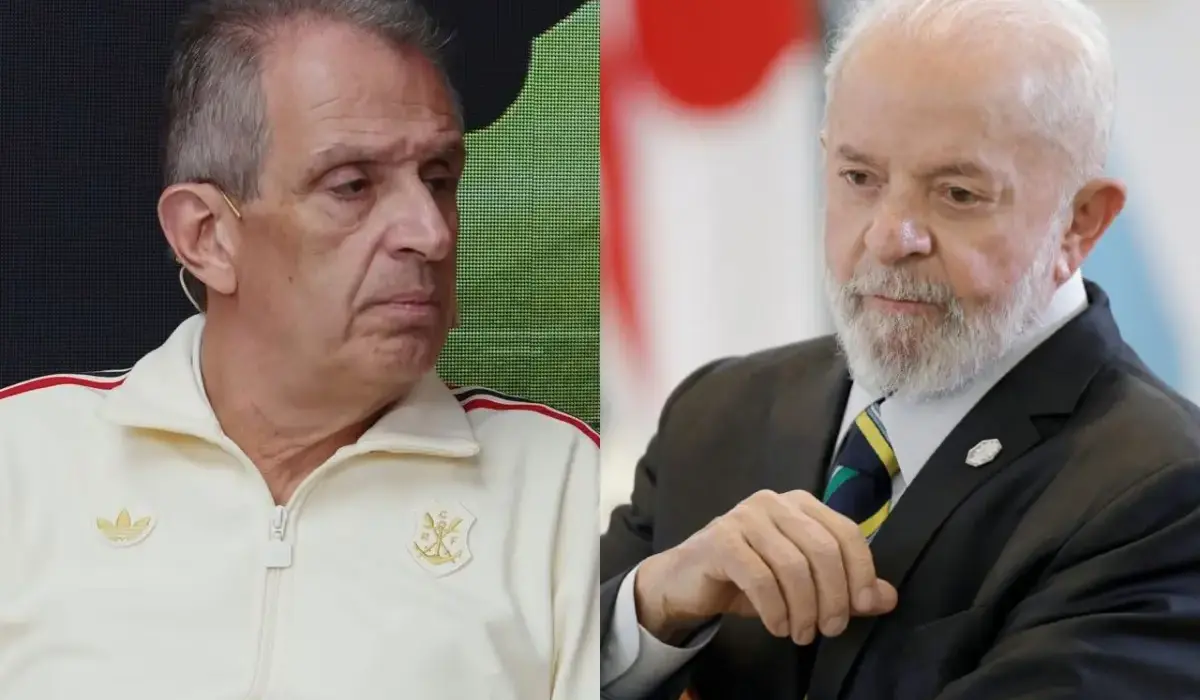
Brazilian football clubs are staging widespread protests and warning of severe financial distress following a sudden and sweeping decree signed by President Luiz Inácio Lula da Silva that bans online betting, online casinos, and all advertising by gambling companies across the nation.
The high-stakes initiative was officially announced on September 25 and is designed to take effect immediately, though it still requires formal congressional approval within a 120-day window to remain permanent. In tandem with the decree, President Lula announced plans to submit a comprehensive new bill to the legislature aimed at explicitly incorporating gambling offenses directly into the Brazilian Criminal Code, a move that would significantly stiffen criminal penalties against illegal betting operations and ensure that unauthorized entities face immediate prosecution.
The swift executive action has sent immediate shockwaves through the upper echelons of Brazilian sports, particularly within top-tier professional football organizations that have grown heavily reliant on gambling revenue over recent years. Flamengo President Luiz Eduardo Baptista became one of the most prominent voices of opposition, sharply criticizing the outright ban during a detailed interview broadcast on the club’s official YouTube channel. Baptista argued that the sudden policy shift directly undermines the foundational financial commitments and operational budgets of major institutions, pointing out that online betting and gaming companies have rapidly evolved into some of the single largest and most lucrative commercial sponsors supporting Brazilian professional football.
Highlighting the competitive imbalance the decree could introduce across South American sports, Baptista remarked that rival leagues in neighboring countries were likely pleased by the disruption. He noted that in Argentina, administrators were practically celebrating the move, warning that the sudden loss of capital will fundamentally weaken the global standing and competitiveness of Brazilian football clubs. Raising practical concerns regarding upcoming transfer windows and squad maintenance, Baptista questioned how clubs will manage their financial obligations moving forward, specifically asking how his club is expected to fund high-profile commitments, such as the acquisition of former Brazil international midfielder Lucas Paquetá, scheduled for January.
Quantifying the immediate economic fallout, the Flamengo president estimated that his club alone faces potential revenue losses hovering around R$400 million, which translates to just under US$76.7 million. Despite the severity of the blow, Baptista expressed hope that the sudden policy initiative would face serious legal challenges and eventually be revisited, either by intervention from the Supreme Federal Court or through a rejection by the National Congress, ultimately leading to the measure being struck down.
Emphasizing the broad scope of the impending financial damage, Baptista explained that the decree does far more than simply disrupt first-team shirt sponsorships. He stressed that the measure compromises critical future revenues across the entire sporting ecosystem, noting that it directly impacts the core football payroll, ongoing player acquisitions and structural investments, funding for vital Olympic sports programs, and essential tax incentives that rely on corporate sports sponsorships to function effectively.
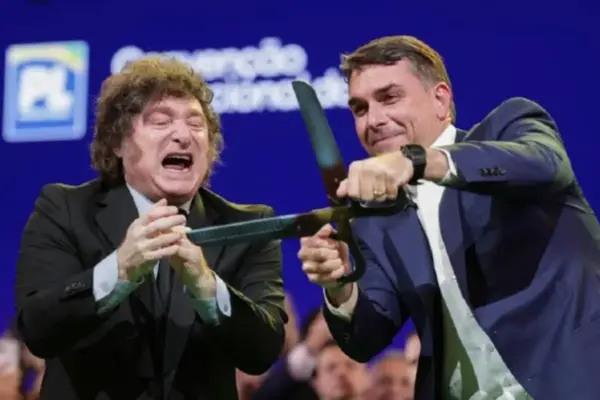
Baptista’s public outcry elicited a deeply divided reaction among passionate football supporters across the country. While a faction of fans rallied behind the president’s decree, arguing that clubs had become dangerously dependent on predatory gambling money, they urged leadership to focus on securing alternative corporate sponsors rather than complaining about regulatory interventions. Conversely, other vocal segments of the fan base reacted with political frustration, hinting at the possibility of shifting their political allegiance back toward the far-right movement championed by figures like Flávio Bolsonaro in response to what they viewed as heavy-handed government interference in the national sport.
Increased revenue dependency
The current friction between the federal government and professional sports clubs stems from a massive surge in commercial partnerships that followed the initial legalization of fixed-odds betting back in 2018. Under the legal framework established at that time, bettors were given the ability to know their potential payout before placing a wager, sparking an explosion of interest and transforming the industry. In the years that followed, marketing campaigns, jersey sponsorships, and stadium advertisements by online betting platforms became increasingly ubiquitous across all levels of Brazilian football.
The depth of this financial integration reached staggering heights by 2025. According to a comprehensive survey conducted by the prominent sports marketing and management firm Sports Value, total marketing income generated by betting companies within Brazilian top-tier football reached an astonishing R$1.143 billion, equivalent to just under US$220 million in direct sponsorships.
On average, income derived from online betting platforms accounts for roughly 36% of a typical Brazilian club’s total marketing revenue. However, the reliance is unevenly distributed, with certain powerhouse clubs having structured their entire commercial models around the industry. For instance, clubs like São Paulo have grown exceptionally dependent on the sector, drawing an eye-opening 73% of their total sponsorship income directly from online betting and gaming services. The sudden elimination of this revenue stream threatens to leave a massive budgetary void that clubs will struggle to fill on short notice.
Blackout coming in October
The administrative reality of President Lula’s decree sets a remarkably tight timeline for compliance, mandating that all online betting companies operating within the country must completely go offline by October 6. Furthermore, the government order stipulates that platform users must be given adequate time to withdraw any remaining financial balances from their accounts before the final plug is pulled.
Under the stringent terms of the new executive decree, operating or running fixed-odds betting by any means, digital or physical, will instantly become a serious criminal offense. Violators will face severe legal consequences, including prison sentences ranging from four to six years, alongside substantial financial penalties and fines. Crucially, the government has made it clear that these strict penalties will apply universally, even if the operator in question holds valid authorization, licenses, or regulatory approval from a foreign authority or overseas jurisdiction.
The crackdown addresses a massive unregulated market that has flourished despite previous legislative efforts. Recent research conducted by the Brazilian digital monitoring platform Bet Legal reveals that an alarming 543 distinct betting sites were launched illegally within the country following earlier federal efforts to restrict or regulate online wagering.
With the implementation of this comprehensive decree, Brazil has suddenly leaped to the forefront of global sports governance, enacting one of the most aggressive and absolute bans on online betting within the context of professional football anywhere in the world.
While Brazil’s total ban is unprecedented in its immediate scope and severity, several of Europe’s most prestigious football leagues have previously experimented with or implemented partial and complete restrictions on betting advertising to curb problem gambling and reduce the visibility of gambling brands. Italy’s top-flight Serie A league has maintained a strict, full-scale ban on betting advertising and sponsorships since 2018, serving as a long-standing European model for the approach. Following a similar trajectory, Spain’s La Liga implemented a comprehensive ban on gambling sponsorships in 2021, forcing clubs to rapidly strip betting logos from jerseys and stadium boards.
In the United Kingdom, discussions surrounding the influence of the gambling industry culminated in April 2023, when the English Premier League announced a collective voluntary agreement among its clubs to implement a ban on sports betting companies serving as front-of-shirt sponsors. However, unlike the immediate criminalization and total blackout ordered in Brazil, the English top flight structured its ban to take effect gradually, with a target implementation date set for the start of the 2026-27 football season to give clubs adequate time to transition their commercial portfolios.