











Initial economic assessments and regional tourism board figures reveal that the financial windfall was staggering. In Buenos Aires City alone, the economic impact exceeded US$88 million, driven by a relentless influx of domestic travelers and international pilgrims. Meanwhile, smaller historic destinations saw their lodging infrastructure pushed to its absolute limits. Hotel occupancy in Luján, the site of the culminating mass, skyrocketed to an estimated 90 percent, while the provincial capital of Córdoba reported an average hotel occupancy of 60 percent, with high-end properties enjoying complete sellouts.
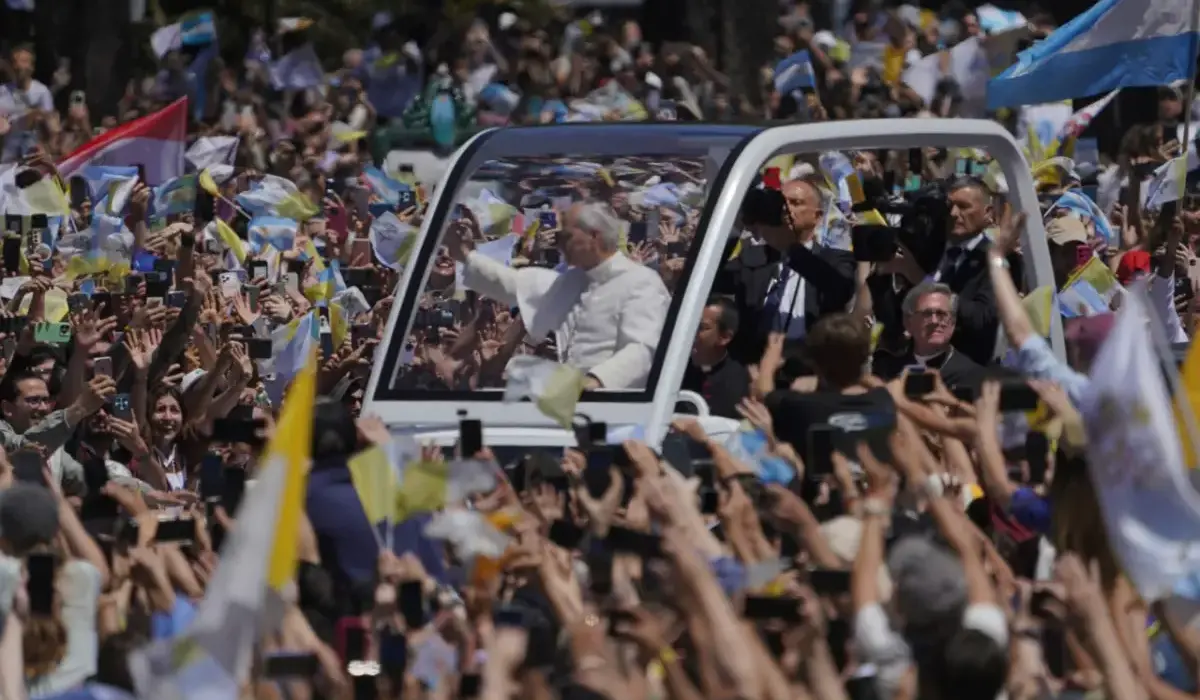
The spiritual draw of the visit brought out massive, historic crowds, particularly in Buenos Aires City and the broader Buenos Aires Province. Event organizers and security officials estimate that more than 2.5 million people gathered for the solemn and emotionally resonant mass held at the Monumento a los Españoles. Days later, the focus shifted to the historic town of Luján, where more than 3.5 million faithful converged on Wednesday in front of the iconic basilica. For generations, thousands of Argentines have made an annual pilgrimage to this sacred site from every corner of the country to pray to the Virgin Mary for her blessings, but the arrival of Pope Leo XIV elevated the gathering to a historic national milestone.
Domestic tourists and international visitors
The scale of the movement across the country became clearer as regional tourism authorities tallied the arrivals. The Buenos Aires City Tourism Board reported that an estimated 1.24 million visitors arrived in the capital between November 6 and 10. Of that total, 242,000 were categorized as overnight visitors. This specific cohort included approximately 165,000 domestic tourists traveling from various Argentine provinces and 77,000 international visitors who crossed borders to witness the papal events. In addition to overnight guests, nearly one million day-trippers poured into the capital for short stays, filling public squares, transit networks, and commercial establishments.
The momentum was not confined to the capital. In the central province of Córdoba, a massive celebration held at the Argentine Aircraft Factory, known locally as FAdeA, drew more than 650,000 people on November 10, according to figures released by the Vatican. While overall hotel occupancy in the provincial capital hovered around 60 percent, premium and luxury hotels reached full capacity. The digital rental market experienced an even more dramatic surge; accommodation searches for Córdoba and the nearby city of Alta Gracia on Airbnb skyrocketed by more than 400 percent compared to the same period in the previous year, demonstrating a fierce appetite for lodging among visitors seeking alternative accommodations.
In Luján, the convergence of millions of faithful for the mass held on Wednesday, November 11, created a lodging landscape defined by near-total saturation. Prior to the celebration, hotel occupancy had already exceeded 90 percent. Digital tourism platforms recorded unprecedented interest, with accommodation searches on Booking rising by more than 1,800 percent year over year, while Airbnb searches surged by more than 500 percent.
Despite these impressive figures, a significant share of the overall tourism and economic activity was not fully captured by traditional hotel industry statistics. A vast portion of the economic boost came from same-day round trips, short-stay excursions, and regional travel to the religious celebrations. This immense movement of people directly stimulated the transportation sector, increased restaurant spending, and fueled retail consumption across the entire route of the papal tour.
The ripple effects of the pilgrimage were clearly visible on major regional transit corridors. In Entre Ríos, traffic passing through the subfluvial tunnel connecting the province with Santa Fe—a primary route for travelers heading toward Buenos Aires or Córdoba—doubled its usual volume. Transit data showed that between midnight and 1 p.m. on Saturday, 4,200 vehicles entered the province, a stark contrast to the usual baseline of 2,000 vehicles for the same time window.
To manage the staggering logistical challenge of moving millions of people safely and efficiently, local authorities and transport operators implemented extensive special measures. To accommodate the massive wave of travelers heading to Luján, the Sarmiento railway line added 42 special trains departing from Moreno between Tuesday and the early hours of Wednesday. Services across seven metropolitan railway lines were also significantly increased to handle the passenger load. Furthermore, event organizers distributed 24,000 SUBE transit cards to provide free rides for volunteers, and coordinated a dedicated fleet of buses to transport approximately 4,000 participants directly from Buenos Aires City, ensuring that the logistical demands of the historic papal visit were met with comprehensive public planning.