






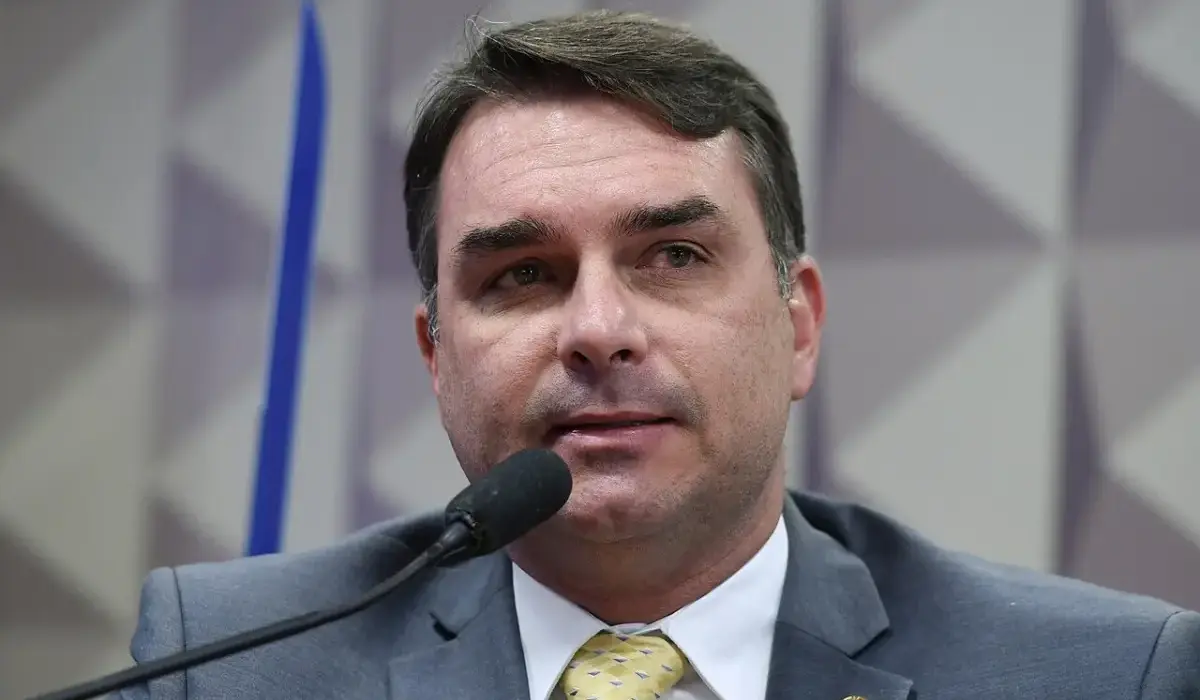
Former Brazilian presidential candidate and senator Flávio Bolsonaro has broken his silence regarding his sudden and secretive departure from South America, asserting that he orchestrated his escape to the United States entirely on his own without foreign or governmental assistance. In a recent interview with The New York Times, Bolsonaro addressed the intense speculation surrounding his clandestine journey, which bypassed an active judicial travel ban and traversed multiple international borders before his eventual arrival in Miami, Florida.
The 45-year-old conservative politician landed in Miami on October 28, just three days after suffering a decisive defeat in the presidential runoff election against incumbent leftist leader Luiz Inácio Lula da Silva. The dramatic turn of events unfolded rapidly in the wake of the electoral outcome. On the morning immediately following the election, Brazilian authorities imposed a strict travel ban on Bolsonaro, citing concerns that he represented a severe flight risk. Later that same Monday evening, Bolsonaro appeared in a video message broadcast across social media platforms, assuring the public and legal authorities that he would fully comply with the judicial restrictions.
However, shortly after releasing the video, he seemingly vanished from the nation’s capital of Brasília. For roughly 36 hours, his whereabouts remained entirely unknown, triggering an urgent scramble among journalists, security analysts, and judicial officials to determine how a high-profile political figure under a travel restriction could disappear from sight.
Bolsonaro resurfaced in Miami on Wednesday. Subsequent tracking of his movements revealed that he had slipped out of Brazil and traveled to the Argentine border city of Puerto Iguazú. From there, he boarded a private aircraft that utilized an intermediate refueling stop in Guayaquil, Ecuador, before completing the long-haul flight to Florida.
The method and means of his departure immediately ignited a firestorm of controversy and investigative queries in both Brazil and neighboring Argentina. Chief among the pressing questions was whether Bolsonaro had entered Argentina through official, legal channels and whether he had received covert logistical or political assistance from Argentine President Javier Milei, a fellow ideological conservative and former political ally.
Addressing these allegations directly in his interview with The New York Times, Bolsonaro firmly denied receiving any outside help. "I did it all on my own. I didn’t get any help from anyone at all, from any government," Bolsonaro stated. When pressed further for the logistical details of how he managed to evade border controls and transit through multiple countries while under an active judicial prohibition, he offered a definitive and cryptic response: "How I got here is something I’ll take to my grave."
‘Lost to the System’ and Mounting Legal Peril
Beyond the logistics of his international transit, Bolsonaro used the interview to level severe criticisms against the Brazilian judiciary, characterizing the nation’s legal institutions as deeply politicized and biased against him and his political allies.
Although the former presidential candidate currently faces no formal criminal charges, his legal jeopardy is substantial. The Supreme Federal Court of Brazil had previously ordered him to surrender his passports in connection with two separate, ongoing judicial investigations centered on allegations of corruption and money laundering. These pending investigations, combined with his high political profile and the impending expiration of his parliamentary immunity, formed the basis for the Supreme Court’s decision to classify him as a flight risk following his electoral defeat.
Bolsonaro’s mandate as a federal senator is scheduled to conclude in early 2027. Once that term expires, he will permanently lose the parliamentary protections afforded to sitting lawmakers, exposing him to immediate criminal prosecution, trial, and potential imprisonment.
"I know that the end result will be my imprisonment," the Liberal Party candidate said, pointing to what he perceives as an inevitable judicial outcome as the primary motivation behind his decision to flee the country rather than face the domestic legal system.
Despite the official certification of the electoral results by independent electoral authorities and the formal acceptance of the outcome by his own political party, Bolsonaro steadfastly refused to concede the presidential race. Instead, he framed his defeat not as the result of a democratic ballot, but as a consequence of being "lost to the system."
Without presenting verifiable evidence to support his claims, Bolsonaro asserted that Lula da Silva’s eventual victory—which followed Bolsonaro leading the initial round of voting—was mathematically impossible. He told The New York Times that he harbored deep suspicions regarding the integrity of electronic voting machines and maintained that no one could definitively prove his fraud allegations incorrect, even while acknowledging the lack of conclusive proof to substantiate them.
Judicial Investigations Unfold in Argentina
While Bolsonaro remains settled in Florida, the political fallout from his transit through Argentina has triggered formal judicial and legislative inquiries in Buenos Aires. The investigations were officially initiated following criminal complaints filed by left-wing Buenos Aires City lawmaker Gabriel Solano and deputy Esteban Paulón, who demanded a thorough examination of whether Argentine state resources were improperly diverted to aid the fugitive Brazilian politician.
Federal prosecutor Paloma Ochoa has taken charge of the inquiry, which aims to determine whether official vehicles, government personnel, public funds, or other state assets were utilized to facilitate Bolsonaro’s movement across Argentine territory. A central focus for investigators is establishing whether a coordinated effort existed among various branches of the executive government to grant preferential treatment or unauthorized logistical support to Bolsonaro and members of his family during their passage.
Furthermore, the prosecutor’s office is examining whether specific political directives were issued to compel border agents and administrative personnel to bypass standard protocols, or whether officials deliberately neglected to execute mandatory security and immigration checks.
To secure evidentiary material, Federal Judge María Eugenia Capuchetti, who is presiding over the judicial case, has issued formal legal orders aimed at preserving critical digital records and surveillance data. Judge Capuchetti ordered the immediate preservation of security camera footage captured at the Tancredo Neves International Bridge, the Puerto Iguazú airport, and the surrounding border control zones managed by national migration and customs authorities. The requested footage specifically covers the timeframe between October 27 and October 28, corresponding directly to the dates Bolsonaro and his family members allegedly moved through the region.
In tandem with the video evidence, the federal court has formally requested comprehensive reports from the National Directorate of Migration. These documents are intended to verify official entry and exit logs for the Brazilian politician, alongside detailed records of any formal inspections conducted on the passengers and the private jet utilized for the international flight out of the country.
The judicial scope has also widened to include inquiries directed at Argentina’s Foreign Ministry and Security Ministry. Judge Capuchetti has instructed these ministries to provide all relevant documentation indicating whether they received prior warnings, diplomatic communications, or formal requests for international police cooperation from Brazilian authorities regarding Bolsonaro’s restricted legal status and the active travel ban imposed by the Supreme Federal Court in Brasília. As the judicial investigations in Argentina progress alongside the ongoing scrutiny of his legal status in Brazil, the circumstances surrounding Bolsonaro’s departure continue to draw intense international attention.