







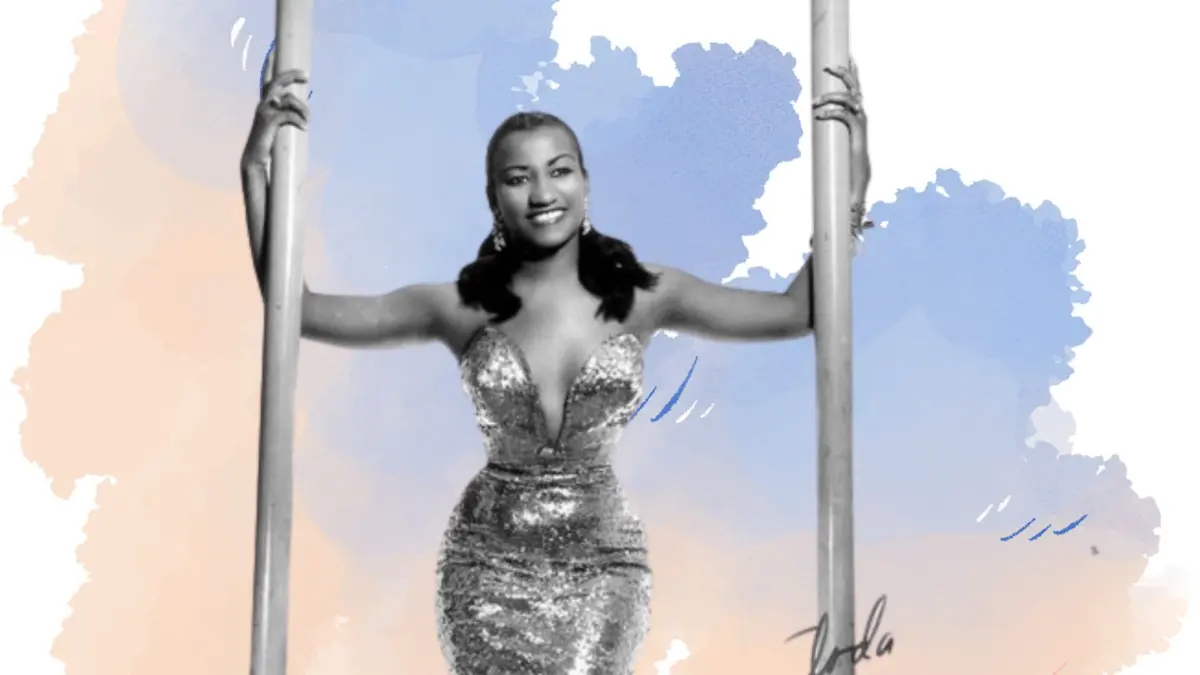
Celia Cruz’s legacy in global music is nothing short of monumental. With a storied career that spanned decades, the beloved Afro-Latina icon accumulated a remarkable array of honors: a Grammy Award, a star on the Hollywood Walk of Fame, a Presidential Medal of Arts, her own Barbie doll, a commemorative U.S. quarter featuring her likeness, and even an asteroid named in her honor orbiting quietly between Mars and Jupiter. In 2023, Rolling Stone ranked her 18th on its prestigious list of the greatest singers of all time, positioning her as the sole Latina in the top 20, comfortably nestled between music legends Elvis Presley and Frank Sinatra in a category that leaves little room for debate. As the world reflects on what would have been her 101st birthday, several defining stories about the Queen of Salsa continue to illuminate the depth, resilience, and global reach of her extraordinary life.
Whoopi Goldberg Spent Years Preparing to Play Her in a Film That Never Got Made
The cinematic history of Celia Cruz features a notable phantom project that involved one of Hollywood’s most prominent figures. In January 2025, actress and comedian Whoopi Goldberg revealed to the studio audience on The View that she had spent years preparing to star in a biographical film about the legendary singer. Goldberg shared that she had diligently learned Spanish, secured her preparation, and dedicated significant time to the venture, only for the project to ultimately stall and outlast the momentum required to bring it to the screen.
Historical reports following Celia’s passing in 2003 indicated that acclaimed actor Samuel L. Jackson had even been considered for the role of Pedro Knight, Celia’s devoted husband and musical collaborator. Despite the high-profile talent attached, the film never advanced into full production. Studio decision-makers reportedly argued that Celia had lived too normal and stable a life to sustain the dramatic narrative arc typically expected of a theatrical biopic—a reasoning that Goldberg, a close friend and one of Celia’s most vocal admirers, fiercely rejected.
On television, Goldberg described Celia as an artist entirely unlike anyone else she had ever known. Celia herself had previously addressed the cinematic venture during an interview with celebrated Cuban-American journalist and host Cristina Saralegui. During the broadcast, Celia confirmed that she had authorized a film adaptation based directly on her autobiography, expressing her belief that the medium would introduce her music and story to newer generations who had not yet encountered her name. Although the biographical film never materialized, Celia’s dynamic voice and magnetic presence carried her name to every corner of the globe without the aid of Hollywood.
The Word “Azúcar” Was Never Supposed to Become an Anthem
The iconic exclamation that became synonymous with Celia Cruz’s performances carries an origin far more grounded than the rich mythology that later surrounded it. Far from being a calculated branding choice, the legendary shout of "¡Azúcar!" was born entirely by chance during a routine dining experience.
Celia herself recounted the simple beginning of the phrase: she adopted the word after a waiter at a Miami restaurant politely asked whether she wanted sugar in her Cuban coffee. Struck by the interaction, she decided to playfully bring the moment onto the stage with her during her next performance. What began as a spontaneous culinary query gradually evolved into a powerful vocal signature, utilized to celebrate the sheer sweetness of a live performance while proudly affirming her deep Cuban and Afro-Latina roots.
Cultural institutions have since ascribed profound historical weight to the phrase. The Smithsonian’s National Museum of African American History and Culture framed the exclamation within a much broader cultural context, describing the word as a poignant echo of the enslaved Africans who toiled relentlessly in Cuba’s grueling sugar mills. This historical interpretation transforms what started as a casual stage joke into a resonant expression of cultural memory and endurance. The Smithsonian even produced a dedicated segment through Smithsonian Music to explore the full significance of the phrase, featuring curator Marvette Pérez discussing how a single word came to encapsulate generations of heritage.
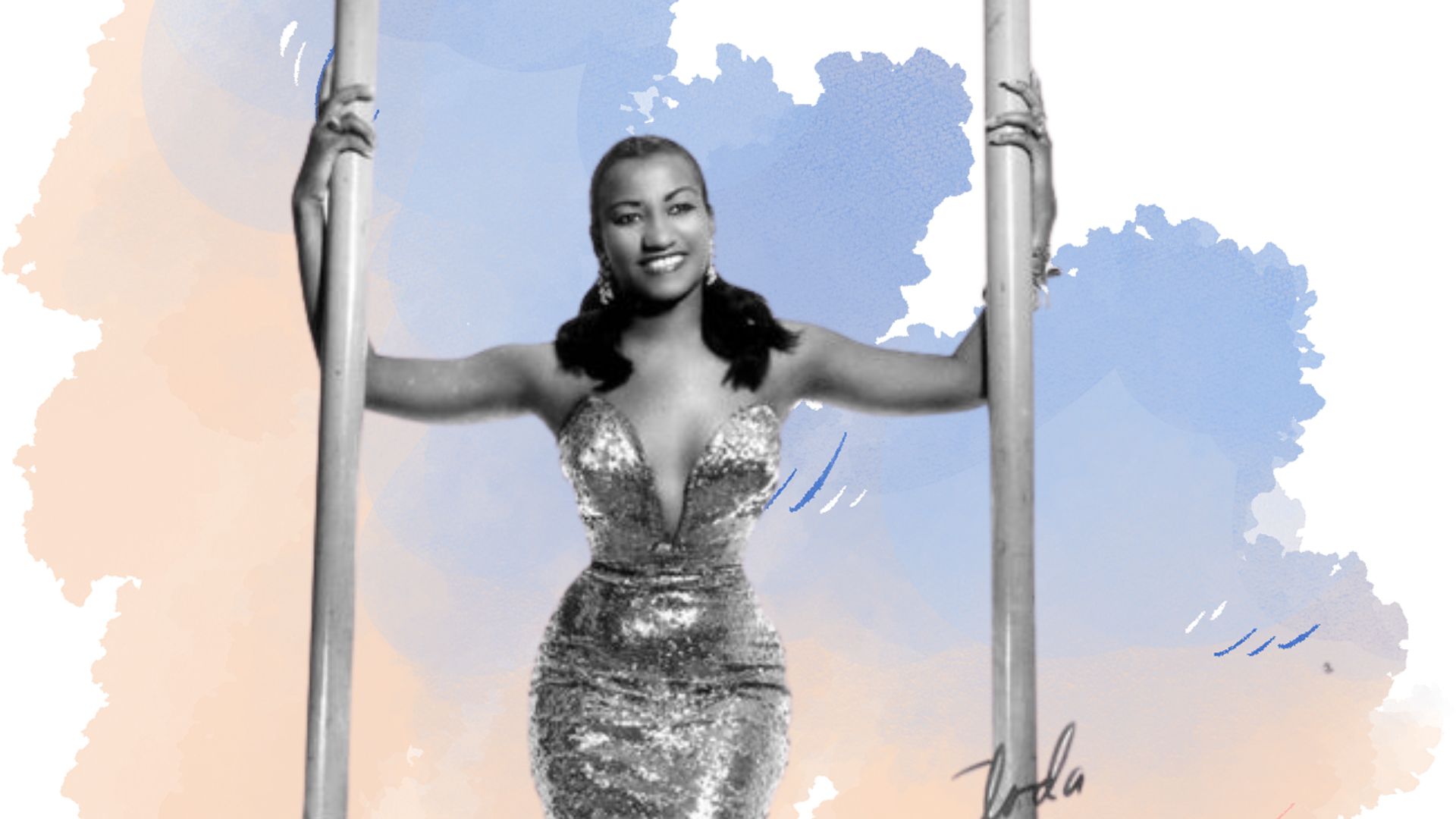
She Sang in Japanese at Least Once and the Audience Gave Her a Standing Ovation
Throughout her illustrious commercial career, Celia Cruz made a deliberate and consistent choice to record and perform exclusively in Spanish. She was remarkably transparent about this artistic boundary, noting in a 2002 interview that while she had covered the Beatles’ "Ob-La-Di, Ob-La-Da," she did so entirely in Spanish, emphasizing that audiences had never seriously demanded English-language recordings from her. Her memorable cameo in the 1992 feature film The Mambo Kings required subtitles to translate her vibrant exchanges, and her acclaimed 2000 release "Yo Viviréf," a salsa adaptation of Gloria Gaynor’s disco anthem "I Will Survive," was delivered entirely in her native tongue.
However, a surprising exception to her Spanish-only rule occurred in 1988 during a performance at the Newport Jazz Festival in Madarao, Japan. When Celia discovered her face gracing the cover of a Japanese music magazine, she decided that the local audience deserved a unique gesture of appreciation. Embracing the challenge, she performed a piece composed by renowned Cuban pianist Armando Orefiche—not in Spanish, but entirely in Japanese. The unexpected linguistic tribute stunned the concertgoers, whose immediate reaction was an enthusiastic and prolonged standing ovation.
Yuri Opened for Her as a Teenager and Celia Told Her to Change Her Sound
The trajectory of Mexican pop singer Yuri was profoundly altered by a pivotal backstage encounter with Celia Cruz early in her career. As a teenager, Yuri frequently opened concert dates for the Queen of Salsa. During one such engagement, Celia pulled the young performer aside and offered professional advice, suggesting that Yuri transition away from contemporary pop-rock and toward tropical music, predicting that her powerful voice would achieve far greater expression within that genre.
Yuri has frequently credited that conversation with opening professional doors that she otherwise never would have discovered. The two artists eventually reunited in a recording studio in Mexico City in 1997 to collaborate on a special compilation album, laying down spirited renditions of classic tracks like "Quimbara" and "Burundanga." Archival audio from the recording session captures Yuri expressing her awe with the affectionate exclamation, "Ay, Dios mío, Celia, hasta que se me hizo, mama," to which Celia immediately replies with characteristic warmth, "Hasta que se te hizo, Yuri."
When an inquisitive reporter later asked Celia whether Yuri could be considered her musical successor, the veteran icon laughed off the premise. She remarked that her own vocal timbre did not resemble anyone else’s, asserted that Yuri would never be in direct competition with her because the younger singer’s style was entirely her own, and jokingly asked the press corps whether they were already attempting to force her into retirement.
There Is an Asteroid Named After Her Orbiting the Sun Right Now
Celestial mechanics eventually caught up with the stellar status of Celia Cruz. In 1989, Japanese astronomers Seiji Ueda and Hiroshi Kaneda discovered a previously uncharted asteroid from the Kushiro Observatory in Hokkaido. In recognition of her immense cultural impact, the International Astronomical Union eventually designated the celestial body as 5212 Celiacruz.
Residing securely within the main asteroid belt situated between Mars and Jupiter, the asteroid measures approximately 12.9 kilometers in diameter and completes a single orbit around the sun approximately every 5.27 years. During a television appearance on Cristina Saralegui’s program, Celia had once laughingly referred to herself as the high-ranking official of salsa—a title delivered with a knowing chuckle that acknowledged its absolute accuracy. Today, that title extends quite literally into the cosmos, providing her with a permanent piece of the solar system to accompany her numerous Grammys, her presidential medal, her dedicated postal stamp, and her star on the Hollywood Walk of Fame. As time continues to demonstrate, the only Latin woman featured in Rolling Stone’s all-time top 20 singers is also, undeniably, an astronomical fact.