










Look around the bustling streets of Buenos Aires, and you will immediately notice a rapidly expanding culinary phenomenon: a modern-day explosion of artisanal burger joints. From traditional smash burgers and casual sliders to towering gourmet creations and even an infamous, controversial raw beef burger, ground beef has firmly taken center stage in the Argentine capital’s contemporary dining scene.
While food enthusiasts across the country are enthusiastically embracing this newfound gastronomic obsession, a very different sentiment prevails in households with young children. For parents, the omnipresent burger trend feels less like a cultural upgrade and more like a lingering public health nightmare. Their anxieties extend far beyond the standard nutritional concerns regarding junk food consumption and childhood obesity.
The primary source of dread is a severe, potentially life-threatening condition known as haemolytic uraemic syndrome, widely referred to simply as HUS. The syndrome poses an exceptionally high risk to children under the age of five, making ground beef—the fundamental building block of the modern burger craze—its most notorious vehicle.
The disease is triggered by dangerous bacterial strains naturally found within cattle, which are ultimately carried into the human food chain through contaminated agricultural products, most notably undercooked minced meat. This pathogen, known scientifically as Escherichia coli, resides comfortably within the intestinal tracts of cattle. When the bacteria produce a potent poison called Shiga toxin, it can spark severe health complications, beginning with bloody diarrhea and acute abdominal pain before progressing to irreversible kidney damage.
A Stark National Burden
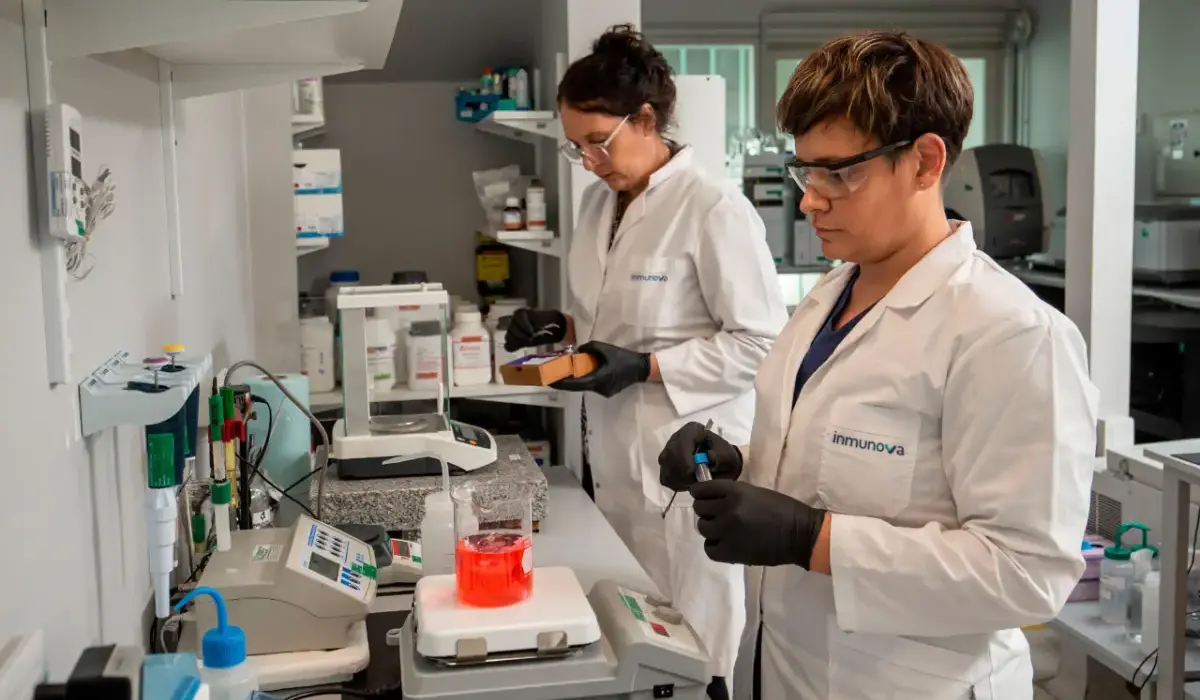
Argentina currently holds the unfortunate distinction of having the highest incidence of HUS anywhere in the world. According to data provided by biologist Vanesa Zylberman, research and development manager and technical director at the Argentine biotechnology firm Inmunova, approximately 300 children develop the disease annually across the country.
“There is no specific treatment for HUS today,” Zylberman told the Herald. “All that can be done is supportive care.”
This exceptionally high national burden served as the direct catalyst for Inmunova’s ambitious mission: to develop what could potentially become the world’s first targeted, specific treatment for the devastating condition. Their investigational drug candidate, designated as INM004, has advanced significantly and is currently undergoing Phase 3 clinical trials, marking the final and most rigorous stage of human testing before the company can formally pursue official regulatory approval.
The international trial is massive in scope, encompassing 220 pediatric patients ranging from nine months to 18 years old. The research is actively being conducted across more than 40 specialized healthcare centers situated in both Argentina and Europe, reflecting the global significance of a disease historically concentrated in South America.
Why Is HUS So Prevalent in Argentina?
Contamination with Shiga toxin-producing Escherichia coli, commonly abbreviated as STEC, is not exclusively tied to meat consumption. The bacteria can also spread through other food products or water sources tainted with fecal matter, including fresh fruits and vegetables.
However, minced and ground beef presents a uniquely challenging vector. When an intact cut of beef is contaminated, the bacteria generally reside exclusively on the outer surface of the meat. The grinding process, however, thoroughly mixes these surface bacteria throughout the entire mass of the product.
“That’s why in many parts of the world it is known as hamburger disease,” Zylberman explains.
The exceptionally high rate of HUS cases in Argentina cannot be attributed to any single isolated factor. Instead, Zylberman notes that it is the result of a complex convergence of variables, including deeply ingrained dietary habits, a massive national cattle population, specific circulating bacterial strains, and regional environmental conditions.
“We eat a lot of meat, there are a lot of cattle, and sometimes there’s a lack of control over certain types of consumption,” she notes.

Furthermore, reported cases tend to surge notably during the warm summer months. During this seasonal window, many Argentines travel extensively and consume meals in environments where commercial food-handling standards and cold-chain management may vary significantly.
Crucially, the roughly 300 clinical cases diagnosed annually represent merely the tip of the iceberg regarding total STEC infections. Zylberman estimates that approximately 90% of individuals who contract the bacteria never actually develop full-blown HUS, frequently recovering spontaneously without medical intervention. Many infections also evade official diagnosis entirely because they manifest with extremely mild symptoms or none at all.
Nevertheless, when the syndrome does strike in its full severity, the clinical consequences are profound. Zylberman emphasizes that HUS stands as the leading cause of renal transplants among adolescents in the country.
Clinical Signs and Red Flags
The initial clinical manifestations of a STEC infection typically originate in the gastrointestinal tract, emerging roughly three to four days after a patient ingests the contaminated material.
The early phase is characterized by severe stomach pain, featuring intense abdominal cramps that patients often describe as sharp, twisting knots. This discomfort is soon followed by diarrhea, which generally begins in a watery form before progressing to visible blood within the first 24 hours. Many sufferers also experience persistent nausea and frequent vomiting, making it exceedingly difficult to retain oral fluids. These systemic symptoms are frequently accompanied by either no fever at all or a very mild, low-grade temperature.
According to attending physicians, the single most critical red flag is a sharp reduction or total cessation in urination, particularly if this symptom appears just as the preceding diarrhea seems to be improving. This alarming urinary drop serves as a definitive clinical sign that the intestinal infection has successfully transitioned into systemic HUS, indicating that the kidneys are actively shutting down.
Heightened Vulnerability in Young Children
The syndrome disproportionately affects small children for two fundamental reasons. First, Zylberman points out that a toddler or young child’s immune system is still actively developing and lacks the maturity to mount an effective defense.
Second, there is a more complex physiological mechanism at play: the kidneys of small children possess a significantly higher density of specific cellular receptors that actively attract the Shiga toxin. This chemical affinity draws the circulating poison directly to the renal cells, triggering intense internal destruction and accounting for the severe damage typically observed in pediatric cases.
Additionally, small bodies dehydrate at an accelerated rate when subjected to severe diarrheal illness. As a pediatric patient loses vital fluids, blood flow to the kidneys diminishes drastically, creating an environment where the delicate organs find it nearly impossible to recover from the initial insult.
This profound physiological devastation is precisely why HUS is treated as a critical public health crisis, despite affecting a relatively small share of the general population. Because specific pharmaceutical interventions have historically been unavailable, physicians are currently limited to managing the crisis through supportive care alone.
During the acute phase of the illness, approximately 40% to 50% of hospitalized patients require mechanical dialysis to artificially filter their blood. Long-term complications for survivors can be lifelong and severe, encompassing chronic kidney disease, persistent hypertension, and lasting neurological damage. Inmunova estimates that the disease carries a fatality rate of approximately 3% in acute cases.
The Science Behind the Argentine Treatment Approach
Treating STEC infections has long presented a major pharmacological paradox: physicians cannot rely on standard antibiotics to eliminate the bacteria, which is the customary medical response to most bacterial pathogens.
When exposed to antibiotic therapy, STEC bacteria do not simply die; instead, the pharmaceutical agent induces severe cellular stress, prompting the surviving microorganisms to release even larger quantities of the dangerous Shiga toxin into the patient’s bloodstream.

This clinical impasse led researchers at Inmunova to pursue an entirely different therapeutic strategy: neutralizing the poison rather than attacking the microbe directly.
The resulting investigational drug, INM004, is a specialized biological medication formulated from polyclonal antibodies specifically directed against the Shiga toxin. The primary therapeutic objective of these antibodies is to bind securely to the toxin molecules before they can attach to the vulnerable receptors on human kidney cells, thereby short-circuiting the destructive chain reaction that causes severe disease.
The foundational concept has been under scientific investigation for years, with Zylberman herself dedicating her doctoral research to the study of targeted antitoxins.
The major technological breakthrough materialized through advanced protein engineering. Researchers designed a novel, customized molecule that successfully combines a specific, non-toxic portion of the Shiga toxin with another stabilizing molecular partner.
This engineered hybrid molecule is subsequently introduced into horses via standard veterinary immunization protocols. Once administered, it stimulates the animals’ robust immune systems to produce vast quantities of antibodies specifically tailored against the Shiga toxin, effectively transforming the livestock into what Zylberman describes as a “biological antibody factory.”
Zylberman emphasizes that the animals—chosen specifically because they naturally produce exceptionally high proportions of antibodies—experience no distress, suffering, or disease symptoms during the process.
“It is as if they were receiving another vaccine as part of their vaccination schedule,” she explains.
The resulting antibodies are subsequently harvested from the animals and purified through sophisticated biotechnological procedures to yield the final pharmaceutical grade medication.
Inmunova developed the foundational engineered molecule entirely within its own laboratories and currently holds two distinct international patents protecting the underlying technology. To execute the large-scale biological production, the company collaborates with the Argentine Biological Institute S.A.I.C. (BIOL), a private laboratory with deep expertise in manufacturing antivenoms and other complex antibody-based therapeutics.
Advancing Through Clinical Trials
Before human trials could ever commence, the experimental treatment had to navigate exhaustive preclinical testing phases, including rigorous evaluations using animal disease models.
Phase 1 clinical trials subsequently evaluated the safety profile of INM004 in healthy adult human volunteers. Following successful completion, Phase 2 trials advanced directly to pediatric patients who had already been diagnosed with HUS. This intermediate stage continued to monitor patient safety while simultaneously gathering preliminary clinical evidence regarding the drug’s therapeutic efficacy.
These early human studies provided highly encouraging signals indicating that INM004 can successfully help mitigate the severe renal damage driven by the Shiga toxin, although definitive proof of efficacy remained to be established. The promising results from these preliminary clinical investigations were subsequently published in peer-reviewed medical literature, including the British Journal of Clinical Pharmacology and Pediatric Nephrology.
Now, the enterprise faces its ultimate empirical test.

The ongoing Phase 3 study is structured as a randomized, double-blind clinical trial. All participating children receive the necessary standard supportive medical care required for their condition, while approximately half are randomly assigned to receive an additional intravenous dose of INM004.
While Inmunova will not be able to definitively establish the final efficacy rate of the medication until the trial concludes—a milestone expected in roughly a year—the team has strong grounds for optimism. An independent data-monitoring committee conducted a planned interim evaluation midway through the trial and formally recommended that the study should proceed without modification.
“One thing that has to be highlighted is that this is a development that began in a 100% Argentine company, from the creation of the molecule to its intellectual property,” Zylberman notes. “Reaching Phase 3 today is very significant.”
Regulatory Pathways and Future Availability
Even if the final clinical phase yields successful results, significant regulatory hurdles will remain before the treatment can be commercialized and distributed widely.
The project has already secured clinical trial authorizations from Argentina’s National Administration of Medicines, Food and Medical Technology (ANMAT), alongside approvals from the European Medicines Agency (EMA) and the United Kingdom’s Medicines and Healthcare products Regulatory Agency (MHRA).
Furthermore, both the EMA and the United States Food and Drug Administration (FDA) have granted INM004 official orphan-drug designation, a specialized regulatory status extended to pharmaceutical agents being developed to combat rare diseases and underserved medical conditions.
However, these international regulatory bodies will be required to conduct a thorough review of the final safety and efficacy datasets once Phase 3 concludes before granting formal marketing authorization. Consequently, there is currently no confirmed timeline for commercial availability.
Zylberman clarifies that if and when the treatment achieves regulatory approval, it will be distributed directly to institutional hospitals rather than commercialized for private retail purchase. Because it must be administered intravenously by trained medical professionals as part of a comprehensive hospital-based intervention, it is designed strictly for acute clinical settings.
For the foreseeable future, Argentina remains simultaneously the country with the highest documented burden of HUS in the world and the focal point where experimental medical science has advanced the furthest toward confronting it.
While parents and caregivers must maintain stringent food-safety precautions—particularly by ensuring ground meat is thoroughly cooked before being served to young children—the realistic prospect of a targeted pharmaceutical treatment represents a profound paradigm shift for a disease that has relied exclusively on supportive management since it was first formally identified in 1955.