











By Staff Reporters
The Federal Aviation Administration announced a rare nationwide ground stop on Friday afternoon, triggering a massive operational crisis that rippled across the U.S. air traffic control system and left hundreds of thousands of travelers stranded in airports from coast to coast.

The sweeping emergency order, which began shortly before 4 p.m., marked only the third time in recent history that a nationwide moratorium on flights has been enacted in the United States. Federal officials scrambled to diagnose a critical telecommunication outage affecting the agency’s Air Route Traffic Control Centers while scrambling to reassure the public that the sudden halt was purely precautionary and entirely unrelated to any security threat or terrorist activity.
Markwayne Mullin, the secretary of homeland security, addressed reporters as the scope of the crisis became clear, emphasizing that the federal government was treating the disruption with the utmost urgency. He explicitly ruled out any malicious or terror-related intent, comparing the situation firmly to infrastructural glitches rather than geopolitical threats.

"This isn’t another 9/11," Mullin said during a briefing. "This is a telecommunication outage."
Mullin cautioned that the technical failures plaguing the system would not be swiftly resolved. Warning travelers and aviation stakeholders to brace for prolonged delays, he noted that the restoration process would require a substantial commitment of technical resources.

"This isn’t going to just be resolved and turned around within the hour," Mullin said. "This is going to take some time. But once again, everybody is safe. Flights are accounted for, and there should be no fear to the public at large."
A Communication Breakdown Across Control Centers
The operational paralysis was first confirmed on social media by Transportation Secretary Sean Duffy, who pointed to a widespread "communication issue impacting all Air Route Traffic Control Centers." Duffy noted that agency technicians had been immediately mobilized to investigate the root cause of the breakdown and promised rapid updates as troubleshooting progressed.

Shortly after the initial warnings, the FAA issued an official advisory stating that "all airports are ground stopped" due to "extraordinary circumstances and for reasons of safety." The directive mandated that all departing traffic remain grounded until further notice, while incoming international flights would be handled on a case-by-case basis under the direction of regional controllers.
The digital infrastructure supporting the aviation network showed immediate signs of strain. Moments after the advisory was published, an FAA website listing air traffic control system notices appeared to crash, erasing dozens of critical operational notices that had previously been posted for pilots and airline dispatchers.

As the afternoon progressed, flight tracking data illustrated the immense scale of the disruption. According to FlightAware, more than 7,800 flights were delayed across the United States by late afternoon, with roughly 350 cancellations already logged—numbers that climbed past 10,000 delays and 1,700 cancellations by early evening. Aviation tracking platforms such as FlightRadar24 and Flighty reported that more than 1,000 airborne aircraft were still en route to U.S. destinations when the ground stop took effect, with tens of thousands of arrivals and departures scheduled for the remainder of the day.
While some airborne flights were permitted to touch down—with planes observed landing at Chicago’s O’Hare International Airport roughly half an hour after the announcement—airplanes preparing for departure remained locked in place. International aviation hubs also felt the immediate impact. Toronto’s Pearson International Airport and Mexico City’s Benito Juárez International Airport reported that U.S.-bound operations had been severely disrupted, leaving international carriers to manage stranded passengers and rescheduled itineraries.

Stranded Travelers and Gridlocked Terminals
Inside terminal buildings nationwide, the sudden ground stop transformed bustling travel hubs into scenes of quiet frustration and uncertainty. Millions of Americans pass through Transportation Security Administration security checkpoints on a typical day—with TSA data showing nearly 2.5 million screened on the preceding Thursday—and Friday’s disruption caught travelers at the worst possible moment.
The outage unfolded just two weeks before Thanksgiving, one of the busiest periods of the year for the American commercial aviation sector, during which industry trade group Airlines for America projects an average of 2.7 million daily passengers.

At Chicago’s O’Hare International Airport, Frank Foto, 34, watched his meticulously planned family vacation hit a brick wall. Foto and his family had booked a trip to Miami months in advance to celebrate his mother-in-law’s 60th birthday, including a planned cruise. Standing in the terminal, he worried whether they could make it to the port in time.
"On the bright side, I suppose it’s better than being stuck at sea—especially with him," Mr. Foto said, gesturing toward his infant son.

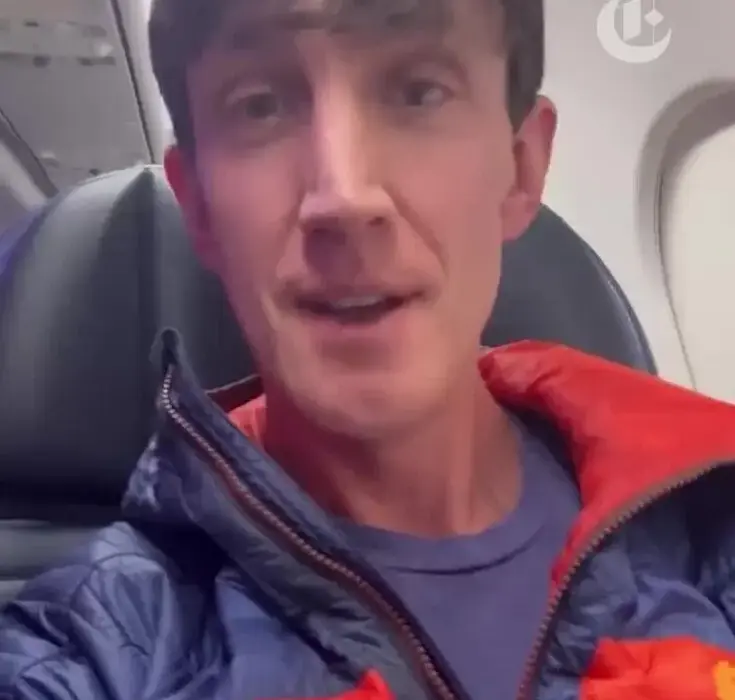
High above the Atlantic Ocean, passengers on long-haul flights experienced a surreal version of the crisis. Drew Armstrong, 45, of New York, was seated in the 44th row of a flight from London to John F. Kennedy International Airport, cruising at 34,000 feet, when he learned of the ground stop via social media. Minutes later, the flight crew made an announcement over the cabin intercom, explaining that pilots were working to land all international flights safely. Passengers woke from naps, abandoning their rest to pace the narrow aisles.
Back on the ground in Atlanta, Ashley Van Mills, 45, expressed the general unease felt by travelers facing an information vacuum at Hartsfield-Jackson International Airport. She had arrived hoping to catch an evening flight to Chicago.

"We’ve been flying for I don’t know how many years, and this doesn’t happen," she said. "It’s just the unknown that gives you an uneasy feeling."
At Denver International Airport, passengers were deplaned and directed away from their aircraft, carrying their luggage back into the terminal. While a handful of travelers immediately joined long lines to rebook their trips for the following day, most waited patiently on concourses for official updates. Southwest Airlines flight attendants circulated through waiting areas to distribute water and snacks, while flight crews attempted to keep spirits up amid mounting exhaustion.

Investigating the Roots of the Outage
As federal agencies worked to restore full functionality, lawmakers and transportation experts began scrutinizing the structural health of the nation’s air traffic network.
The Republican staff of the Senate Commerce Committee, which exercises congressional oversight over the FAA, pointed out that the core facilities at the center of the outage—Air Route Traffic Control Centers—have seen virtually no new construction in decades. "No new ARTCC has been built since LBJ was in office," congressional aides wrote on social media, highlighting that lawmakers had recently authorized $1.9 billion in legislation to replace and consolidate the aging facilities.

The crisis also reignited discussions regarding the agency’s ongoing technological modernization efforts. Just days prior to the incident, the FAA announced a nationwide rollout of a new artificial intelligence tool designed to help air traffic controllers mitigate delays. The system, known as SMART (Strategic Management of Airspace, Routes and Trajectories), was developed by Air Space Intelligence under an $875 million contract and had previously undergone limited testing, including a deployment in the Washington, D.C., area two months prior that coincided with a separate communication failure caused by a severed backup fiber optic line.
However, representatives for Air Space Intelligence quickly distanced their technology from Friday’s events. In a public statement, the company asserted that "the current ground stop is not based on or a result of the SMART system, any product of ASI or our integration with FAA and ATC."

Other major technology providers also clarified their status. Microsoft confirmed that it had no indication the FAA ground stop was connected to a separate global outage affecting its Outlook and email services from which the company was actively recovering.
Historical Precedent
Friday’s shutdown stands as an exceptionally rare disruption in modern aviation history. Prior to this incident, nationwide ground stops of this magnitude had occurred only twice.

The first and most notable took place on September 11, 2001, when the FAA ordered an unprecedented grounding of all commercial airspace in the wake of terrorist attacks against the World Trade Center and the Pentagon.
The second occurred more than two decades later, on January 11, 2023, when a morning system failure in the Notice to Air Missions (NOTAM) system—which alerts pilots to real-time hazards, closed runways, and airspace restrictions—forced a 90-minute national ground stop. That incident resulted in approximately 9,000 flight delays and 1,300 cancellations before normal operations could be fully restored.

As technicians continued diagnostic work late into Friday evening, federal officials stressed that safety remained the singular priority governing the step-by-step restoration of the nation’s airspace. Airlines advised all passengers to check individual flight statuses directly with carriers before returning to airports, as scheduling backlogs were expected to impact travel itineraries well into the weekend.