











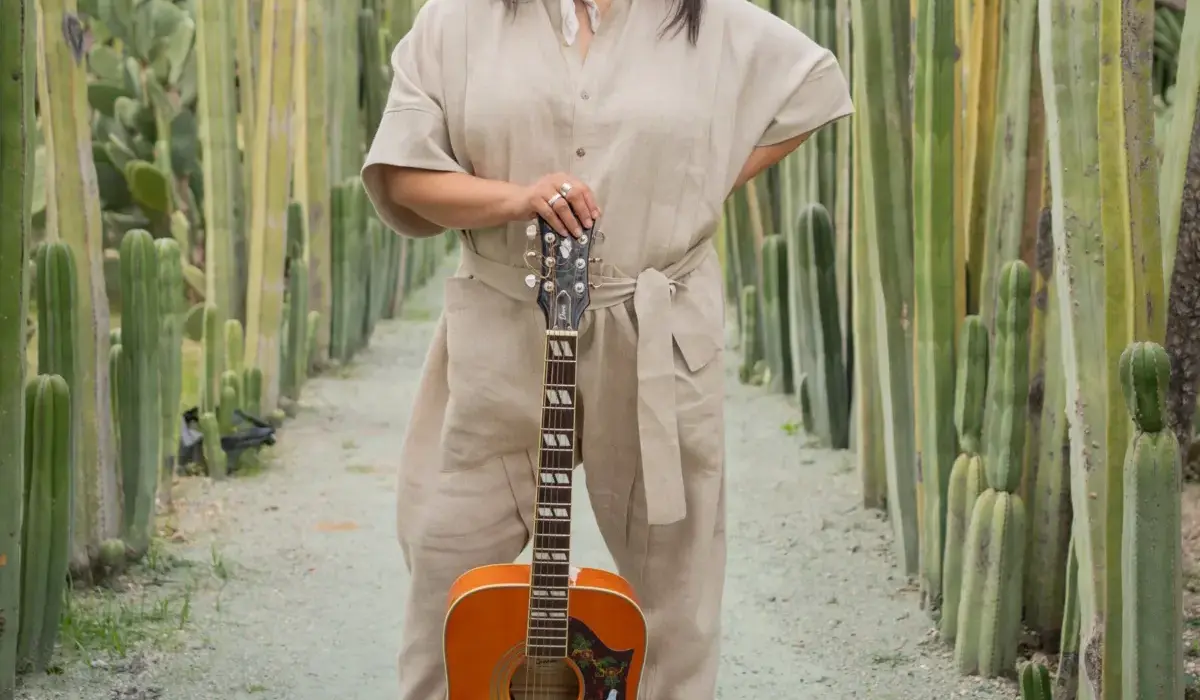
Against the backdrop of a centuries-old stone church in the colonial and cultural heart of the Mexican city of Oaxaca, the acclaimed singer Vivir Quintana recently raised her deep, husky voice above the blare of trumpets, trombones, and the booming, rhythmic pulse of a tuba.
Behind her stood a powerful brass band composed of young Indigenous girls, all dressed in traditional embroidered white blouses and brightly colored skirts that caught the bright Oaxacan sun. Holding a white hat in one hand with her fist firmly raised in defiance, Ms. Quintana delivered a powerful corrido—a traditional Mexican folk musical form that has historically been utilized to recount legendary tales of male revolutionaries, outlaws, folk heroes, and, in more recent decades, infamous drug traffickers.

For generations, corridos have been overwhelmingly sung by men, about men, immortalizing masculine bravado and violence. But Ms. Quintana is part of a cultural movement subverting that patriarchal tradition. In Oaxaca, she sang a corrido that she penned herself, based on the harrowing true story of a woman who fought back when her abusive partner attempted to gouge out her eyes with a knife.
“I used to think that what united us women was our pain,” Ms. Quintana told the enraptured crowd in October during a high-profile women’s conference in Oaxaca known as Decididas, her words drawing a roaring wave of applause from the audience. “Now I have realized it is love and resistance. We must keep defending ourselves!”
This profound re-envisioning of Mexico’s musical heritage has propelled Ms. Quintana onto the international stage, transforming her into one of Latin America’s most vital cultural figures. The Grammy-nominated songwriter has become widely known across the region for giving a long-overdue voice to women who have fought back against domestic violence, systemic abuse, and gender-based oppression. Her work reimagines a traditional art form, turning what was once a chronicle of male dominance into a vehicle for female survival, agency, and solidarity.

That artistic mission reaches another major milestone as Ms. Quintana prepares to take the stage at the Latin Grammy Awards in Las Vegas. There, she is set to perform alongside the renowned Colombian pop superstar Juanes, with whom she shares a prestigious nomination for song of the year for their collaborative track, “Humano.” It marks the second Latin Grammy nomination of her burgeoning and influential career, signaling a broader industry recognition of her socially charged artistic vision.
The performance in Oaxaca with the all-female regional band, Mujeres del Viento Florido, in Oaxaca de Juárez, encapsulated the essence of Ms. Quintana’s musical philosophy. By blending traditional brass arrangements with contemporary feminist lyricism, she creates a bridge between ancestral Mexican folk traditions and modern social justice movements. The collaboration with the young Indigenous musicians highlights her commitment to lifting up marginalized communities, ensuring that the next generation of women and girls see themselves not as passive victims of violence, but as the heroines of their own stories.
As she heads to Las Vegas for the Latin Grammy ceremony, Ms. Quintana carries with her the resonance of these grassroots performances and the heavy, urgent realities of the women she champions. Through her music, the centuries-old corrido is no longer just a relic of male folklore, but a living, breathing testament to women’s resilience across Latin America.




