









At the beginning of the year, Economy Minister Luis Caputo made bold and repeated predictions about the future of Argentina’s financial landscape. In his public addresses, he asserted that the "best 18 months" the country had witnessed in "recent decades" would unfold between May and June 2026. According to the government’s ambitious narrative, macroeconomic stabilization policies would rapidly translate into a broad-based economic bonanza, trickling down to improve the daily lives of everyday Argentines.
With only three months left until the end of the year, however, that promised prosperity remains conspicuously absent from the lived reality of the vast majority of the population. While macro-level indicators are frequently cited by administration officials to showcase progress, ordinary citizens continue to grapple with severe financial strains. The widening chasm between government projections and the financial realities on the ground has become a central point of tension in the country’s current socio-economic landscape.
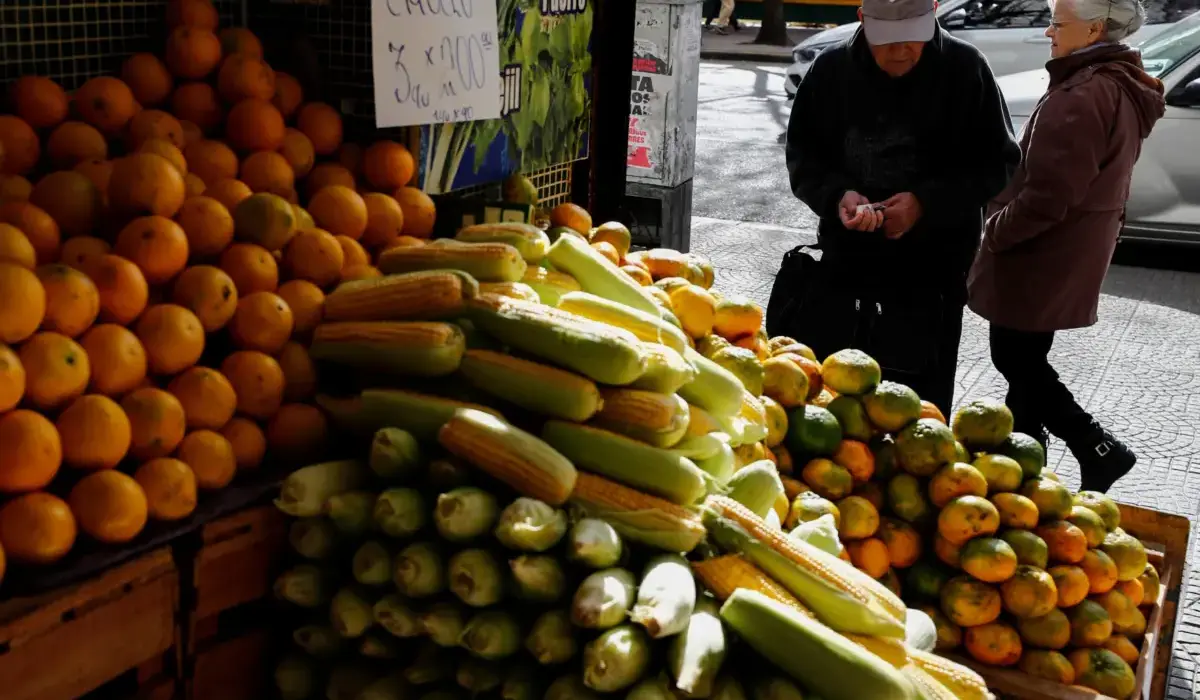
Public opinion data underscores just how disconnected the official narrative is from the daily struggles of households. According to the latest public opinion poll conducted by consulting firm Management & Fit (M&F), more than 69% of respondents stated that their most pressing personal problems are fundamentally economic in nature. Rather than feeling the benefits of a recovery, the vast majority of Argentines find themselves consumed by the immediate, day-to-day challenge of managing their shrinking financial resources amid persistent inflationary pressures and structural adjustments.
A Breakdown of the Numbers
A deeper look into the M&F survey reveals the specific contours of this widespread financial distress. The difficulty in simply making ends meet remains the single primary concern for individuals, accounting for 22% of responses. Closely following in second place is the sharp and ongoing decline in purchasing power, which was cited by 17% of respondents as their most acute personal challenge.
These concerns are firmly rooted in hard economic data. In real terms, average registered salaries have fallen by 3.4% since President Javier Milei took office in November 2023. As wages have failed to keep pace with the cost of living, families have been forced to exhaust their savings and resort to borrowing just to cover basic necessities.
Consequently, personal or family debt problems ranked fourth among personal issues, capturing 10% of responses. This mounting debt crisis is a direct consequence of a dramatic increase in household delinquency, which has reached record levels this year. Financial system data illustrates the severity of the trend: in July 2026, delinquency on credit to families within the formal financial system stood at 13%. To put that figure in perspective, data from the Center for Argentine Political Economy (CEPA) shows that formal family delinquency was just 2.5% in November 2024.
The situation is even more alarming within the informal financial sector. Delinquency on credit to families outside the formal banking system reached 33.9% last July. In stark contrast, that same indicator stood at just 7.3% in November 2024, highlighting how vulnerable households have been forced into high-risk, informal borrowing channels to survive the crunch.
Interestingly, while the top three concerns—difficulty making ends meet, declining purchasing power, and mounting debt—recorded a slight decrease compared to the previous M&F poll conducted in July, this shift did not signal an overall improvement in household well-being. Instead, the drop occurred because respondents increasingly highlighted other emerging anxieties: the lack of work, which climbed to 9.4%; the severe difficulty in finding and maintaining rental housing, cited by 7.4%; and the acute insecurity of losing one’s job, mentioned by 4.5%.
These fears are far from unfounded. Labor market indicators confirm a deteriorating employment landscape, with the national unemployment rate rising from 6.2% in the second quarter of 2023 to 7.9% in the same period of 2026. The M&F study further revealed that more than 52% of families currently struggle to cover their routine monthly expenses.
A demographic breakdown of the data shows that these economic difficulties are not distributed evenly across society. Economic hardship is disproportionately prevalent among women. When segmented by education level, the burden falls most heavily on individuals with a lower level of formal education. Furthermore, when divided by age range, financial distress is most commonly reported among respondents over the age of 40, a demographic often burdened with supporting dependents and maintaining established households.
When polled about what they consider to be the country’s single main problem at the macro level, nearly 20% of respondents pointed to unemployment, making it the top-ranked national concern. In second place was the sharp and continuous increase in public utility rates, which garnered nearly 19% of the total responses. Meanwhile, poverty secured fifth place, cited by more than 13% of participants as the nation’s most critical obstacle.
The gravity of Argentina’s social and economic situation has not gone unnoticed by international observers, including the International Monetary Fund (IMF), which has closely monitored the Milei administration’s reform program. While the Fund has repeatedly praised the government’s fiscal discipline and macroeconomic stabilization efforts, concerns regarding the social cost and the uneven nature of the recovery have increasingly taken center stage in policy discussions.
During her most recent press conference, IMF spokesperson Julie Kozak addressed these very issues, noting that the distribution of economic growth is a key topic of dialogue between the Fund and the Argentine government. Kozak stated that one of the primary subjects discussed with the Milei administration is the imperative to ensure that "growth, which so far has been very much in the energy, mining, and agricultural sectors, broadens and becomes more evenly distributed across sectors in the economy, but also across workers."