










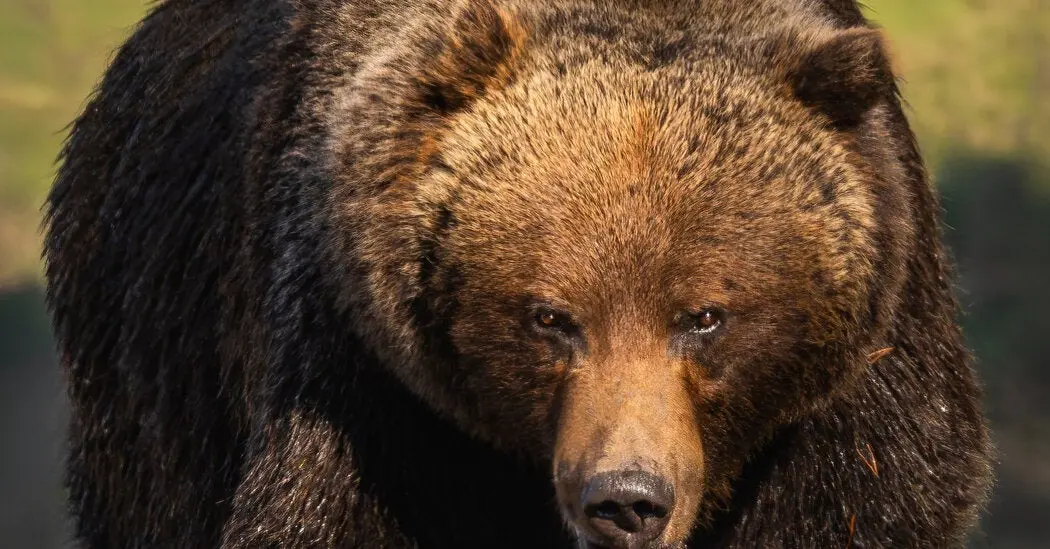
To the scientists, wildlife biologists, and park wardens who monitor the rugged backcountry of Banff National Park, he is officially known simply as grizzly bear 122. But to the locals who live in the shadow of the Canadian Rockies, the business owners in nearby mountain towns, and the millions of tourists who flood the region each year, he is known by a far more commanding the Boss.
Ruling over a massive 2,000-square-kilometer territory within Canada’s oldest national park, the Boss has evolved over the years from a formidable apex predator into a near-mythical wildlife icon. Weighing in at roughly 700 pounds and armed with four-inch claws, his mere presence commands instant respect and fascination. Yet, despite his fearsome reputation and a life spent navigating the perils of a heavily human-impacted landscape, wildlife experts warn that the single greatest threat to the legendary grizzly’s continued reign may not be rival predators, speeding locomotives, or busy highways, but rather his own overwhelming fame.
The life of Bear 122 is a testament to both the raw power of nature and the extraordinary resilience of an individual animal surviving at the intersection of wilderness and modern civilization. Over the course of his long life, the Boss has faced hazards that would spell certain doom for most other wildlife. He has been struck by a freight train barreling through the mountain passes and walked away without apparent ill effect. He has also been hit by cars along the region’s busy roadways and emerged unfazed.

Scientists studying the park’s grizzly population have documented his dominance in the local ecosystem, confirming that he has hunted, killed, and fed on black bears on at least one occasion. Furthermore, genetic and observational evidence indicates that he is the patriarch of a significant portion of the grizzly population within his sprawling range, having fathered many, if not most, of the bears sharing his territory.
His legendary status, however, is forged daily in the public eye. When the massive bear chooses to stroll casually along the edges of the Trans-Canada Highway—frequently stopping to graze on dandelions or forage for food—he inevitably triggers what locals and park staff refer to as "bear jams." Traffic grinds to a halt as motorists slam on their brakes, pull over to the shoulders, and scramble for cameras and binoculars to catch a glimpse of the reigning monarch of the Rockies.
His ongoing, brutal turf wars with a rival grizzly known as "Split Lip"—a conflict in which the Boss decisively earned his adversary’s namesake injury—are whispered about with awe by outdoor enthusiasts and tracked closely by wildlife researchers. Even his annual emergence from hibernation, which typically occurs each March as the mountain snows begin to recede, is treated as a major seasonal news event by media outlets across the province of Alberta.
This widespread fascination has long since spilled over from the park boundaries into commercial culture, transforming the wild animal into a booming local brand. Art galleries located in the resort town of Banff and the neighboring community of Canmore regularly ship giant, high-resolution photographs of the Boss to collectors around the world. His distinct likeness has been stamped onto an array of souvenirs, including refrigerator magnets, T-shirts, and canvas tote bags sold in gift shops throughout the region.

The commercialization of the bear’s image is perhaps best embodied in Canmore and Banff by a local restaurant named in his honor. Inside the establishment, the main dining room is anchored by a striking, oversized scrap metal sculpture of the grizzly bear, constructed entirely from discarded industrial gears, cogs, and overlapping metal plates that mimic his powerful frame and muscular build.
Yet, beneath the lucrative merchandise, the tourist attention, and the romanticized folklore, park wardens and wildlife conservationists harbor a deep and growing anxiety. Ironically, despite his immense size, fierce demeanor, and formidable combat skills in the wild, few bear experts view the Boss as a direct threat to the safety of park visitors or local residents. Instead, they fear that the legions of admirers he has drawn over the years pose an insidious and potentially fatal risk to his survival.
As the crowds swell and the pressure to capture the ultimate photograph intensifies, human behavior around the famous grizzly has increasingly tested the boundaries of wildlife management. When well-meaning tourists and eager photographers push too close in their quest for a memorable encounter, they risk habituating the animal to human presence or triggering a defensive reaction that could force park authorities to intervene. For a bear that has spent a lifetime successfully dodging the physical perils of the modern Canadian wilderness, the adulation of the public may ultimately prove to be the most dangerous challenge of all.