






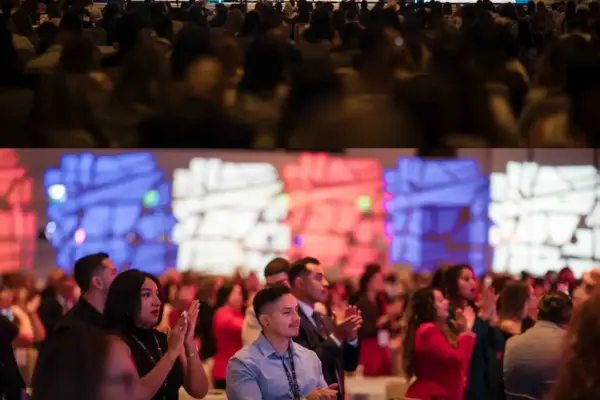
MIAMI — The Miami stop of Karol G’s Viajando por el Mundo Tropitour nearly did not happen for me, a reality that feels increasingly surreal given how profoundly the night ultimately altered my perspective. An opportunity materialized through Acoustyle, prompting me to bring along my close friend Angélica Romero, a paisa from Medellín and a costeña from Barranquilla navigating the aggressively humid Miami streets together. Stepping out into the heavy night air, we were immediately greeted by a tropical warmth that felt like a physical slap, instantly establishing the mood. Long before we stepped foot inside the venue, we carried that specific, high-voltage electricity that comes from two Colombian women preparing to watch a fellow Colombian woman utterly command a major stage.
It is worth being transparent about the initial hesitation that rippled through many of Karol G’s fans as the Tropitour era began to unfold, as I felt that exact skepticism myself. In the wake of Mañana Será Bonito—an album that functioned as a form of collective emotional rehabilitation for women, feeling far more like an immersive therapy session than a traditional concert—many of us remained fiercely attached to that specific brand of musical solace. That era provided a comforting sonic embrace that spoke directly to the fractured pieces of Latina womanhood, validating our pain and making us feel profoundly seen. Tropicoqueta introduces an entirely different sonic and cultural frequency, and initially, that stark pivot felt disorienting. It was akin to being handed something vivid and dazzling when a vital part of you was still guarding something tender and unresolved. Yet, standing shoulder-to-shoulder in that packed Miami crowd, sweating through a carefully curated outfit while holding a rapidly melting drink and screaming every lyric at the top of my lungs, the shift finally made absolute sense. Latinas are multifaceted beings who do not exist solely within a permanent healing era; sometimes, we inhabit a vibrant, fully alive tropical era, and Karol G was offering explicit permission to embrace that version of ourselves without a shred of guilt or hesitation.
The Mañana Será Bonito Era and Why It Still Lives in My Body
To fully grasp the emotional weight of what the Tropitour ultimately delivered, one must first understand the seismic impact of the Mañana Será Bonito era. That musical chapter served as a lifeline during one of the most punishing and grueling periods of my personal life, arriving precisely when daily existence felt so heavy that survival itself seemed uncertain. Karol G’s vocals became a constant fixture on my daily playlist, functioning as a repetitive prayer and a daydream of a future where I might feel emotionally whole once again. Playing her tracks felt like establishing a binding promise with myself that better days would eventually arrive. Sharing her roots in Medellín amplified that bond, transforming her into a supportive sister who instinctively understood the struggle without requiring explicit explanation, carrying me through countless bleak nights.
Given how deeply intertwined that album became with my survival, attending her Mañana Será Bonito show at Miami’s Hard Rock Stadium felt non-negotiable. I donned the sparkles, dressed up, and walked into the massive venue carrying a heavy heart, determined to bear witness to every single moment. Live music possesses an extraordinary capacity to forge profound intimacy with artists we will likely never meet in person, where a voice and a melody offer sufficient proximity to alleviate isolation. That night was designed to serve that exact purpose. However, the moment “Amargura” began to play, triggering an overwhelming surge of raw emotion in my chest, my protective instincts took over. I quietly slipped out of my seat, allowing the performance to pass without me to shield myself from a grief I simply was not prepared to process publicly. I carried that fragmented, unfinished emotional chapter silently for months, unaware of how deeply it remained embedded beneath the surface, simply waiting for the right conditions to finally breathe.
What the Tropitour Gave Me That I Did Not Know I Was Looking For
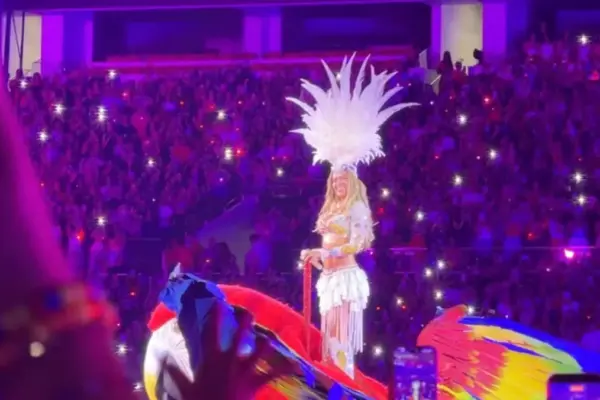
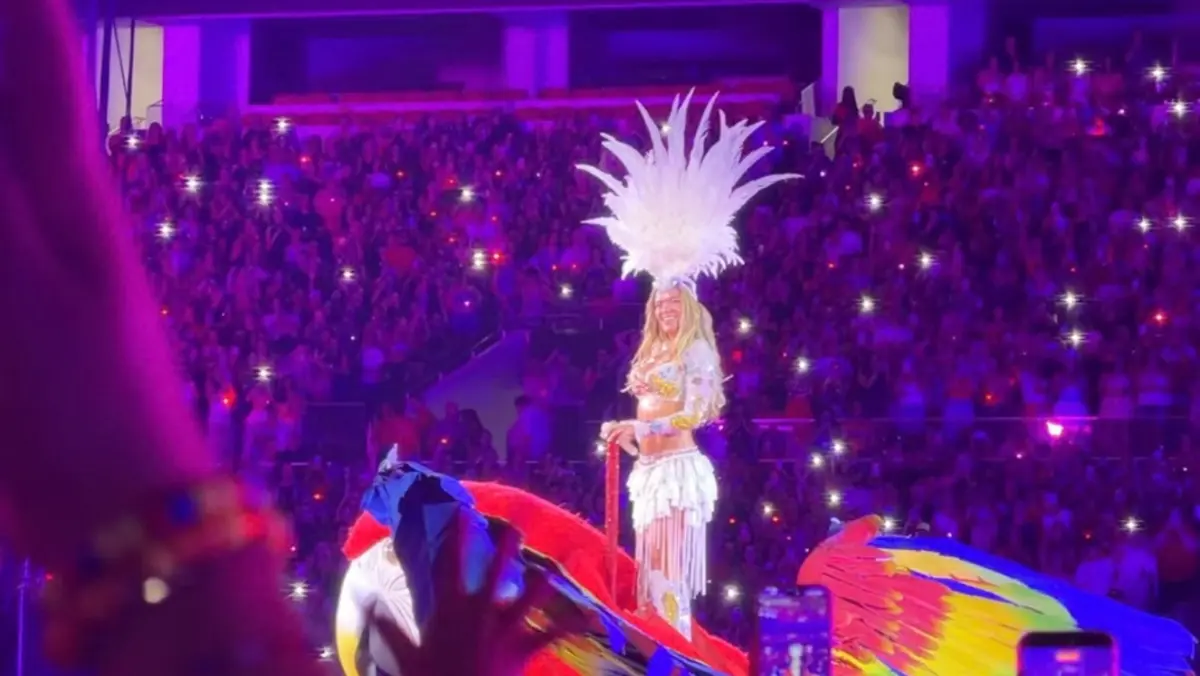
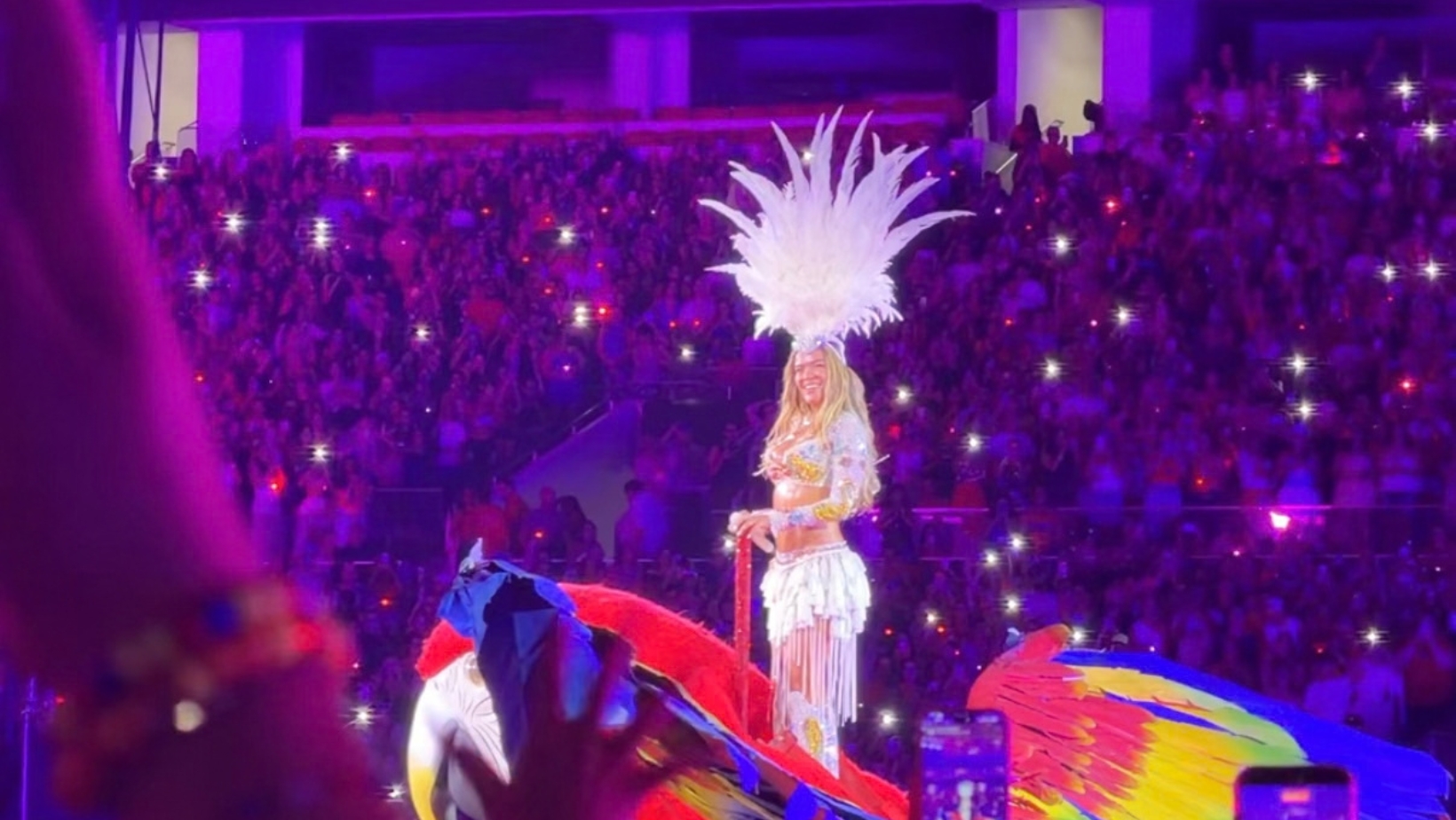
When Karol G made her grand entrance during the Tropitour, her characteristic energy surged through the venue before I could even brace myself, instantly sweeping me into the current. I found myself fully immersed, moving, singing, and absorbing every ounce of the vibrant tropical atmosphere she had carefully constructed, leaving the heavy-hearted version of myself from the Mañana Será Bonito era feeling delightfully distant. Her setlist smoothly transitioned through her foundational tracks before welcoming guest performers and fans onto the stage, including two Cubans she proudly noted were among the first from their nation to join her performance space, alongside a Mexican fan and two Colombians. Watching individuals from diverse backgrounds converge for an energetic perreo to “Bby Wow” encapsulated the very essence of what live music is meant to achieve: a shared room where distinct lives find synchronized joy.
That collaborative spirit was further elevated by the integration of viral TikTok videos featuring fans executing the “Bby Wow” dance trend directly into the stage production. This thoughtful touch underscored the meticulous attention Karol G and her creative team pay to grassroots digital culture, deliberately honoring her audience’s participation rather than treating them as passive spectators. That genuine attentiveness distinguishes artists who merely execute a performance from those who build a reciprocal relationship with their supporters.
A parallel ethos was evident when she welcomed mariachi musicians to the stage, followed by rising artists Elena Rose and Greeicy. By actively carving out a platform for performers still establishing their mainstream footing, Karol G mirrored the persistence required to claim her own space, offering a masterclass in generosity. By the time she launched into a cumbia-infused rendition of “Bichota,” the track felt as though it had matured alongside everyone in the audience, pulling us collectively closer to our folkloric roots. Beneath the heavy perreo beats, that cultural resonance has always been present, and the Tropitour functioned as a bold declaration that we are permitted to embrace the entirety of our musical heritage.
‘Amargura’ and the Moment I Realized How Much I Have Healed
midway through the performance, synchronized bursts of flame added an intense wave of heat to an already sweltering evening just as the opening chords of “Amargura” began to echo. My body recognized the song instantly, long before my cognitive faculties could process it, and all the unresolved emotions tied to the last time I heard it live came flooding back. On that previous occasion, the emotional weight had forced me to abandon the room. This time, however, I stood my ground. I sang every word, moved to the rhythm, and allowed myself to experience genuine happiness inside a melody that once felt entirely too heavy to inhabit. Somewhere amid the lights, the heat, and the music, I realized that the lingering, incomplete moment from the Mañana Será Bonito tour had finally reached its conclusion.
It represented the unexpected completion of a circular journey I never consciously realized I was undertaking when I nearly opted out of attending the concert. Karol G continues to evolve across distinct creative eras, yet her artistry consistently honors the complex emotional realities of her listeners, walking alongside them whether they are broken, thriving, or navigating the complicated space between. The Tropitour stands as definitive proof that this core philosophy remains intact, even as her sonic landscape expands. We can embody the fierce energy of an emotional bichota while still carving out space to sing “Pineapple” and “Mamiii,” because human emotion encompasses all of those facets simultaneously—a truth Karol G champions without apology across every genre she explores. Standing in that crowded Miami venue, finally belting out “Amargura” without needing to flee the auditorium, I understood that the healing process initiated during Mañana Será Bonito was never truly finished. It was simply transforming into something entirely new.