




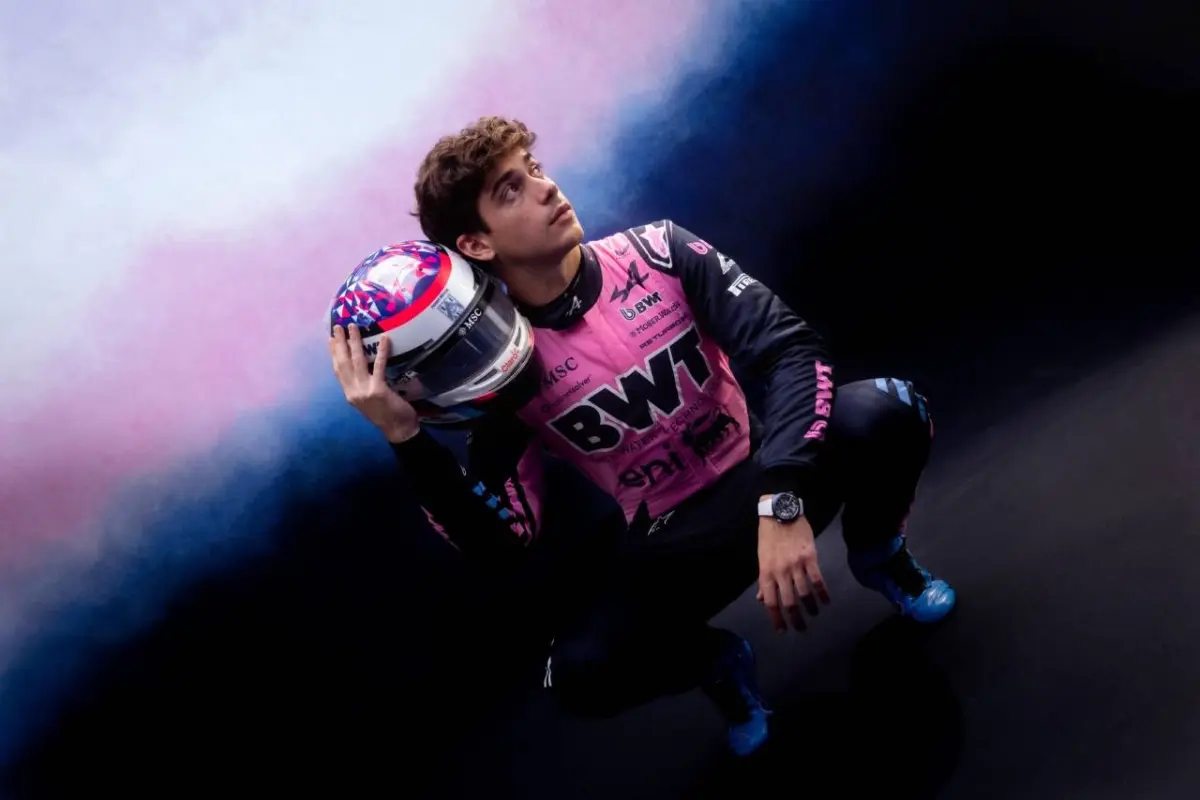
Formula 1 weekends are rarely short of drama, but few drivers left the Circuit de Barcelona-Catalunya with as much to unpack as Argentine rising star Franco Colapinto. Following a stellar qualifying session and a fiercely contested grand prix, the 23-year-old delivered what many pundits and the driver himself consider the finest performance of his young career. Starting from ninth on the grid, Colapinto navigated the notoriously tight and technical Spanish circuit with remarkable poise, ultimately crossing the finish line in seventh place.
While it did not match his career-best sixth-place finish secured earlier in the season in Canada, Sunday’s outing felt like a watershed moment for the young driver. Over the course of the weekend, Colapinto exhibited a level of consistency, racecraft, and tactical maturity that underscored his rapidly growing stature in the premier class of motorsport.
His journey to the points began on Saturday during a fiercely contested qualifying session. Pushing his Alpine machine to the absolute limit, Colapinto carved out a brilliant lap that safely vaulted him into the final top-ten shootout. Securing the ninth grid slot gave him a strong platform, but it was his defensive masterclass during Sunday’s Grand Prix that truly turned heads. Throughout the fifty-plus laps, the Argentine driver maintained exceptional pace while successfully holding off a swarm of significantly faster machinery, most notably the charging McLaren of Oscar Piastri.
Reflecting on his weekend after climbing out of the cockpit, Colapinto could not hide his satisfaction. Speaking to reporters, the young driver was candid about the magnitude of his drive.
"It’s got to be one of the best races I’ve had," Colapinto said. "Yesterday was solid too. It was a clean race; I’m happy with my performance."
The race also yielded a moment of profound personal and cultural significance for the driver. During the post-race cool-down lap, a track marshal handed Colapinto a national flag. Holding the Argentine banner aloft, he carried it proudly all the way back to the team boxes as grandstands filled with vocal compatriots roared in appreciation.
"Happy to be able to fly [the Argentine flag]. That stand was packed with Argentines; I’m proud that there were so many. It was a super special moment, and I’m thrilled it happened here," he added, visibly moved by the reception.
Yet, despite the personal triumph on track, the weekend in Spain laid bare underlying friction within the Alpine garage. Colapinto’s stellar drive was coupled with a direct, uncompromising intra-team battle against his far more experienced teammate, veteran French driver Pierre Gasly.
Tensions with Pierre Gasly
The Spanish Grand Prix saw Colapinto thoroughly outperform Gasly over the entire weekend, a script that has begun to repeat itself with concerning frequency for the French driver’s camp. Gasly, a 30-year-old Grand Prix winner widely regarded by the team as a reliable anchor and primary tactical option, found himself consistently trailing his younger teammate’s pace. As Colapinto continues to showcase rapid development and remarkable adaptability, the traditional hierarchy within the Alpine squad is facing unprecedented pressure.
The root of Sunday’s on-track friction lay in differing strategic gambles made by the pit wall. Gasly started the race down in fourteenth place on the hard compound tires. Early in the race, following a dramatic crash involving Aston Martin’s Lance Stroll, a Virtual Safety Car was deployed. While the vast majority of the field elected to dive into the pit lane for service, Gasly and his strategists chose to gamble by staying out on track.
That high-risk roll of the dice temporarily propelled the Frenchman up into seventh position. However, it came with a heavy tactical caveat. Because Formula 1 regulations mandate that drivers must utilize at least two different dry tire compounds during a Grand Prix, Gasly was still forced to make a mandatory pit stop before the checkered flag. To salvage his track position, he desperately needed another safety car or a red flag period to minimize the time lost in the pits.
As the race entered its tense final laps, Gasly was running in seventh place on heavily degraded rubber, while Colapinto was charging hard right behind him. Compounding the issue for the Argentine was the presence of Piastri’s McLaren, which was eagerly hunting down both Alpine cars. With Gasly yet to complete his mandatory stop and bleeding immense amounts of lap time due to worn tires, conventional team protocol and common tactical sense suggested a position swap. Allowing the faster Colapinto through would protect the team’s overall points haul and insulate the Alpine cars from the looming McLaren threat.
Instead, Gasly remained ahead, forcing Colapinto to lose crucial seconds trapped in his teammate’s dirty air. The delay invited Piastri into the fight, threatening to dismantle a hard-earned points finish for the team.
In-race radio communications captured the raw frustration bubbling over in the cockpit. Audio broadcasted after the event revealed an increasingly frantic Colapinto pleading with his race engineer over the team radio.
"Guys, let’s not lose more time. Swap, swap. Come on, swap. Honestly, oh my god, for f*ck’s sake," the 23-year-old transmitted, highlighting the high-stakes pressure of the closing laps.
Simultaneously, the audio from Gasly’s side of the garage underscored a driver under immense stress. The French driver could be heard aggressively pushing back against his own engineers regarding the team’s strategy of keeping him out on a failing set of tires. When informed that his teammate was directly behind him demanding a way through, Gasly bluntly told his engineer to "don’t even talk" to him.
Following the conclusion of the race, Alpine’s social media channels attempted to project a unified front. The team published a photograph of Colapinto and Gasly exchanging a professional salute in the paddock, accompanied by the optimistic caption, "stronger together." However, the online community and motorsport observers were quick to point out the public relations spin, with fans flooding the comments section to joke about the apparent frostiness between the garage neighbors and the deeper competitive currents at play.
A rivalry brewing?
The flashpoint in Spain was not an isolated incident; rather, it represents the latest chapter in a growing rivalry between the two Alpine teammates. The underlying tension has been simmering across multiple race weekends, driven by the stark contrast between Gasly’s status as the established team leader and Colapinto’s relentless upward trajectory.
A similar strategic disagreement played out at the Dutch Grand Prix a season prior. In that race, Colapinto had been bolted onto fresh soft tires in the closing stages while Gasly struggled to manage older, harder rubber, with the pair running twelfth and eleventh respectively. As the Argentine surged forward with superior pace, a late request for a position swap was delayed or denied, effectively robbing Colapinto of a realistic opportunity to chase down Esteban Ocon, who was driving for Haas F1. Ocon ultimately crossed the line eleventh and was later promoted into the final point-scoring tenth position following a post-race penalty handed to Mercedes driver Kimi Antonelli.
Colapinto made no secret of his dissatisfaction following that weekend, openly criticizing the team’s operational execution. He bluntly stated that Alpine had "failed to do a better job as a team" and remarked that the respective driver crews "didn’t help each other at all."
The friction is further amplified by how internal resources and technical updates have been distributed. Since Colapinto’s arrival at the squad, Gasly has largely retained the status of the priority driver. It has been common practice for the Frenchman to receive new aerodynamic packages and technical upgrades ahead of his teammate. For instance, Gasly received crucial car developments ahead of the Dutch Grand Prix, putting on a strong display that validated the team’s investment in his side of the garage.
Conversely, Colapinto has repeatedly demonstrated the ability to maximize machinery even when lagging behind in the development queue. When the Argentine finally received the corresponding upgrades at the subsequent Italian Grand Prix in Monza, he immediately translated the hardware into a competitive ninth-place finish.
As the season progresses, performances like the one Colapinto delivered in Spain are making it increasingly difficult for Alpine management to maintain a rigid, pre-determined driver hierarchy. If the young Argentine continues to match or outperform his experienced teammate on track, the team will inevitably face difficult questions regarding how to manage equal footing, fair racing, and intra-team harmony inside a garage where two ambitious drivers are fiercely fighting for their futures.